
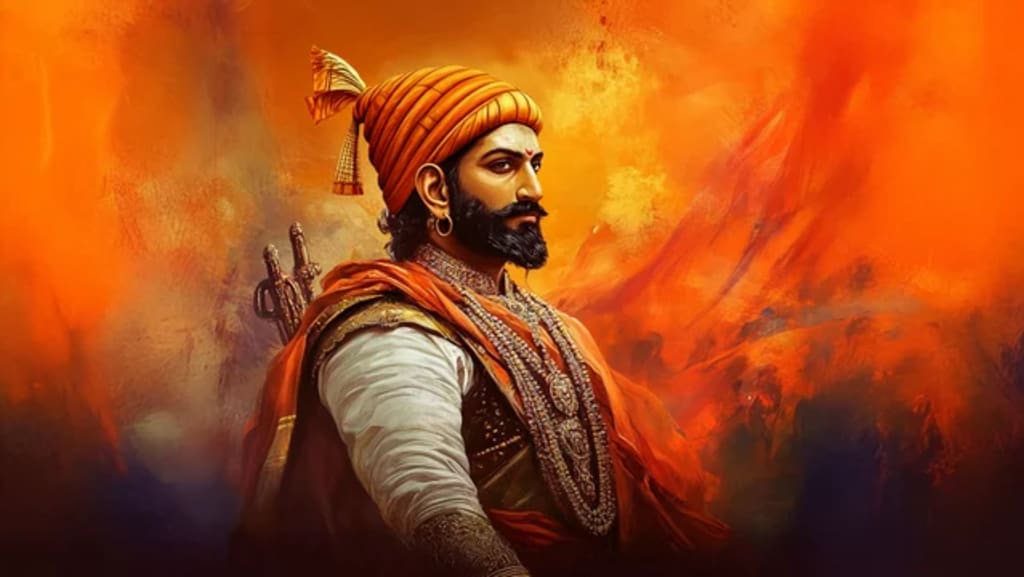
Sambhaji was born into a universe in which his fate had already been determined. Right from the time he could walk, he was not just a prince—he was the destiny of Swarajya, the promise of an independent Maratha nation. Son of the illustrious Chhatrapati Shivaji Maharaj, even as a little boy, the burden of expectation weighed heavily upon him.
But first, he was not a warrior, king, or martyr; Sambhaji was a young lad—curious, intelligent, and ambitious. He grew up with the reverberations of court discussions, the ring of sword training, and the rumors of political machinations. He was schooled not just in the science of war but also in the expansive knowledge of the world.
A polyglot and a master of Sanskrit and Persian lore, he was as quick as his sword with his mind. But in spite of all these learnings and trainings, he was nothing but human.
He must have had happy moments, laughing with his companions, racing horses between the forts, and listening to the court musicians with appreciation.
Maybe, as with his father, he took comfort in the sheer joy of watching a hawk soar into the air or listening to the old men recount tales of earlier battles. But always, in the recesses of his mind, the awareness remained—his life wasn't ever really his own.
Shivaji Maharaj's loss was not merely the loss of a father, but a loss of a star guiding light. Sambhaji is perhaps standing in the majestic court, listening to the ministers and the generals speaking with low, fervent voices, their eyes glowing with ambition.
The empire his father forged in blood and steel now rested on shaky ground, and each man in the court had a plan for what should come next. The weight of the throne was placed upon him, not as an entitlement, but as a challenge—a challenge to his strength, loyalty, and determination.
The moment he mounted the throne, the storm broke. The Mughals were unyielding, Aurangzeb watching and waiting for the signal to move in. The neighboring kingdoms, always greedy, wanted to break the Marathas. Even among his own troops, there were doubters, who spoke in huddles about whether the new king was ever going to be able to live up to his father.
But Sambhaji was no one to give way. He charged into battle as violently as a tempest sweeping down the Sahyadri hills. He did not reign from a throne—instead, he rode with his soldiers, sword in hand, in the midst of combat.
The battlefield was not a place for myths; it was a place where steel clashed with flesh, where men bled and perished, where kings did not issue commands from a distance but fought shoulder to shoulder with their soldiers. Sambhaji witnessed it all—the agony, the losses, the sacrifices. He bore the burden of every fallen soldier on his conscience.
But for all his bravery, fate had a bitter surprise in store for him. Betrayal. A term so bitter, so cutting that it sliced deeper than any sword. Sambhaji was taken prisoner, not by the skill of an enemy, but by treachery from among his own ranks.
Aurangzeb did not recognize simply a king standing before him; he recognized a challenge, a rebellious mind which would not bend. The Mughal emperor, merciless and pragmatic, wanted destroy Sambhaji not only in chains but in humiliation.
He presented him with an option: surrender, convert, abandon his father's dream. And after 42 days of being tortured he died by leaving his breath.
About the Creator
Keep reading
More stories from Shaik Yaseen and writers in Humans and other communities.
WW-II
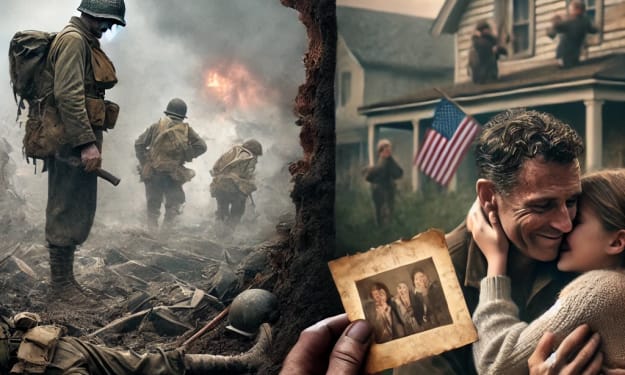
EXT. BATTLEFIELD - FRANCE - DAY Smoke drifts through the air like clamoring fingers. The gunfire crackles in the distance, echoed by the roar of the artillery. Soldiers crowd next to a deteriorating stone wall, their faces covered in mud and terror.THOMAS HAYES, a fatigued corporal in his late twenties, raises his head over the edge, trying to see the distance.
By Shaik Yaseen10 months ago in Men
Libra Woman and Aries Man Compatibility Score
The pairing of a Libra woman and an Aries man is one of the most classic and dynamic opposites-attract matches in astrology. Ruled by Venus and Mars respectively, this duo embodies the eternal dance between love and desire, harmony and action, diplomacy and courage. Their connection is rarely boring—often exciting, sometimes challenging, but usually transformative for both partners.
By Inspire and Fun6 days ago in Humans
"Hear Me Out"
"Hear me out, what if we ran away together?" "Where do you want to go?" "Anywhere but here. We could move to a new city or to Canada, or we could disappear from society to live in the middle of the woods. Maybe a combination of two of those things would be good. What do you say?"
By Kay Husnick8 days ago in Fiction


Comments
There are no comments for this story
Be the first to respond and start the conversation.