
Cellular Memory
Birthed into a cold, harsh world, void of nurturance, protection & guidance.

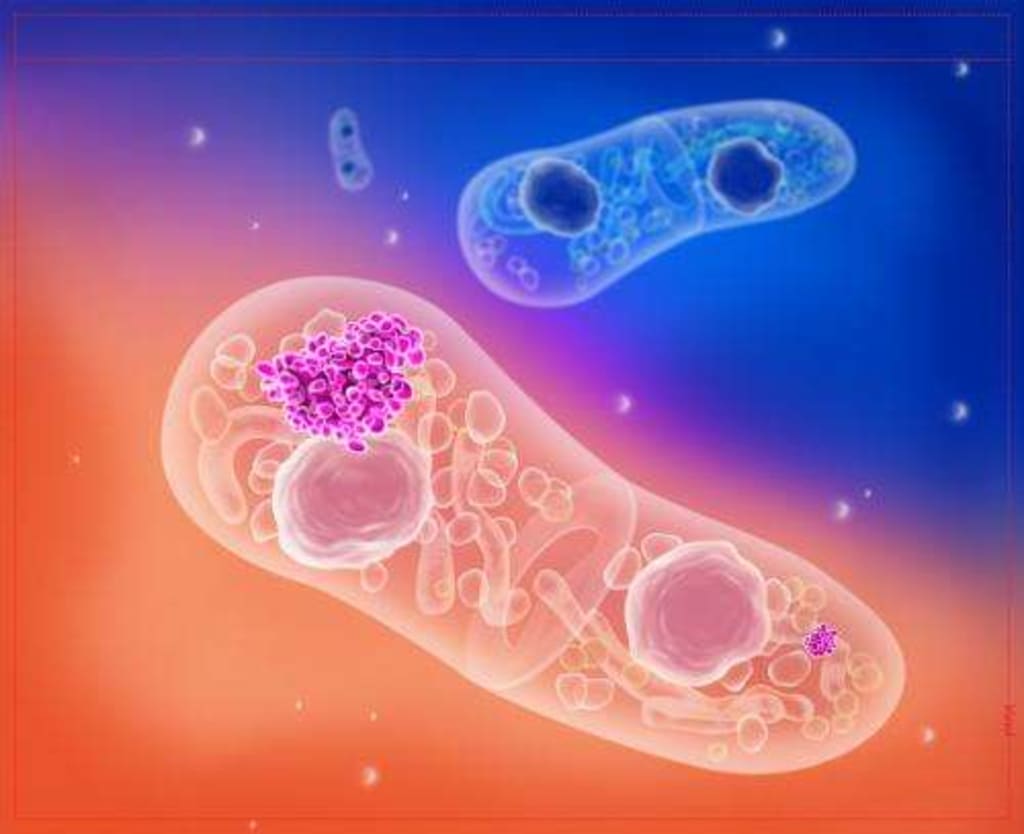
“When your mother’s love is threatening, your body remembers the pain at a molecular level.” — Kelly McDaniel
This essay is basically just a compilation of the research I have found that has helped me to understand my earliest years and where my self-destructive behaviors stemmed from.
Let’s start with the basics of early attachment injuries and what happens when a caregiver is not attuned to a babies needs.
Early Attachment Injuries
Preverbal times
“In the first 18 months of life is when we are getting wired to know, “love is safe, the world is safe, I can trust and I’m ok.” That’s all pretty much set by the time we’re three. The most dynamic time of brain growth is in the first 18 months of life. When we are newly born, our biology is already online and ready to protect us. If the care-giver is the threat our little bodies are going to register we are in danger.” — Kelly McDaniel
My parents, like so many, subscribed to The Ferber Method.
Just let ’em cry it out & learn how to self soothe as an infant …
Yeah. Totally.
Well, thanks to new research, we now know that this is completely false information.
Infants are physically incapable of self soothing.
What we did learn, though, was how to disassociate.
Infant Anxiety
The crushing effects of the Ferber Method (from Aha Parenting)
“Ferber now says in interviews that he regrets some of the advice he’s given. He’s been quoted as saying that he feels badly that child health professionals are encouraging parents to leave very young babies to cry, and that it’s ok to co-sleep.”
1. Richard Ferber is a pediatrician with no psychological training. While his approach works on some babies, it may not be simply “teaching them to sleep in their own beds”, as Ferber maintains. Other, less desirable lessons are unwittingly being taught.
2. Your baby is learning that you cannot be depended on, and in fact will regularly desert her when she needs you most; that she is powerless to have an impact on her world in the ways that most matter to her; and that her world is a cold and lonely place. The most important developmental work your baby is doing right now is learning how to trust.
3. She learns that you will not help her when she needs it, she concludes that she is not, in the deepest dark of the night, really lovable. She may even conclude that you are intentionally tormenting her.
4. It is possible that these early lessons will underlie her sense of self and worldview for the rest of her life.
“Harvard Researchers who examined emotional learning, infant brain function and cultural differences claim that babies who are left to cry themselves to sleep suffer long-lasting damage to their nervous systems. The researchers claim that this makes these children more susceptible in later life to anxiety disorders, including panic attacks. The incidence of anxiety disorders has increased dramatically in recent years, but I personally don’t think this is necessarily correlated to the practice of letting children “cry it out.” My own view is that such a susceptibility could be caused by many aspects of childhood in 21st century North America and would need to be triggered by later trauma to play out.” — Dr. Laura Markham
Polyvagal Theory. Heard of it? It teaches us how our Nervous System is the foundation of our lived experience and controls how we move through the world. So imagine how a baby with early attachment injuries, a baby who has a cellular memory from very early on in life that tells her she is not loved, protected, or safe, that she is alone in the world… imagine how this baby would move through the world (Hint: addictions & survival mode). Now think of this on a grand scale… this is a huge issue.
Rachel Yehuda & Dan Siegel have both done excellent research on this topic if you feel like you want to really dive deep.
The Still Face Experiment. Have you seen this on YouTube?
From The Gottman Institute: “The Still Face Experiment illustrates the power of emotion coaching and the importance of turning toward your child’s bids for connection.The video portrays the natural human process of attachment between a baby and mother and then the effects of non-responsiveness on the part of the mother. Dr. Edward Tronick of UMass Boston’s Infant-Parent Mental Health Program conducts research on how mothers’ depression and other stressful behaviors affect the emotional development and health of infants and children.”
“Edward Tronick is an American developmental psychologist best known for his studies of infants, carried out in 1970s, showing that when the connection between an infant and caregiver is broken, the infant tries to engage the caregiver, and then, if there is no response, the infant pulls back — first physically and then emotionally.” — Wikipedia
From an interview with Kelly McDaniel: “We think that a baby is ok crying itself out in the crib and when the baby eventually stops crying people think, ‘see, look, a good baby, we’ve taught them’. No. That’s not a good baby. That’s a disassociated baby because what has happened is that this infants only way of getting its need met is to cry. If that’s not responded to in a sensitive, tuned in way, the baby registers, ‘ok, I’m alone.’ Babies are not meant to be alone.” — Kelly McDaniel
Preverbal trauma is hard to process, articulate & share because there are no words, it’s somatic, it’s cellular, it’s in the body. It takes time to remember and requires a very safe environment and certain level of self-care. You have to have proved to yourself that you know how to take care of the emotions that this kind of work brings up. The point of this essay is just to I guess perhaps state the obvious- when your cellular memory tells you you’re not safe and that you’re alone, it makes life very, very difficult.
“The prevention of child abuse is possible with greater public awareness. Much unnecessary suffering could be prevented if, for example, recent discoveries about the importance of bonding between a mother and her newborn child (through eye and body contact) were more widely disseminated. Bonding gives the child greater security and safety.” — Alice Miller, The Drama of The Gifted Child
“If you grew up with a mother who was cruel and frightening, her behavior required your autonomic nervous system to stay in overdrive. Under constant threat, developing brain pathways meant for social behavior took a back seat to the pathways meant for safety. Unused neurons became weaker and less able to carry signals that govern attention and mood regulation. At the same time, pathways designed for self-preservation gained strength to keep you alert for signs of danger. Complex trauma explains why you were wound up, energetic, anxious, or irritable as a child and may still feel this way as an adult. Like someone anticipating a blow, your body and mind are wired for war.” — Kelly McDaniel
My entire life was rooted in coping mechanisms I developed in a subconscious effort to self-soothe. As I got older the coping mechanisms would become more and more destructive.
About the Creator
Natalie Nichole Silvestri
We are what we believe we are— C. S. Lewis
Keep reading
More stories from Natalie Nichole Silvestri and writers in Humans and other communities.
Mother Hunger
My Original Heartbreak was primitive and profound; No one can break your Heart like your Mother. Trigger Warning: This essay is about the Dark Mother. Be prepared for reading about child abuse. My intention in writing and sharing my experiences is to contribute to the collective efforts to bring light to the truths of motherhood and the devastating effects of traumatized, unsupported mothers in our world.* I want to be very clear that this is not an attack on my mother or my family. This is an honest, creative expression of my own personal life experience. Mothers are still a kind of untouchable subject, but hopefully soon we, as a society, will be able to talk more openly about the struggle of motherhood and offer support to mothers in need. I hope that my work is supportive of our collective evolution.
By Natalie Nichole Silvestri3 years ago in Humans
The CEO of Everything
They say "jack of all trades, master of none," but they forgot to mention the part where the jack of all trades is also the camera woman, the makeup artist, and the person currently yelling at a tangled Wii microphone cable in a her own bathroom while recording herself singing and trying to make it look realistic and professional. (As professional as you can make it with nothing but a cell phone camera and a mic that doesn't work)
By Sara Wilson6 days ago in Humans
🅼🅸🅳🅽🅸🅶🅷🆃 🆂🅽🅰🅲🅺🆂
"It's 10 in Tuscon! We all know what that means... It's Time for Midnight Snacks with your man, Gerald Gee! Ready to spend the night together? Me too! I'm full of snacks and can't wait to regurgitate them all back into your hungry ears. Crack a brew! Pop some corn! Anything to get ready for one hell of a show where the talk maybe cheap but the words cut deep...
By Lamar Wigginsa day ago in Fiction


Comments
There are no comments for this story
Be the first to respond and start the conversation.