
Cease and Desist
how i let go of what i built from grief

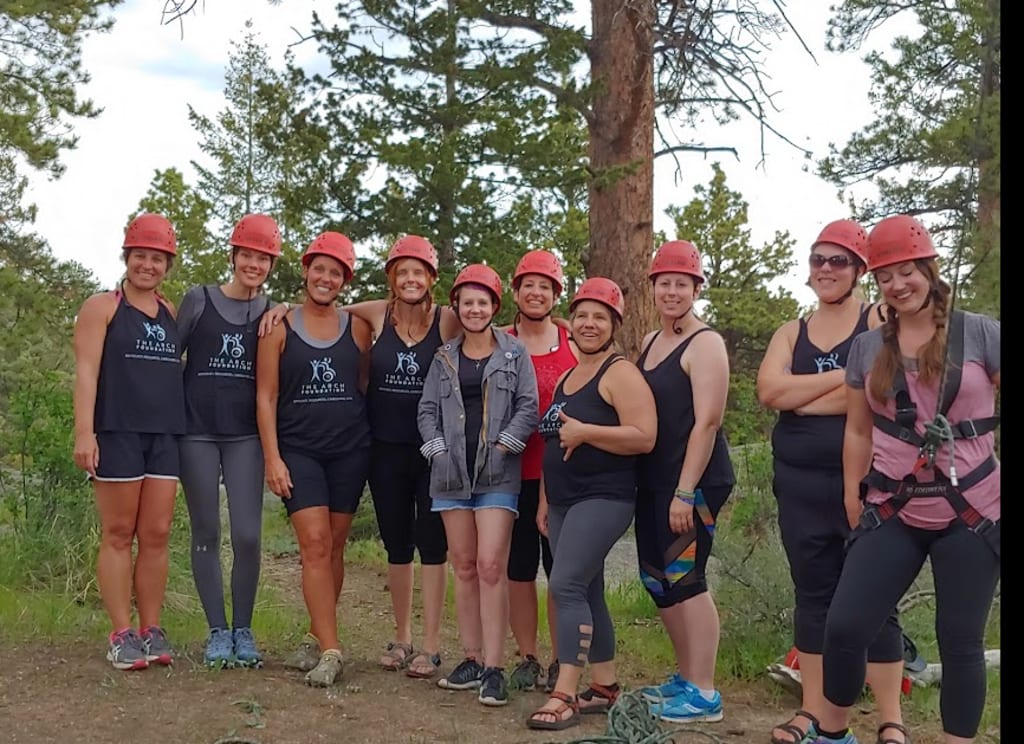
I wrote this piece nearly two years ago and honestly forgot it existed until I stumbled across it while cleaning out old drafts.
I decided to share it now because professional grief — especially the kind that comes from building something out of your own heartbreak, only to watch it be misunderstood or mishandled — isn’t talked about enough.
The program I created came from the deepest parts of me. When I merged it with a larger organization, I believed I was saying yes to support. What followed was one of the more brutal reckonings of my career — and also one of the most clarifying.
I’ve long since released what no longer served me, including the disappointment of being led by an all-female leadership team that didn’t walk their talk. And yet, I'm grateful. The lessons were hard-won, but they shaped what I built next.
If you’re grieving the loss of work you poured yourself into — know this: you are not alone.
And you are allowed to begin again.
Huge thanks to Know Thyself, Heal Thyself for giving this story a home.
____________________________________________________
You thought I would cease and desist.
Bend like frostbitten boughs,
splinter under the weight of you,
let you press your name into what was never yours.
But I am not winter-weakened wood.
I do not break that easily.
When I built The Arch Foundation, it was because something inside me knew—grief untransformed would rot me alive.
I have had a lifetime of companionship with caregiving’s shapeshifting grief—twisting through childhood, marriage, motherhood.
When my father’s stroke felled him at thirty, it turned our family into a diseased knot, every limb and branch slowly blackening.
Later, my own body betrayed me—a decade of illness, Ehlers-Danlos Syndrome reshaping my marriage, my parenting, my friendships.
Grief seeped into every pore.
And then, my son’s accident.
The sterile hospital rooms.
The recalibration of what life would look like now.
Watching Connor ask me if I could fix his legs—and knowing I couldn’t.
I realized how invisible caregivers were.
How unseen.
How unsupported.
I didn’t set out to build something national.
I set out to build something real.
A space for caregivers carrying their crumbling worlds on their backs.
A place where survival wasn’t the end goal—healing was.
I created the thing I couldn't find:
time away, in nature.
Not talking about caregiving—but laughing again.
Breathing again.
Reconnecting to something larger than our grief.
No one believed it would work.
Except a few.
Except me.
I knew—if I was drowning, if my husband had drowned caring for me while I was sick—I wasn’t alone.
So I built it.
Where there was a gap, I planted something wild.
We didn’t fit into neat boxes.
We didn’t follow the scripts.
And somehow, against every odd, The Arch grew.
When the opportunity came to merge with a larger organization, I believed I was saying yes to expansion.
Protection.
Sustainability.
Growth.
I negotiated carefully:
My program would remain true to its vision.
We would mold to caregivers’ realities, not contort them to fit polished programs.
Caregivers would run it—because authenticity matters.
They agreed.
And for a while, it looked like it could work.
My team—twelve fierce women, molded by the hard edges of caregiving—came with me.
Together, we built something beautiful inside their walls.
The most volunteer hours.
The highest survey scores.
The deepest impact.
We won awards.
We gained national recognition.
We grew in ways statistics couldn’t measure—in the way people softened when they realized they weren’t alone.
It was working.
Until it wasn’t.
When COVID hit, the ground shifted.
People were laid off.
Funding streams dried up.
Everything blurred.
I stayed—not because I was protected, but because I had brought my own funding, my own fire.
When they asked me to fold three jobs into one, I said yes—if my boundaries were honored.
Compensation.
Respect.
Clarity.
I wrote them down.
I spoke them aloud.
They nodded.
Their mouths were full of smoke.
The mountain campus wasn’t ready.
We were told it would be—running water, showers, dignity.
But when we arrived:
twenty caregivers.
Two portapotties.
No showers.
No working kitchen.
“It’s just the caregiver program,” someone whispered behind our backs.
Supposed to be a place of rest.
Instead, it became another battlefield.
My team—caregivers themselves, scarred spines, weary bones—didn’t just facilitate healing retreats.
They cooked.
They cleaned.
They hauled coolers and scrubbed pans in freezing water.
They stitched something tender from broken things.
And then, the emergency.
A caregiver collapsed.
My team moved without speaking—muscle memory of past traumas guiding them.
Stabilize.
Load vans.
Keep breathing in, keep breathing out.
She lived.
And when the vans returned to campus, when we sat around paper plates under a bruised sky, nobody spoke for a long time.
One volunteer smoothed the tablecloth over and over, like she could erase the edges of the day.
Another just stared out at the trees, her fork untouched.
We had done what we came to do:
Saved a life.
Held a crumbling space together with our bare hands.
But the celebration never came.
Instead, I was summoned—not to be thanked, but to be reprimanded.
"You didn’t follow protocol," they said.
As if protocol would have kept her heart beating.
As if we hadn’t done exactly what survival demanded.
I sat in the meeting, my hands folded tight against my stomach, willing them not to tremble.
Their words buzzed overhead like flies.
The list of our supposed failures was longer than the list of what we had survived.
The air tasted like antiseptic and arrogance.
It crawled down my throat, sour and sharp.
I realized then:
These women who claimed to champion empowerment had no interest in real strength.
They were architects of control.
Caretakers of comfort zones—not people.
And suddenly, the landscape tilted.
I wasn’t leading a program anymore.
I was surviving inside a system that saw my work, my team, my body, as an inconvenience to manage.
The heartbreak didn’t come all at once.
It seeped slow—like smoke under a door you thought was sealed.
Until one day, you realize you’re choking.
I stayed longer than I should have.
I reread the agreements late at night, words curling into smoke in my hands.
Still, I showed up every morning, voice steady, pretending I hadn’t heard the laughter behind closed doors.
Loyalty, I called it.
Denial, I named it later.
The decision didn’t come with fanfare.
No slammed doors.
No raised voices.
It came in the quiet—after a stretch of nights when my joints screamed louder than my heart.
"I'm done," I said.
Not with a scream.
With certainty.
"I'll finish the season. I'll hold my commitments. But after that, I leave with my name, my program, and my story intact."
They scrambled.
Tried to dictate the terms of my exit.
But I stayed steady.
I chose leaving.
I chose myself.
_____________________________________________
Author’s Note
What follows is not a summary of this story, but its echo, a poem.
These lines came to me in the aftermath — when the words I couldn't say aloud finally asked to be shaped.
It is the language of the body after the leaving.
The truth beneath the telling.
*Happy to say we built it thrice and are still holding caregiver and women’s retreats with Adaptive Outdoor Education Center in Maine. Check them out and support the important work they do!
___________________________________________________Winter Weakened Wood
You thought I would cease and desist.
Bend like frostbitten boughs,
splinter under the weight of you,
let you press your name into what was never yours.
But I am not winter-weakened wood.
I do not break that easily.
I built something with steady hands,
with the weight of years pressed into stone,
with echoes that did not need your permission to ring.
I built it once.
I built it again.
And the second time, it grew wilder,
without your hands twisting the roots.
But you—
you were ivy.
Slipping through the cracks,
threading yourself around my ribs,
pulling tight,
whispering care that smelled of decay.
And I—
I unraveled.
Did you learn anything in the wreckage?
I did.
I see where the fire burned too hot in my hands,
where I let heat speak louder than wisdom,
where I mistook the flames for the work itself.
Still, you pulled at the seams,
thinking my undoing would be your triumph.
But power built on possession never lasts.
And once I left,
the others came.
One by one,
whispering their own scars,
their own stories of your vines that choked.
But I—
I burned the ivy.
Tore it from my skin.
Left it curling in the embers.
And now,
I walk unbound.
The wind does not ask where I have been.
The trees do not lean to hear my name.
And I—
I do not turn to see what still smolders.
________________________________________________
Brutally Beautiful is a reader-supported space. It takes time, energy, and intention to create and share what lives here.
If this piece moved you, supported you, or offered something of value, but you’re not ready for a monthly subscription, you can always buy me a coffee as a way to say thanks.
Your support, in any form, truly helps keep this work going.
About the Creator
Heather Zoccali
Life is brutal. Life is beautiful. I live—and write—the brutiful. Memoir, poetry, and musings on grief, caregiving, resilience, and nature’s repair. Raw and tender, brutal and bright. An invitation: live brutifully.
Keep reading
More stories from Heather Zoccali and writers in Humans and other communities.
Ashes in the Wind
At the Colorado-Utah border, under a sherbet sunrise, I opened the jar. A raven dipped low, wings slicing the air with a kind of knowing. It hovered, looked us in the eye—really looked—and then soared west into the painted sky. We didn’t speak for a moment.
By Heather Zoccali5 months ago in Humans
Autonomy Is The Real Privilege
Good morning, freedom-seekers! Today we’re gonna be looking at autonomy. A strange word, I know; one many would probably look at blankly and run away from on sight. We’re gonna figure out what it actually means, consider how it’s achieved, and decipher just how deeply most of us are tangled up in dependence without realising it.
By That ‘Freedom’ Guyabout 12 hours ago in Humans
You Don’t Miss Them, You Miss Who You Were With Them
I used to think I missed them. That the tight feeling in my chest, the sudden wave of nostalgia, the random memories that showed up uninvited were all proof that I still wanted them back. I thought longing meant love, and sadness meant unfinished business.
By HazelnutLattea2 days ago in Humans
Smart phones, Humans and Aliens.
WARNING. I will be tapping into one of your favorite creative tensions: The absurdity of humans worshipping their glowing rectangles as if they were tiny oracles. There’s something deliciously poetic about that contradiction, and it lends itself beautifully to an instructive proviso.
By Novel Allen4 days ago in Poets




Comments
There are no comments for this story
Be the first to respond and start the conversation.