
Causes and treatment of red eyes and eye discharge in newborns
Neonatal conjunctivitis: causes, diagnosis and treatment

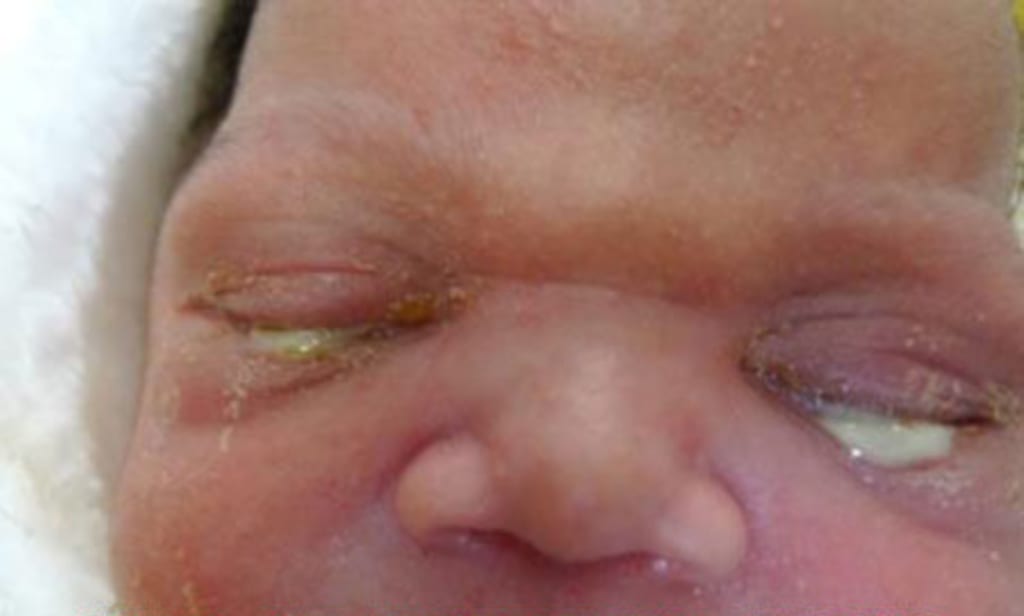
This is the story of a two months old baby girl that was brought to our clinics with so much discharge covering the entire eyes that the eye balls weren't visible anymore as shown in the picture above.
This condition is known as Ophthalmia Neonatorum or simply Conjunctivitis in newborns.
Please if you are a nursing mother, midwife or a child caregiver, pay close attention to this story because it will be of help to you.
Ophthalmia neonatorum, also known as neonatal conjunctivitis, is a common condition that affects newborns during the first month of life. It is characterized by inflammation of the conjunctiva, the thin, transparent membrane that covers the inner surface of the eyelids and the white part of the eye. Ophthalmia neonatorum can be caused by various infectious agents and poses a significant risk to the newborn's vision if left untreated. This article will explore the causes, diagnosis, and treatment of ophthalmia neonatorum.the
Causes of Ophthalmia Neonatorum
Ophthalmia neonatorum can be broadly categorized into two types: chemical and infectious conjunctivitis.
Chemical Conjunctivitis: This type of conjunctivitis results from the irritation of the baby's eyes due to exposure to chemical agents during the birthing process. Chemical conjunctivitis can occur when the baby comes into contact with substances such as vaginal secretions, blood, or antiseptic solutions used during delivery.
Infectious Conjunctivitis: Infectious ophthalmia neonatorum is primarily caused by bacteria or viruses transmitted from the mother to the newborn during childbirth. The most common bacterial agent responsible for infectious conjunctivitis is Neisseria gonorrhoeae, which causes gonococcal ophthalmia neonatorum. Another common bacterium is Chlamydia trachomatis, responsible for chlamydial ophthalmia neonatorum. Both of these infections can lead to severe eye damage if not promptly treated.
Diagnosis of Ophthalmia Neonatorum
Prompt and accurate diagnosis of ophthalmia neonatorum is crucial to prevent potential vision impairment. The diagnosis is usually based on clinical examination and the baby's medical history.
Clinical Examination: A healthcare professional, often a pediatrician or an ophthalmologist, will visually inspect the baby's eyes for signs of inflammation, redness, swelling, and discharge. Additionally, they may assess the baby's ability to open and close their eyes comfortably.
Microbiological Testing: In cases of infectious conjunctivitis, samples of the eye discharge may be collected for laboratory analysis. This helps identify the specific infectious agent responsible for the condition, guiding appropriate treatment.
Maternal History: Obtaining a thorough maternal history is essential in determining the potential risk factors for ophthalmia neonatorum. This includes information about the mother's prenatal care, presence of any sexually transmitted infections, and whether she received prophylactic eye medications during childbirth.
Treatment of Ophthalmia Neonatorum
The treatment of ophthalmia neonatorum depends on the type and cause of the conjunctivitis.
Chemical Conjunctivitis: Mild cases of chemical conjunctivitis usually resolve spontaneously within a few days. However, to prevent potential complications and discomfort, healthcare providers may recommend gentle eye cleansing with saline solution and application of antibiotic ointment or drops to prevent secondary bacterial infection.
Gonococcal Ophthalmia Neonatorum: Gonococcal conjunctivitis requires urgent and aggressive treatment due to its potential to cause severe eye damage. Intravenous or intramuscular antibiotics, such as ceftriaxone or cefotaxime, are typically administered to treat the underlying Neisseria gonorrhoeae infection. Concurrently, topical antibiotic eye drops or ointment may also be prescribed to target the local infection.
Chlamydial Ophthalmia Neonatorum: Chlamydia trachomatis conjunctivitis is treated with oral antibiotics such as azithromycin or erythromycin. It is crucial to treat both the baby and the mother to prevent reinfection.
Prevention of Ophthalmia Neonatorum
Preventive measures are essential to reduce the incidence of ophthalmia neonatorum:
Prophylactic Eye Medications: In many countries, including the United States, it is a standard practice to administer prophylactic eye medications, such as erythromycin ointment or povidone-iodine solution, to all newborns shortly after birth. This helps prevent infections acquired during childbirth.
Prenatal Screening and Treatment: Routine prenatal screening for sexually transmitted infections, including gonorrhea and chlamydia, is vital. If an infection is detected, appropriate treatment should be administered to the mother during pregnancy to reduce the risk of transmitting the infection to the baby.
Hygiene and Infection Control: Healthcare providers must adhere to strict hygiene and infection control measures during childbirth to minimize the risk of transmitting infectious agents to the newborn's eyes.
Conclusion
Ophthalmia neonatorum is a significant health concern in newborns, and prompt diagnosis and treatment are crucial to prevent potential vision impairment. While chemical conjunctivitis often resolves spontaneously, infectious conjunctivitis caused by bacteria or viruses requires specific and timely treatment. Additionally, preventive measures, such as the administration of prophylactic eye medications and prenatal screening for sexually transmitted infections, play a vital role in reducing the incidence of ophthalmia neonatorum and safeguarding the visual health of newborns.
■ Dr Chris Uche Iheukwumere
About the Creator
Dr. Chris Uche Iheukwumere
An outstanding Optometrist with many years of experience, a freelance writer, a publisher in national dailies, websites, blogs, and medical journals. Author of the best seller book, a passionate researcher, Buisness analyst, and a Pastor.
Keep reading
More stories from Dr. Chris Uche Iheukwumere and writers in Humans and other communities.
Do you want to conceive a male child? Consider these nine factors.
Conceiving a child is a life-changing decision for any couple, and some may wish to have a specific gender preference. While the gender of a child is largely determined by biological factors, there are some theories and practices that some couples believe may increase the chances of conceiving a male child. It is essential to remember that these methods are not scientifically proven and should be approached with caution. Nonetheless, for those who are interested in exploring these possibilities, here are some factors to consider when aiming to conceive a male child:
By Dr. Chris Uche Iheukwumere2 years ago in Humans




Comments
There are no comments for this story
Be the first to respond and start the conversation.