
Canada's Immigration Dilemma: A Nation at a Crossroads
From Welcoming Arms to Growing Skepticism

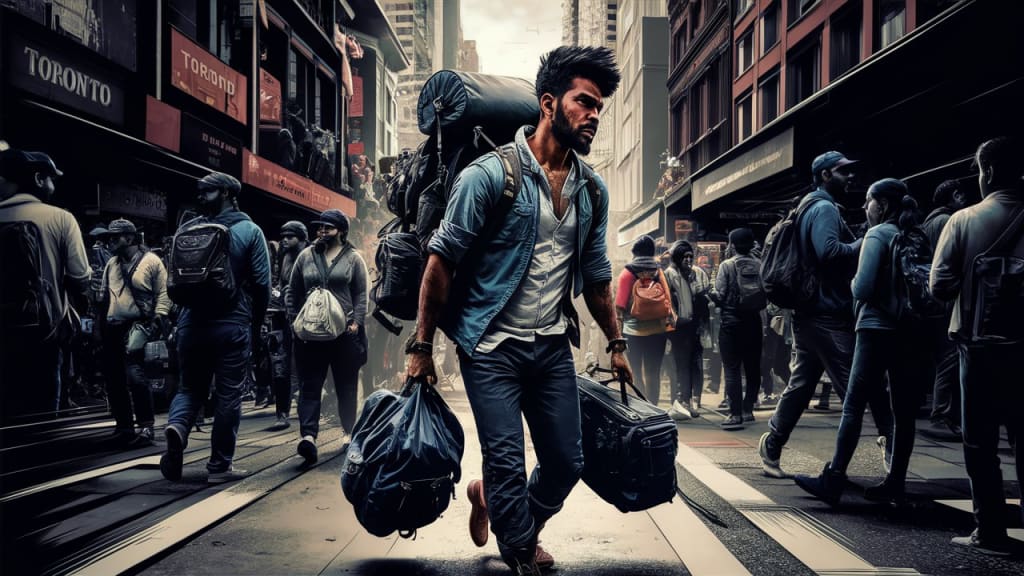
Once hailed as a beacon of multiculturalism and opportunity, Canada is now grappling with a growing anti-immigration sentiment that threatens to reshape its national identity. The country, long known for its open-door policy and diverse population, is facing unprecedented challenges as it struggles to balance its tradition of welcoming newcomers with the harsh realities of a strained infrastructure and soaring living costs.
In recent years, Canada has experienced a massive influx of immigrants, with over one million people arriving in the past year alone. This surge, while in line with the government's ambitious immigration targets, has exposed critical gaps in the country's ability to accommodate such rapid population growth. The repercussions are being felt most acutely in major urban centers like Toronto, where the dream of a better life is colliding with a stark reality of unaffordable housing and limited job prospects.
Toronto, Canada's largest city and a longtime magnet for immigrants, has become the epicenter of this crisis. The city's rental market has seen a staggering 40% increase in costs over just two years, pushing many residents to the brink of financial ruin. John Smith, a 35-year-old software developer who immigrated from India five years ago, shared his experience: "When I first arrived, I could afford a decent one-bedroom apartment downtown. Now, I'm considering moving back in with roommates just to make ends meet. This isn't the Canada I was promised."
The housing crisis has led to desperate measures, with some immigrants resorting to living in substandard conditions. Local realtor Ana Ettinger has witnessed this firsthand. "I've seen people paying $900 a month to share a queen-sized bed with a stranger," she recounts. "It's heartbreaking to see skilled professionals reduced to these living situations simply because they can't afford anything else."
This harsh reality stands in stark contrast to the image of Canada marketed abroad. Many newcomers, particularly international students, arrive with high hopes only to find themselves struggling to survive. Paan, an Indian student studying in Toronto, explained, "Back home, we're told that earning in dollars means you're rich. What they don't tell you is that you're spending in dollars too, and everything is so expensive here."
The strain on resources has not only affected newcomers but long-time residents as well. Public services, from healthcare to transportation, are buckling under the pressure of increased demand without corresponding infrastructure improvements. This has led to a growing resentment among some Canadians who feel their quality of life is deteriorating.
As a result, anti-immigration sentiment is on the rise. A recent poll showed that 60% of Canadians now believe immigration levels are too high, a significant shift in public opinion. Online forums and social media platforms have become hotbeds for discussions criticizing "mass immigration" and what some perceive as political failures in managing the influx.
This backlash has given rise to movements like "Take Back Canada," which advocates for more restrictive immigration policies. Ethan, the co-founder of the movement, argues, "We're stealing the future that Canadians were promised, that our parents and grandparents worked for. We need to be more selective about who we let in and ensure they can contribute positively to society."
However, proponents of immigration warn against scapegoating newcomers for systemic issues. Daniel Burnhard, who runs the Institute for Canadian Citizenship, emphasizes the vital role immigrants play in Canada's economy and future prosperity. "We need to recognize that immigrants have a lot to contribute," he states. "The real problem isn't population growth; it's the decay of public services and lack of infrastructure investment over the past decades."
The Canadian government, for its part, remains committed to high levels of immigration, viewing it as essential for economic growth and offsetting an aging population. Prime Minister Justin Trudeau has repeatedly defended the country's immigration policy, stating, "Immigration in Canada is not just something we do, it's who we are."
Yet, the government faces mounting pressure to address the challenges associated with rapid population growth. Critics argue that without significant investments in housing, healthcare, and other essential services, the country risks undermining its reputation as a land of opportunity for all.
Despite the growing tensions, many immigrants continue to find success and fulfillment in Canada. At a recent citizenship ceremony in Toronto, newly minted Canadians expressed their gratitude and optimism. Maria Gonzalez, originally from Mexico, shared, "Yes, there have been challenges, but Canada has given me opportunities I never dreamed of back home. I'm proud to be Canadian and excited to contribute to this country's future."
As Canada navigates this complex issue, it's clear that solutions will require a delicate balance between maintaining the country's traditionally welcoming stance and addressing the very real concerns of both long-time residents and newcomers. The coming years will be crucial in determining whether Canada can successfully manage its immigration levels while preserving the quality of life that has long made it a desirable destination for people around the world.
The path forward remains uncertain, but one thing is clear: the outcome of this debate will shape the very essence of what it means to be Canadian for generations to come. As the nation stands at this crossroads, the world watches to see if Canada can once again set an example of successful multiculturalism or if it will succumb to the pressures that have challenged other immigrant-receiving countries around the globe.
About the Creator
Keep reading
More stories from Next Koding and writers in Humans and other communities.
The Twilight of British Nightlife: A Nation's Social Fabric Unravels
In a startling revelation that has sent shockwaves through the United Kingdom, a recent video documenting the eerie quietude of a once-thriving Midlands town on a Saturday night has sparked intense debate about the changing face of British social life. The footage, which has since gone viral, paints a bleak picture of empty streets, shuttered businesses, and a palpable absence of the vibrant nightlife that once defined many of the nation's urban centers.
By Next Kodingabout a year ago in Humans
You Don’t Miss Them, You Miss Who You Were With Them
I used to think I missed them. That the tight feeling in my chest, the sudden wave of nostalgia, the random memories that showed up uninvited were all proof that I still wanted them back. I thought longing meant love, and sadness meant unfinished business.
By HazelnutLatteaabout 7 hours ago in Humans
Miss Persephone's Manual to a Seemingly Ordinary Life
Miss Persephone was found at the dining table, her blue eyes swollen, her tears arriving and retreating like the tides of the ocean. Earlier that day, her family had visited her in the retirement home where she had lived for eight years. It was her eightieth birthday.
By Imola Tóth3 days ago in Fiction



Comments (4)
So so amazing .i love your content and subscribed. Kindly reciprocate by subscribing to me also . thank you and keep it up
Well done, well said! My neighbors are from Syria(immigrants). They will buy a house and land...I will have my own house, perhaps next life.
Brilliant article
Excellent points