
BUENOS AIRES NIGHTSHADE
this story was rejected because it contains a little bit of Spanish, but chiefly written in English. In the United States, more than 43 million people speak Spanish as a first language (about 13 percent of the population), and that number continues to grow. Additionally, the United States is home to nearly 12 million bilingual Spanish speakers.

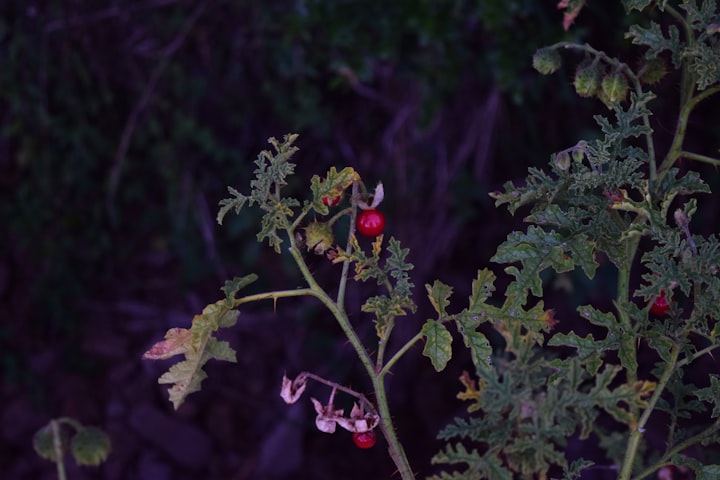
Gaetano ruminated the thought of how some plants naturally avoid incest as he pressed the air between the petals and his ample palm, carefully compressing the flower’s randy fragrance into a sigh. Then, he cut through the tropical fog of the vast conservatory with agile steps receiving the bow of the admiring Zingiber, the African flame tree, the Mirabilis, the Hibiscus, the Bombox ceiba, the Passiflora, the Frisia, the Oleander, the Mandragora, the Milkweed and the Belladonna. Hesitated in one step, but out stepped firmly from the warm hydroponics lights stage to the chilled semi-dark outside, the grayed northwestern air of the afternoon was brittle in his potent chest. Deftly, he dialed his cell and talked to Mr. Rubin about the dilapidated shutters on the first floor at the back of the decaying mansion in Belgrano, the important delivery pick up, and their recently departed gardening staff — he could hear Matilda fussing over him the expansive oak room upstairs from where the old man doesn’t descend any longer. After a pause, Gaetano softened his broad lips to a “you too, sir” and snapped shut the device like the Venus flytrap.
The morenito botija hopped on the SUV and gave Gaetano a taste of sugarless peppermint in his lips and burrowed his small hands under his impeccable tuxedo shirt, counting the six-pack, scraping the nape of the pleasure trail that descended into his fitted trousers, the engorged money clip, the new fun. A bashful tendency dashed with testosterone and an ambitious future in botany, ethnobotany to be precise thought Gaetano and sped away contentedly. Much like the iron clad conservatory on Barrio Belgrano, Gaetano was an exemplary model of a 1950s building designed to withstand strong gusts of wind and gardening all year round. On the darkened highway, Gaetano did not lose his grip on the steering wheel as the silent young man bit his thick lower lip. Such docile attention was reassuring; it put them over the hill of the slight impasse the week prior, their first in their short relation, it had been about the usual tedious awkwardness of fluids. This new millennium generation surely understands that illness is a problem of the poor, not of the groomed, well-to-do, and well-married ones such as Gaetano. They should turn their attention onto poor adopted children and their grieving grandmothers. Indeed, this evening, Gaetano was taking the promising ethnobotany student to a fundraiser for Andean orphans, the swankiest of the year.
Taking the helm of the highway with velocity, Gaetano’s smooth ride was a tad distracted by the feeble demands on the other end of the crackling cell phone call from Buenos Aires – interrupted by bouts of ghastly hacking – the need to find a new apothecary, the needless dismissal of their latest gardener, the dilapidated shutters. Kind but firm words flowed out of Gaetano’s lips giving an explanation about a delayed shipment of rare cuttings from somewhere in the Amazons and a search to hire new personnel. Without missing a drop, the student tightened his glottis once Gaetano had pronounced his “you too, sir” gravely to Mr. Rubin sealed with a clack of the polished cell phone. Such release made Gaetano’s muffler roar past two sports cars on the right lane. “Super,” buzzed the student admiringly and smoothing his white tuxedo shirt down, licking clean his lower lip, “Dulce”. Gaetano glanced from the corner of his eye, the sound of Spanish words always made the tongue almost lick of the linguistic bubble in which he lived. Although profoundly bilingual, Spanish was used as necessity, to allow others momentarily into the life of the centennial household and the conservatory business in Belgrano. Off they went, both dressed to impress to the glamorous AIDS and the Andean environment benefit gala in a glitzy events place by the shimmering lake.
That evening, several Mojitos later, having delivered the student back to his dorm, Gaetano distractedly mulled over the need for a newer SUV, his mental abacus calculating Mr. Rubin’s allowance while reasoning on the cell phone with Matilda, the conservatory manager, the housekeeper — it was so inconvenient that she called at the end of such perfect evening, overzealous about business, conducting a verbal auditing on the phone he would have preferred not to have this late in the evening, after a few drinks, and in the midst of sheathing drizzle in the treacherous highway. Gaetano, at the metronome pace of the windshield wipers, listed the things to do: the nursery, Mr. Rubin’s health, his own regime of pills and herbal supplements, the recently fired gardener leaving them short of one staff person, and the late evening trainer sessions at a fancy local gym where he had first seen the tiny and devoted Uruguayan botija and future ethnobotany student – a chat in a locker room can reveal much about guys. The morenito was working the summer off under the table as attendant in the fancy gym/spa, his first time in the great BA, dazzled by its massive calm beauty parlayed into Gaetano’s deportment, a large city so self-assured, it feels comfortable breathing the noise of claxons, the tango pollution of its dripping windows, the congested grad avenues, Buenos Aires is like a old man dying inside who looks beautiful almost seductive in his reclining posture.
“El cordovez –that gardener, he was working out well” Matilda’s tiny voice hurried him off his mental calendar by reminding him that given the delicate health of Mr. Rubin, he carried great responsibility (upon my broad shoulders – Gaetano added mentally).
“No he wasn’t Matilda; he became more interested in cavorting with Mr. Rubin’s day nurse.”
“He seemed quite efficient dear,” she paused and emitted the little vibrato of a coleopteran antagonistic to flowers, “I will be darned if I understand what could possibly have gotten into those two to marry in such a rush.” Her doubt is redolent of talk show banality.
“He was getting too old for the job anyway,” points out Gaetano while pressing the pedal down to take a swift long curve off the highway, he enjoyed the thrill of a bit of careening.
“He was all of twenty-five or twenty-six, dear. I remember, you were—”
Gaetano coasted fast around an exit to a promontory off the main road. “Anyway, I have a prospective apothecary from one of the local colleges. We’ll talk about this later, shall we? Bye.” Disconnects. In the downpour, the small ferry arrives to carry him across to Possession Beach.
He knew that Matilda knew he would be burning out his steam by speeding up the slippery narrow roads leading to the farmhouse by the sea. Gaetano brought his foot off the pedal. A police car had appeared from nowhere like a spatial machine signaling him to the side of the forest road. Odd, he hadn’t seen it when whizzing by the crossroads. Not many venture into these dicey back roads. The sheriff seemed to be traveling alone; he walked out of the car, tensed hand near the hip, coked hammer, and an old horse swagger. Objects appear closer in the rear-view mirror than in reality: the Sheriff’s pants rode too high up on his hips. By the rolled down SUV window, the stout officer solicited the license papers, and adjusted his unnecessary tinted sunshades on the high bridge of his fat nose to scan the inside of the vehicle. Gaetano hadn’t seen him before around those roads, but then again, he didn’t notice men with glasses.
“You were going mighty fast there, buddy boy.”
“There’s no one around…officer.” Gaetano didn’t give him a second glance.
“Anyway, driving like a young buck, eh?”
“I’m young,” Gaetano said flatly. The crotchety sheriff took off his sun glasses and a squint came over his owl eyes.
“What’s all this equipment you carry at the back?” He asked as he handed Gaetano a ticket.
“Plant nursery equipment.” If there ever was a tinge of apprehension in Gaetano’s deep voice, no one would have noticed.
“For a grow-up?” shot the sheriff.
“We run an accredited apothecary—er, a farm up the road, at the Nightshade Farm.” Gaetano’s answered in clipped words, quickly.
The sheriff simply looked at him intently with a sneer. “I know, I know, son. Anyway, stop speeding. What’s the rush anyway?” He turned to leave, paused, and hanged his sun glasses on his nose. “Give my regards to Mr. Rubin, son.” The blind owl wobbled away in the rain. Gaetano recovered his cool as he pulled into the wet gravel road again. What kind of sheriff was this? No breathalyzer? In any case, that was lucky. Many people in this area knew of Mr. Rubin and his Nightshade Farm and conservatory of rare species for homeopathic and alternative medicine. He had also worked as advisor for the police in infamous cases of death by poison. Whatever fame one can have to spare a speeding ticket is good. Gaetano would later that week pay the ticket at City Hall and forget the incident for the best part of the following week.
Moving stealthily around the house Matilda beamed her antlers and rubbed her hind legs when passing and dispensing compassionate smiles to the attendants, with the suavity of a widowed First Lady, a habit formed in the days before she became the executive assistant, before shame had usurped her place as the mistress of this house. She arranged one of the crooked wreathes of exotic blooms without glancing at the little window on the casket where a powdered caricature of the octogenarian Mr. Rubin laid properly. There was a rustle of Catholic visitors murmuring to each other, a few locals and former staff sheathed in yards of black fleece sidestepping the carcass like a murder of crows. Even in this gloomy morning, when death had made her heels slightly heavier, Matilda had found composure to arrange an impressive number of details (at a reasonable cost). In the generous foyer of the house, Matilda straightened the doilies and the bite size cucumber sandwiches at the table without betraying a thought. She looked around for Gaetano, he seemed to have stepped out. She took it upon herself to carry the heavy silver tray to the kitchen and address the caterers sotto voce and sternly. She found only a middle-aged blonde waitress at the back. Where did your young helper go? This platter needs to be refreshed!
On the cell phone, Gaetano realized that el morenito botija student’s voice had firmed up in the last week since they had met, tinted by the self-entitlement of the newly schooled, losing his vesre quick permuting of syllables in his words. Gaetano could not keep up and almost felt annoyed. He expressed his quick regrets to Gaetano interspersed with admonitions for timely arrival to his graduation ceremony that dreadfully stormy afternoon. Down at his feet, a genuflected caterer doubled as deacon saying long prayers at the vertical desire of the stifling cathedral of exotic plants. Gaetano offered reassurances that the service would end on time – hadn’t he given this reassurance forty-eight hours before the beginning of the end had started; how can the young be so demanding! – he assured him that he would make a point of finding the young man in the crowd, being a foster kid from out of state; no family member would be in attendance. His voice sweetened and his thinking hardened at the recall of his own graduation many years ago, a raw porteño wind brushed through the conservatory with softening vie and making the exotic plants stand erected momentarily scared that their little world could be infected by a chill. Gaetano’s temper had bloomed when he had caught the young caterer smoking a joint in his conservatory.
“¿Que mierda haces aqui perdiendo el tiempo? ¿No te contrato Matilde para estar ayudando en el funeral?”
“Sorry mister. Me tomaba un recreo.”
“No me llames ‘mister’” had countered Gaetano. The caterer scurried past him muttering low, “loca.”
“¿Que dijiste imbecil?”
“Nada mister.” Insolently, the young glowered over his shoulder.
“Te dije ya que no me llames ‘mister’ — vete a hacer tu trabajo.”
“La puta que te pario, gil.” Barely inaudible, under his breath.
Outside, a turbulent early afternoon had bowled over unkind shadows. Inside, Gaetano had caught up with the young caterer at the end of the row of creeping mandragoras, snatched him by the elbow, but he missed one step and stumbled.
“¿hoy sentis que cagas fuego como el abuelo alli dentro en el cajon?” The young’s sputter had made Gaetano lose a beat.
“Se lo que queres, mierda.”
The youth’s vulgar thin lips curved up. “una propina y un faso.”
He pushed himself in all his thick length distractedly while revising his eulogy notes mentally and counting bills for a tip over the bent back of the uncouth waiter: twenty, forty, sixty and totaling at a hundred dollars, all of five minutes and six thrusts later, a tip in bills of twenty.
“gracias.” He cleaned Gaetano properly not to ruin his suit. “¿Tenes rebusque aqui?” He had been kneeling and glancing around, the busy type.
“Laburo, necesitamos aprendiz de jardinero.” Thought Gaetano out loud, he needed a new gardener.
“Y, levantas el muerto tan bien como lo haces hoy?” whistled the young man tucking in the bills and tucking in his white shirt.
“Algunos de los servicios pueden ser los mismos,” sneered Gaetano. “vete ya, te telefoneare la proxima semana.” The lithe caterer did not wash his hands before rearranging the cucumber sandwiches.
Gaetano’s tailored dark blue suit did not wrinkle at all. He sped into the highway cloverleaf and took the exit to the university campus, barely on time. Through the first part of the ceremony, he could not spot the young man in the blue sea of gowns flowing in the mature fall wind. His ample palms kept getting cold on the knees, or maybe numb, through the long graduation keynote speech by a retired physician about the sanctity of life. Gaetano’s thoughts drifted to the trembling long fingers of Mr. Rubin whose alkaloids had produced the desired effect on his parasympathetic nervous system causing a decrease in respiratory system secretions, decreasing heart rate and dilating the pupils, a death competently assisted by Matilda with the same muted equanimity with which she tends all financial affairs. Mr. Rubin snoozed like a newborn in his arms while Matilda dialed 911 for the blue men and the tardy crimson of the ambulance lights. A stout old sheriff, close to retirement, arrived first. The two men recognized each other, and no words were exchanged: barely a fleeting tremor of the eyelid, a widening of the irises, the way flowers shudder at the touch of insects. More policemen and the ambulance personnel arrived moments later. There was a brief rosary of questions that did not jeopardize the fragility of their bereavement.
At the end of the ceremony, Gaetano stood up in all his six feet of might, his cell not vibrating, his heart still, and he located the nearest exit to the auditorium to go and find his young lover.
“We meet again,” stated a voice in the row behind him; it was the old sheriff in plainclothes, his pants riding high on his hips nonetheless. He looked up to Gaetano in the incisive wide blue eyes and the self-entitlement of his breathing. He added, “It was a nice viewing this morning,” followed by a second of quietness. “Anyway, figure meeting you here, eh? You and I seem to know the same people.”
“Many die and graduate in one day.” Observed Gaetano, his eyes searching the corridor plagued with suburban mothers in gaudy flower patterns and fathers holding digital cell phones, taking cheap shots that crackled the Alma Mater colors in a million pixels.
“So you know someone here or just come for the picking?” His remark didn’t scratch Gaetano’s veneer.
“It wouldn’t be anyone you know. No worries.” Gaetano strode out in search of the young graduate.
At the top of the long flight of stairs outside the graduation hall, Gaetano arrived from the flank side to find the young man reveling under his mortar board in the company of a classmate. The old sheriff emerged from the other side, and all four of them stood clumsily at the top of the steps as the auditorium crowd noisily emptied into the street below.
“You met my friend Josh, right?” The kid made jovial introductions. “He is chemistry major too.” Josh nodded but didn’t mention his part-time as caterer arranging cucumber sandwiches in all kinds of social situations. An impudent breeze swept the stairs.
“We’re off to the party. Will call in the afternoon tomorrow,” paused and then added the afterthought, “thanks for the…present.” The SUV keys tinkled in his index finger. The old sheriff quickly handed Josh an envelope and adjusted his sunglasses. The two young men floated in their gowns heading down to the parking lot.
“I guess we’ve got each other’s company,” considered the cop.
“Fuck you,” muttered Gaetano and bolted down. At the bottom of the stairs he fumbled for his cell to call a cab. No signal. Had Matilda not made the payment? A shadow of what was to come with Matilda at the helm came upon Gaetano’s gray eyes, the coming day of Mr. Rubin’s probate and last will execution. Gaetano was momentarily paralyzed.
“Want a ride, son?” Gaetano ignored the offer and flipped his cell open to dial again. “You surely can use a ride.” The raspy voice of the retired sheriff startled him because it sounded like Mr. Rubin’s.
The sheriff drove his wide load truck the way only those who are above the law can drive. They rode in silence, hearing only the merciless beating of the rain on the windshield. The sheriff seemed to know the road to Nightshade Farm well. Now they were on a secondary gravel road.
“Tough day.” Silence. “Listen — the young make their own way. We can only help.” Silence.
“They are ruthless.” Said Gaetano while he accepted a gush from the flask that the old man reached under his nose. The content was harsh, somewhat acidic, but comforting.
“Ruthless, that is a big word, son. Weren’t you ruthless when you were that young?” He turned into the service road leading up to the big house in the forest by the sea. Matilda would be ambling inside enveloped in late nightshades: the next of kin, the would-have-been widow. The body would have been taken away; the guests must have left a while ago.
The sheriff added, “You’ve got to be patient with yourself, things change. Forget and forgive”.
“Thirty years of service?” Gaetano’s temples grayed. “I was brought to tend the gardens.”
“You gave all you could to Mr. Rubin”. The voice of the sheriff was eerie. His wrinkled hand descended to Gaetano’s knee. At the side of the conservatory, he stopped the truck and dimmed his lights. They sat silently.
“Listen, son, Mr. Rubin was a friend, he would have liked me to take care of you…” Gaetano stepped out of the truck quickly into the rain but didn’t run away moonstruck, drenched, and yearning for the solace of his conservatory.
“You make me sick, all of you”. He said with barely a sentiment. The sheriff sweetly escorted him through the formidable doors of the conservatory like a kid on his first day of school, pushing his back gently to make him step inside.
“Defiance only makes you old.” The old man slowly removed Gaetano’s soggy blue jacket. “There, there, my boy, take this shirt off too or you’ll catch a cold”. The old man’s rough fingers ran past the formidable neck, the thick nipples, the narrow waist and let the garments crumpled at their feet. Dutifully, Gaetano discarded the rest of his soaked garments and stood tranquil on the magnificent cold tiles, the dance floor for the exotic flowers. “Why do we have to do this?” His beautiful face implored to the heavens. The tears welled up but did not overflow.
“Why we do it? Nobody wants to be alone”. Explained the old man, holding Gaetano’s sobs by the expansive shoulders and making a circle around him. “You became defiant, you wanted to leave … and tell others.”
“I didn’t need him that much”. Gaetano felt lightheaded, intoxicated. He took another sip from the old man’s flask before he would polish the rest himself. “He infected me so I would not run.” The old man took off his sunglasses to reveal the hypnosis of his plentiful eyes. “No, Mr. Rubin gave you a reason to stay, to work hard.”
“I think he needed…a gardener” He pauses, “maybe a reason to keep Matilda at bay.”
“No, no, son.” The old hands seem to read the pain in Braille tattooed all over Gaetano’s face, shoulders, lips, and tongue. “Matilda has her own reasons. Her time was over long before Mr. Rubin found you.”
Kissing the sweet and warm mulch, Gaetano heard spellbinding words trickling behind him. “We all need each other…eventually. You’ll see; your new chemist and your new gardener will need you.” Gaetano nose dove in the verdure shrine and his muscles began to give in to the rocking cadence of the old man. In the chiaroscuro of the conservatory, the old gnawing tender mercies at his neck, helping him blot his tears in the fertile soil; his quivering lips masticating belladonna leaves, letting out bashful cries reverberate through his beloved conservatory.
A while later, the sky had stopped tumbling down on the crystal dome of the cathedral like dome of the conservatory; they had sat motionless, their backs leaning against the wall near one of the heat lamps.
“I imagine this young man will not want to stay here and work now. You will find someone soon,” consoled the old man.
“Ah! Trust me, he will stick around.” No remorse dried Gaetano’s tears. “He has a bright future. He has had a taste of what it is like to distill one’s own potion.
“Anyway, he has surely had a taste of your potion, I imagine.” The old owl approved.
“I am concerned about Matilda wanting to take everything away from me, that old mandragora.” Gaetano’s words cajoled.
“Not to worry, son, I will take care of her”. No sweeter words were uttered that night.
About the Creator
Keep reading
More stories from Francisco Ibanez-Carrasco and writers in Humans and other communities.
Ein Morgen in Berlin
You rise to kill André. Pack a Luger heat tucked in your thick belt. In leather armor, straddle your Triumph motorbike with spit shined horsepower. Yesterday you caressed that motorbike thinking of what you have to do, you took the muck off the chrome and off your wheels deep groove to not leave tracks behind.
By Francisco Ibanez-Carrasco5 years ago in Criminal
Whiskey At Dusk
Guess the whiskey was more important to you in the end, wasn’t it? It was more than the well-being of your friends; more vital than showing up to the places you promised you would and could come to; more critical of a matter than fulfilling your damn responsibilities and getting the press off your back.
By Snarky Lisa4 days ago in Humans
Carolyn Jarvis: Husband, Salary, Biography, Net Worth & More
Carolyn Jarvis is a Canadian television journalist known for her work as the Chief Investigative Correspondent for Global News. With a strong background in broadcast journalism and a reputation for in-depth reporting, Jarvis has become a prominent figure in Canadian media.
By Enoch Saginia day ago in Humans
TUS NUA - ch 49
TUS NUA – ch 49 New Beginnings – Mia and Midnight (*)(*)(*) As Mia spoke on the phone to Ali’s sister, Ellen, Finola slipped quietly away and walked to the stream behind Tus Nua. Carefully, she put a block on her family so no one could know what she was about to do.
By Margaret Brennan3 days ago in Fiction




Comments
There are no comments for this story
Be the first to respond and start the conversation.