
Book your epitaph
She has an indefinable real and vivid wildness in her

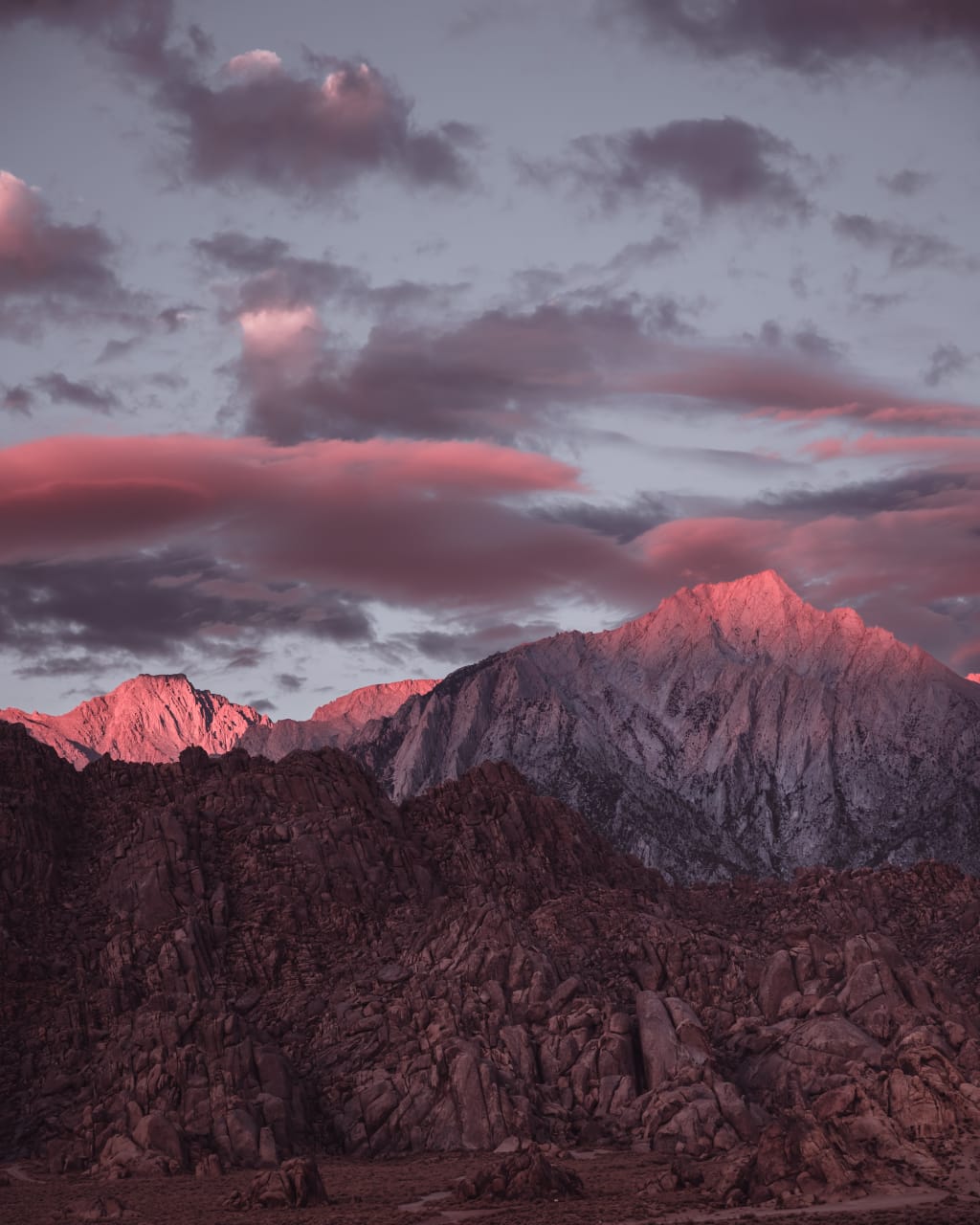
This is a sexy woman and someone who is destined to be on the road until she dies.
There is an indefinable real and vivid wildness in her.
She had been growing at will.
One day she was sitting in the corner of the big ice hut drinking. Everyone else was pinching small sticks of wind and snow, she clutched a large bottle of Tsingtao beer, barefoot and sitting on a card cushion with her legs in her arms. She doesn't chat much with people, just concentrates on drinking, drinking without making a sound, quietly is a bottle, quietly another bottle ...... she is like those women described by Gu Long, the more wine drank the brighter the eyes.
I introduced her to others: "This is my old friend Baima Yangzong, la bleach."
She turned her head sideways and asked with a smile, "Trash like floating people?"
I laughed harshly and sang to her, "Mike, you used to drift far away from life like a plastic bag in flight ......"
She showed me a nude photo she took on the Gobi beach. Red lips slightly open, black hair messy, pigeon-like wind slightly trembling breast - room, angular shoulder blades, rib roots visible, chin slightly raised, eyelashes cover the eyes, with a Tibetan-like calm face ...... she has a furious green plant tattoo, the whole person has a weird and sexy gothic beauty.
I said, "The photo is much prettier than in person, like a soon-to-be-married Ando girl." A Novel of the River of Sorrow
She was slightly drunk, her head buried in her knees rocking and singing: "...... Mike you come back to this city again, can you ever meet the old girl, with wildflowers on her head, wearing a dowry."
This is a sexy woman and one who is destined to walk the road until she dies. She is not a walker or a backpacker in the general sense, or a hobo "La Drift", she has an indefinable real and vivid wildness. Unlike those urban women who are stereotyped at the age of 27 or 28, she has been growing at will.
She was once listed among the authors of Lonely Planet, which describes her as follows in the author's profile: "Her years of living in Tibetan areas have made her look somewhat close to Tibetans, from her early aimless wandering to her current examination of Tibet and her inner world. Curiously, her wanderings have always seemed to be inseparable from sudden upheavals, and she has gradually discovered that her favorite travel destinations are not quiet and peaceful, but rather more crowded, heated, and chaotic, and therefore has a penchant for turbulent lives and perspectives, while at the same time paradoxically yearning for stability. She now works as a freelance writer and freelance photographer for human geography magazines, and prefers documentary photography to words, finding images easier to get to the heart than words."
I asked her, "Why didn't you use the nude photo as the author's image photo? The green flower on her body is so beautiful."
She said, "A flower? That is a green velvet artemisia, also known as snow ginseng, specializing in the treatment of various kinds of qi deficiency, edema, asthma, heart rhythm arrhythmia."
Reincarnation Wanderer
The last time we met, she had just finished walking the northern Sichuan-Tibet route again, writing a guide for a new edition of Lonely Planet.
Of the six routes into Tibet, the northern Sichuan-Tibet route is usually an area only considered by "Nth time Tibetan" travelers. But this area is far more scenic, unpredictable, and densely populated with religious and historical buildings than the popular and conventional southern route of Sichuan-Tibet. The golden barley fields of Ganzi in September, the yellow leaf-filled mountains of Dangling at the end of October, the heavy Benpo towns of Danba, and the solemn jungles of Yachting and Sedar ...... all make people startled and moved everywhere.
The northern route of the Sichuan-Tibet Khampa Tibetan area left me haunted, I have been convinced that my countless reincarnation in life had been in this old, sick and dead, or a mastiff with burnt teeth, or a leopard with snow-white teeth. The white horse Yangzong said she also has a similar feeling, she is convinced that she is in the next life as a blood red hero knot Khampa Han. I said, "By the time you are born, the Khampa people may no longer have this folklore in vogue.
She said, "Maybe our afterlife does not follow the vector of time in this world, and I may suddenly be reborn in the next life in the era of King Gesar, or maybe the name of some great general of the Ridge who was chanted thousands of years ago by the King Gesar raconteur is my next life... ..."
I like her sophistry. She has been immersed in Tibet for so many years that it is impossible for her not to understand the meaning of the six paths of reincarnation. But I like the circle she drew for me with her imagination.
The area of Dharma is Weizang, the area of horses is Amdo, and the area of humans is Khampa. Weifang is the headquarters of Tibet, attaching importance to Buddhism, and Amdo Tibet is a vast grassland where horses run, so it is called the horse area. "Khampa" is the ancient name of the Tubo people to the people of Khamtang, meaning "border people", similar to the ancient Central Plains people look at Lingnan.
A lot of mainlanders look at Tibet as a kind of child, but the northern route of Sichuan-Tibet is a school of its own in terms of customs and traditions, people's race, language, clothing, and folkways very different from the Tibetan headquarters. The difference is no less than the difference between the northern and southern parts of the Han Dynasty.
The Chinese have the basic civilization genome of the Chinese, while the Tibetans have the traditional cultural heritage of the Tibetan veins. The Tibetan culture is not as single-mode as some mainlanders understand, and Tantric Buddhism is now the dominant science, from which many people start to understand Tibet. However, it is not possible to focus on the vast amount of information about Tibetan culture as a whole from only one entry point of "religion". The humanistic accumulation of the northern route of Sichuan-Tibet alone is enough for a person to spend three lifetimes and three lives, but it is only a glimpse of the panther.
Some things do make people look up to them, and on this point of admiration for the "human region of Khampa", Baima Yangzong and I share the same emotional intensity, if not more so.
I have seen her lose her cool at a dinner party in Chengdu.
The Tibetans in Danba Mosca have a habit of feeding groundhogs, a spectacle that Baima Yangzong enjoyed so much that she brought back photos and videos to share with everyone. But someone said dismissively, "So-and-so who studies highland biology has said that groundhogs bring plague and are very dangerous." "The locals have been doing this for generations, and there has never been a plague!" Baima Yangzong said, "I asked, I went to investigate to find out, and nobody died of the plague." "But keeping groundhogs must be bad, groundhogs are the highest risk carriers of bubonic plague!" She flamed out, her face turning red, and lit several cigarettes. Finally, she burst into tears, crackling and falling. She wasn't a very pretty girl, but at that moment I thought she was sexy.
Khampa Tibetan men and women are the sexiest in the entire Tibetan region, but taking pictures of Khampa girls is not an easy task, in addition to asking for their consent, but also seeking the consent of the male members of her family. In contrast, it is much easier to take pictures of the Khampa men, who invariably stand in an imposing pose, with their feet apart and their eyes gleaming. In Lonely Planet, Baima Yangzong writes: "Their hair (hero's knot) and sutra turners are best not touched without permission. If you are a male tourist and a Khampa man takes your hand and walks down the street, it doesn't mean he is Gay, but an act of expressing intimacy between men." White Night Novel
I've been to Mosca Nature Reserve, and that was many years ago, as a backpacker. No one held my hand, but I was handed a small piece of raw beef, a small bloody piece, picked on the tip of a knife, turned upside down, and handed over. I didn't dare to eat it, but I couldn't swallow it even after chewing for ten minutes, blood dripping down the corners of my mouth. The kombucha man kindly reached out to help me wipe, with sandpaper-like rough hands and rubbed my jaw in raw pain.
Well, in addition to my father, that is the only one to help me wipe the mouth of a man.
When Baima Yangzong walked the northern route of Sichuan-Tibet, he wore a Khampa woman's hat to keep warm. It was not a good season to travel, and most of the time people were shaking in the car. The roads were icy, the climate was cold, the hotels were terrible, there was nothing to eat, and one had to endure all kinds of curiosity from the drivers when hitchhiking about such a young Han Chinese woman traveling alone. The driver of the big car in Derge had the cheek to verbally harass her, and the motorcyclist in Danba drove her halfway and then asked for more money.
She did not care about all of this, was angry with the Tibetan language cursed back, and was angry with a head a Sichuan foul language. Strangely enough, those tough Khampa men would invariably show fear of "Sichuan cursing", and then become restrained and respectful, like a child who had been reprimanded.
I imagined her in a rage, and without noticing, I visualized an angry Rakshasa woman descending from the sacred mountain of Murdo, wearing a Khampa woman's hat on her head, hiking shoes on her feet, and a padded Tibetan woman's robe on her body, opening her mouth to say: "You hammer ......". When I think about it, I can't help but laugh.
My favorite Ganbai Highway and Ganzi Temple are also her favorites. I talked to her about the Wuming Buddhist Institute, that holy place, and about the small wooden house built there by our mutual friend from Wuhan, Wufei. Fishless had promised me that I could take over the ownership of the cabin at any time for an advance payment of 100 yuan. I gave him the money in the heat of the moment but forgot to leave a note. A Novel of the Desert
The first time I saw him, I thought he was lying to you.
I said, "You're so smart ...... I thought I was the only one with fewer roots ......"
She told me about the Yachting Temple, the temple that sits on a river bank with tens of thousands of practitioners and red clothes floating everywhere. Pigeonhole-like short rooms were crowded to overflowing, and destitute practitioners covered the barren hills.
Baima Yangzong said, "Yacheng Monastery is another version of Seda Five Minds Buddhist Institute. Why don't you also give me a hundred yuan, and I'll help you buy a house next to Yacheng Monastery later."
I said, "Sister ...... it seems you are less root."
About the Creator
Lista Ream
I'm a photographer and I'm going to bring you my experience
Keep reading
More stories from Lista Ream and writers in Humans and other communities.
Magic wall protection
When Baima Yangzong came to Tibet, she had just graduated from university a year ago. At that time she did not have a tattoo, nor did she have the courage to stand naked in the north wind and take nude photos of herself. The first time I saw her, she had a pimple on her face and quit her job at a newspaper in Chongqing, and came to Lhasa with her diploma to interview for an internship, and no salary during the probationary period.
By Lista Ream3 years ago in Humans
Time to change your life.
Is it even possible for you to change your life? A lot of people, more than there should be, are unhappy with their lives. But what are they doing about it? Usually nothing. People talk about how shitty their lives are and want change, but are they not taking the actions to change?
By Jen Phillipsabout 23 hours ago in Humans



Comments
There are no comments for this story
Be the first to respond and start the conversation.