
Biology Race and Racism
Conceptualization of Race
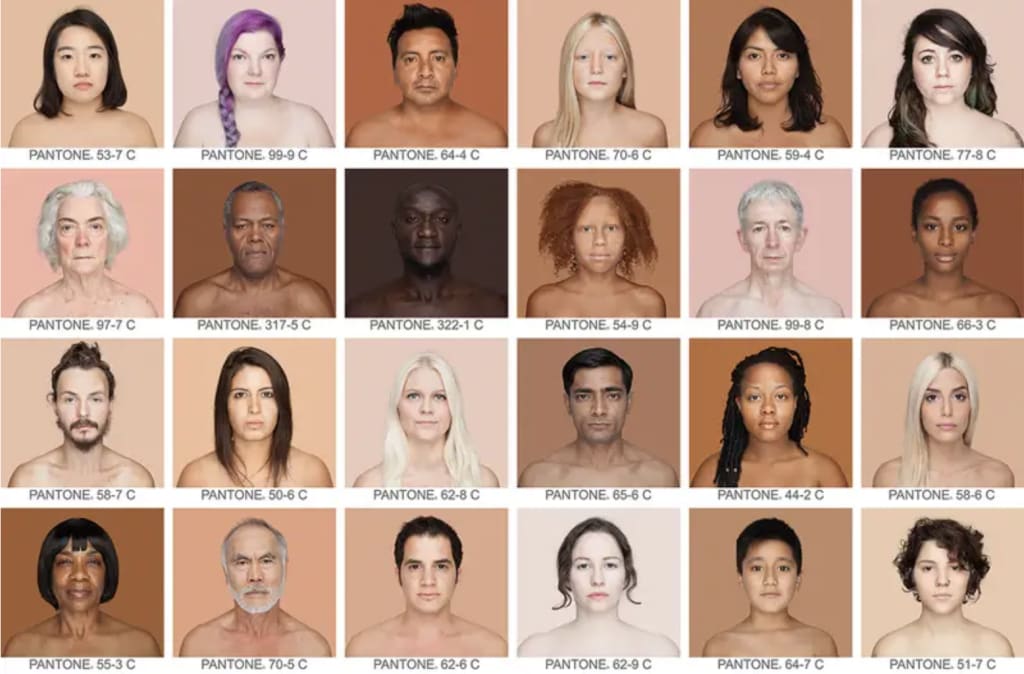
The study of genomes confirms an existing biological basis for the different races.
As per the Mixed Marrow Registry, a black person has a 23% chance while a white person has 77% of finding a matching donor (Halagan et al., 2018). The probability of the different races is determined by the population representation in the Mixed Marrow Registry.
Although there are 33 million registered donors, only 4% of the Blacks are registered as donors. The data depicts that people from a similar ethnic background have a high chance of matching their leukocyte antigens. Therefore, there is an existing biological basis for races due to the different genetic makeups of people.
The human race does have a biological basis from a genomes analysis. The complexity of human tissue depends on their ethnic background (Grupp et al., 2019). For this reason, the likelihood of a black person finding the right donor is due to the few registered blacks in the Mixed Marrow Registry. Notably, experts argue that blacks have rare genetic structures, making finding the appropriate donor difficult. As a result, it is easier for white people to get matched donors than for blacks.
Social sciences argue that human races do not have a biological basis. Humans belong to the same species with similar traits and morphological functions. Furthermore, the intellectual capacity and biological functions of humans are similar. As a result, they cannot be described as having different biological bases based on their races.
Summary of evidence
The human race does have a biological basis as per genomes analysis. HLA matching helps in determining the suitable donors for blood and marrow. In a family, a person has a 25% chance of getting a full or complete match (Grupp, et al., 2019). The unique traits portrayed by people's genomes narrow down their chances of getting another match outside their ethnic group. For this reason, advanced genetic analysis depicts that people have a biological basis that is distinct to their races.
The geographical locations of people attribute racial differences. Geography exposes people to different environments and develops unique genetic traits to adapt to different locations (Spencer, 2018). Furthermore, the difference in climate zones and natural factors enhances the biological basis of humans. Therefore, there is an existing difference between the human races based on the genomes.
Human races do not have a biological basis as per the scientific classification and social sciences. Contrary to genetic discovery, human beings have similar traits and biological functions despite their races (Lee et al., 2021). Besides, they have similar intelligence and metabolic functions, which helps define them into one group. Therefore, there is no biological basis for the human race.
Opinion
Based on the Mixed Marrow Registry, I opine that human races have a biological basis. 55% of the Latinos, 60% of Asian America, 75% of African America, and 75% of multi-racial do not have a matching donor. The decreasing probability of finding the right donor for the Blacks is due to the fewer volunteers from this race. Therefore, data depicts an existing difference in genetics for people from different races.
The Marrow Registry methods involve advocating for diversity in getting donors to help save lives. Finding the right match involves testing leukocyte antigens in the human body of the potential donors. Using the HLA, the Marrow Registry can help determine the matching donors for a patient. The goal of the Mixed Marrow Registry is to increase the probability of saving lives by increasing the percentage of finding a matching bone marrow.
Exploration of conceptual issues
Mixed Marrow Registry focuses on ethnicity and diversity in enhancing bone marrow donation. Genomes analysis depicts the distinctive differences in races and ethnicity. For this reason, getting all the people in society to donate bone marrow will decrease the risk of people succumbing to blood cancer (Halagan et al., 2018). Since people from the same family have a 25% chance of having similar HLA, the population from a similar ethnicity can benefit from the donations.
Mixed Marrow Registry focuses on saving lives through general public participation. Outlining statistical facts and data outlines the extent to which a given population is under-represented in the registry (Halagan et al., 2018). The organization calls for ethnic support to reduce the chance of a given race failing to find a matching bone marrow. Therefore, the organization focuses on responding to the effective strategies of ensuring an increasing system of dealing with the diverse impact of blood cancer.
Conclusion
In conclusion, the research accepts human races have a biological basis. From a genetic makeup perspective, the human races are distinct. For this reason, the probability of finding the right match is determined by ethnic background. The research further depicts that the adaptability of humans consequently affects the genetic makeup. Therefore, there is a need for more research on the extent to which there is an existing human race biological basis and how it affects their abilities in performance.
About the Creator
Amanda Marie Bremer
As a storyteller, my goal is to connect people interested in world events. I love to share my opinions and reviews on matters based on research as well as personal experience.
Keep reading
More stories from Amanda Marie Bremer and writers in Humans and other communities.
Shawshank Redemption
One of my favorite movies to watch when I'm feeling dejected and despondent would have to be Shawshank Redemption. This movie always somehow reminds me that even on my worst days, there's always tomorrow. If there's always a tomorrow, there's always a chance that tomorrow will be better than the day before, and even if it's not - there's hope that one day it will be.
By Amanda Marie Bremer4 years ago in Geeks
5 Things to Know About Intensive Outpatient Care and How It Works
Intensive outpatient care has become an important treatment option for individuals seeking support for substance use or mental health challenges without entering residential treatment. This level of care offers structured therapy while allowing people to maintain daily responsibilities such as work, school, and family life.
By Jordan Blakea day ago in Humans



Comments
There are no comments for this story
Be the first to respond and start the conversation.