
Beyond the Fence
How a Simple Hello Built a Lifelong Bond

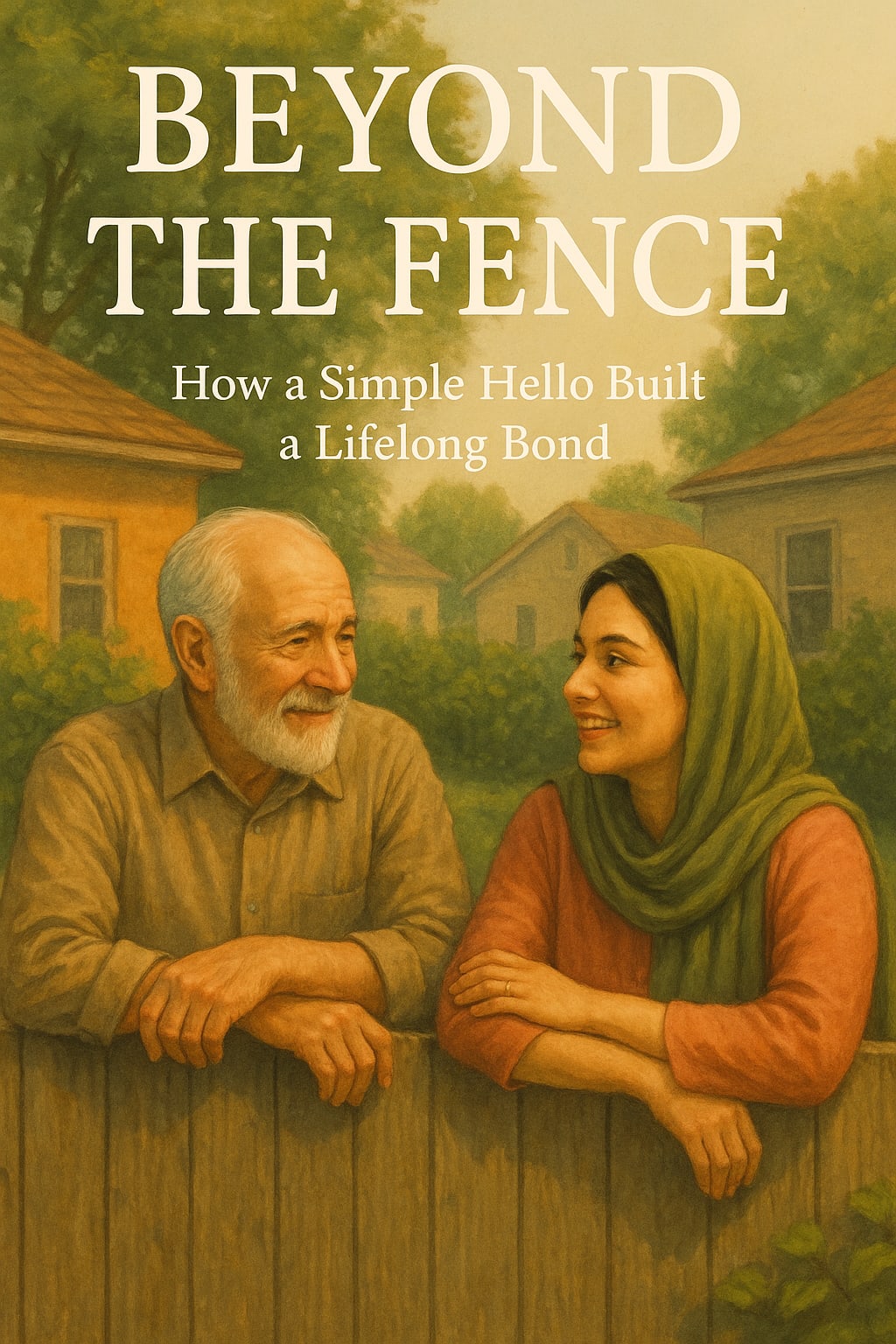
In the quiet lane of Jasmine Street, life moved slowly. Mornings were marked by the sound of roosters and the smell of fresh parathas. Children rode their bikes in lazy circles, dogs barked at squirrels, and old men read newspapers under the shade of neem trees. Among the many houses lined up side by side, two stood quietly next to each other—House No. 5 and House No. 6.
House No. 5 belonged to Mr. Rahman, a retired postmaster in his seventies. He lived alone after his wife passed away three years ago. His days were simple: morning tea, gardening, and watching the world from his porch.
House No. 6 was rented out to a young family—the Khans—who had just moved in from another city. Arif Khan, his wife Nida, and their five-year-old daughter Aisha brought with them a sense of quiet curiosity, not quite sure how to blend into their new neighborhood.
At first, there was only polite nodding between Mr. Rahman and the Khans. A wave across the fence, a “salaam” in passing. But the fence between them, low and painted white, remained a symbolic barrier.
One afternoon, the silence was broken—not by words, but by a cricket ball.
Aisha’s giggling broke through the calm as her tennis ball flew over the fence and landed in Mr. Rahman’s prized rose bed. The old man picked it up, inspected the flattened flowers, and sighed. But instead of anger, he walked over to the fence and called gently, “Whose ball is this?”
Aisha peeked shyly. “Mine… sorry, uncle.”
Mr. Rahman smiled, his eyes softening. “Roses forgive, and so do I. Just try not to aim for my garden next time.”
From that moment, the wall began to melt.
The next day, Nida sent over a small box of homemade biryani to apologize properly. Mr. Rahman returned the gesture the following week with a plate of his famous almond halwa. Conversations started blooming like spring flowers.
Arif, who worked long hours, often worried about leaving Nida and Aisha alone. But over time, he realized Mr. Rahman’s presence next door was a quiet reassurance. The old man often watched over the gate, greeted Aisha with candy, and shared gardening tips with Nida, who had started planting tulips along the fence.
When summer came, Jasmine Street suffered a long power cut one evening. With no electricity and stifling heat, the neighbors spilled out of their houses onto the lane. Mr. Rahman brought out old lanterns. Arif brought cold drinks. Children played hide and seek in the moonlight. Laughter echoed. That night, the people of Jasmine Street realized that neighborliness wasn’t old-fashioned—it was essential.
Later in the year, when Mr. Rahman fell ill with a chest infection, it was Nida who noticed first. She brought soup every day. Arif arranged for a doctor. Aisha, in her tiny handwriting, made him get-well cards. Mr. Rahman, once used to solitude, now felt surrounded by family.
During Eid, the two households celebrated together. Arif and Mr. Rahman offered prayer side by side. Aisha helped decorate both houses with fairy lights. Nida and Mr. Rahman debated over the best kind of sheer khurma.
It was no longer about two houses with a fence. It was a shared life.
Years passed. Aisha grew taller. Mr. Rahman grew slower. But the friendship between the two homes never faded.
One evening, as Aisha sat on the porch doing her homework, she asked her mother, “Mama, is Uncle Rahman our family?”
Nida smiled, brushing her daughter’s hair back. “Family doesn’t always mean blood, beta. Sometimes, it just means being there.”
---
In the end, the street didn’t remember how many years the Rahmans or the Khans had lived there. They remembered the kindness, the shared meals, the cricket ball, the laughter during a blackout, and the deep bond between neighbors who became more than friends.
They became family—beyond the fence.
About the Creator
Raza Ullah
Raza Ullah writes heartfelt stories about family, education, history, and human values. His work reflects real-life struggles, love, and culture—aiming to inspire, teach, and connect people through meaningful storytelling.
Keep reading
More stories from Raza Ullah and writers in Humans and other communities.
Whispers of the Wild: A Journey Through Nature's Heart
Saira had lived in the city her whole life. The sounds of traffic, the blinding neon signs, and the rush of daily life had become normal to her. But somewhere deep inside, she felt a longing — a quiet hunger for something calmer, something real.
By Raza Ullah7 months ago in Humans
Autonomy Is The Real Privilege
Good morning, freedom-seekers! Today we’re gonna be looking at autonomy. A strange word, I know; one many would probably look at blankly and run away from on sight. We’re gonna figure out what it actually means, consider how it’s achieved, and decipher just how deeply most of us are tangled up in dependence without realising it.
By That ‘Freedom’ Guya day ago in Humans
Today, Tomorrow
I had a moment recently where I contemplated what is even genuine anymore in the digital space. Humans were bound to be predictable in our unethical use of AI, I cannot think of any popular user generated platform online that has not been exploited or oversaturated in one way or another. Money, power and dominance are the pillars of society, so it is no surprise the rapid development of AI coincides with the human condition.
By Malachai Hough3 days ago in Humans




Comments (1)
Neighbor.