
Between Two Worlds: Why the West Isn't Always Winning, and Why the Rest Isn't Always Losing.
A conversation about privilege, struggle, and the things we forget to value

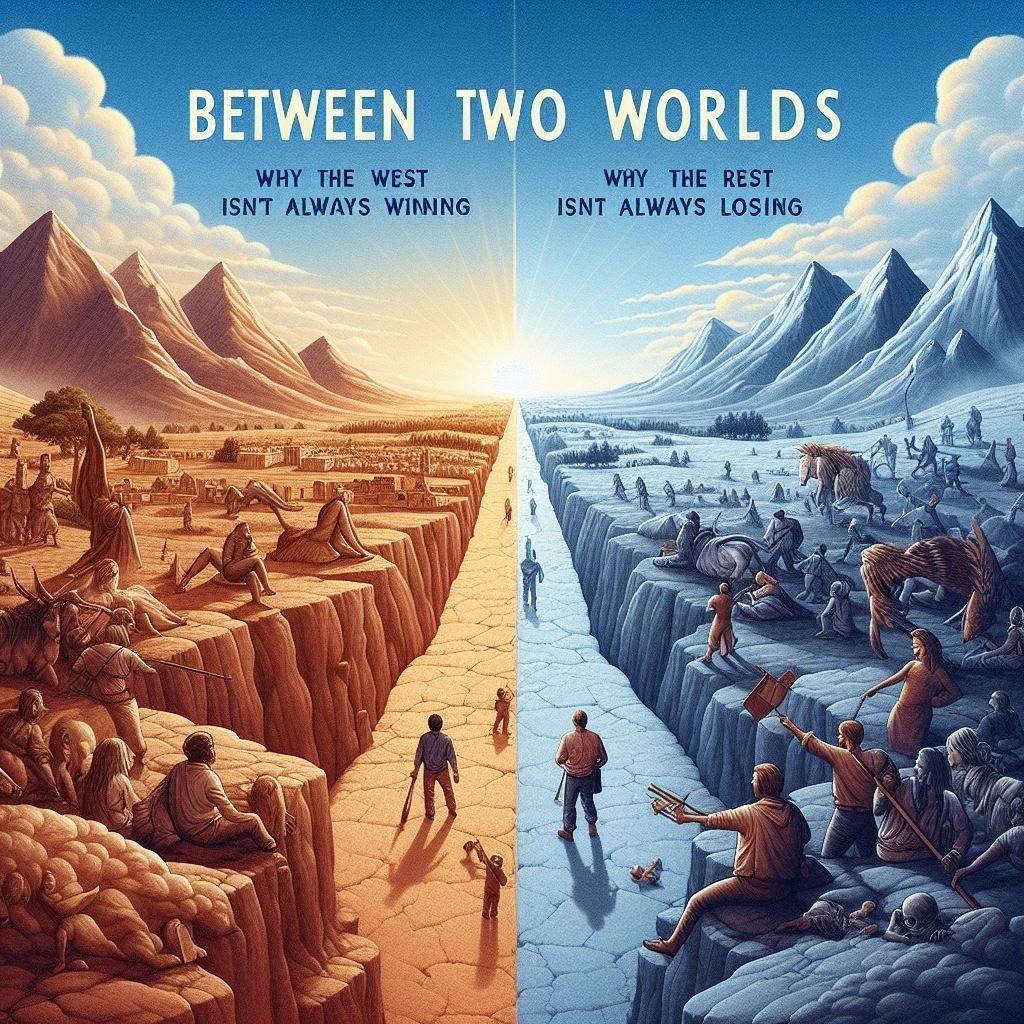
Let’s be real. The way we live in different parts of the world isn’t just about borders or bank accounts — it’s about how we see life, how we connect with each other, and what we think counts as "a good life."
If you live in the West — the US, UK, Canada, Australia, and places like that — you probably don’t spend a lot of time thinking about how different life is elsewhere. Things like stable electricity, clean water, fast internet, and even online shopping feel normal. You can book a doctor’s appointment, stream your favorite show, or have dinner delivered without a second thought.
But that kind of ease isn’t everyone’s reality.
In many developing countries, people are facing daily challenges that go way beyond inconvenience. Basic needs aren’t always guaranteed. Jobs are hard to come by. Infrastructure can be unreliable. And yet — and this is the part many people miss — there’s something deeply human that still exists in those places. People see each other. They show up for their families. They share meals, stories, and space. Strangers help each other. There’s still a heartbeat of community that, in many Western places, is starting to fade.
And this goes both ways.
A lot of people in developing countries (and many in the diaspora) look at the West and see what they don’t have: wealth, stability, access. And it’s true — those things can change lives. But what often gets missed is the cost of that comfort. In chasing independence and efficiency, many Western societies have lost touch with something essential: deep connection.
People are often lonely. Neighbors rarely speak. Families are spread out, and time together feels like a luxury. Depression, anxiety, and burnout are common — even among those who “have it all.” Success is individual. Privacy is prized. But at what price?
So here’s the thing: we don’t need to feel guilty for having comfort. And we shouldn’t romanticize struggle either. But we can hold space for both truths. People in the West can recognize the power of community that still lives in other parts of the world. And people in developing countries can stop assuming that a Western life is automatically a better life.
Because “better” is complicated.
Having money is helpful. But so is having people. Living in a safe city matters. But so does being surrounded by those who care if you’re okay. The truth is, each place has its own kind of wealth — and its own kind of poverty. We just don’t always see it.
That’s why empathy matters. It’s not about who has it harder or who should be more grateful. It’s about understanding that we all have different struggles — and different strengths. And if we could learn to listen more, post less, and assume less, maybe we’d build better bridges between our worlds.
So if you’re living in the West, think before you show off what you have. You might not mean to, but it can sting for someone still fighting to meet their basic needs. And if you’re living in a developing country or come from one, remember — you carry things the West has forgotten. Things money can’t buy.
In the end, none of us are above or below each other. We’re just living different versions of human life. And maybe the most powerful thing we can do is not compare — but connect.
Let’s hold space for both privilege and pain. Let’s remember that having more doesn’t always mean living better, and having less doesn’t mean there’s nothing to offer. When we choose to see each other fully — not through pity or pride, but through empathy — we begin to heal the distance between our worlds. And that kind of understanding? That’s what makes us truly human.
About the Creator
Cathy (Christine Acheini) Ben-Ameh.
https://linktr.ee/cathybenameh
Passionate blogger sharing insights on lifestyle, music and personal growth.
⭐Shortlisted on The Creative Future Writers Awards 2025.
Keep reading
More stories from Cathy (Christine Acheini) Ben-Ameh. and writers in Humans and other communities.
Provision Is Not a Privilege: Why I Refuse to Build With a Broke Man.
For centuries, across cultures, continents, and civilizations, one truth has remained constant: women are wired to be cared for, protected, and provided for. It is neither entitlement nor arrogance; it is nature. It is the very design of balance between the masculine and the feminine.
By Cathy (Christine Acheini) Ben-Ameh.9 months ago in Humans




Comments (2)
This is a very beautiful image and a fantastic story.
Wise lessons here Cathy. Well said.