
Between Circuits and Soul
When technology advances beyond control, can humanity preserve its heart?

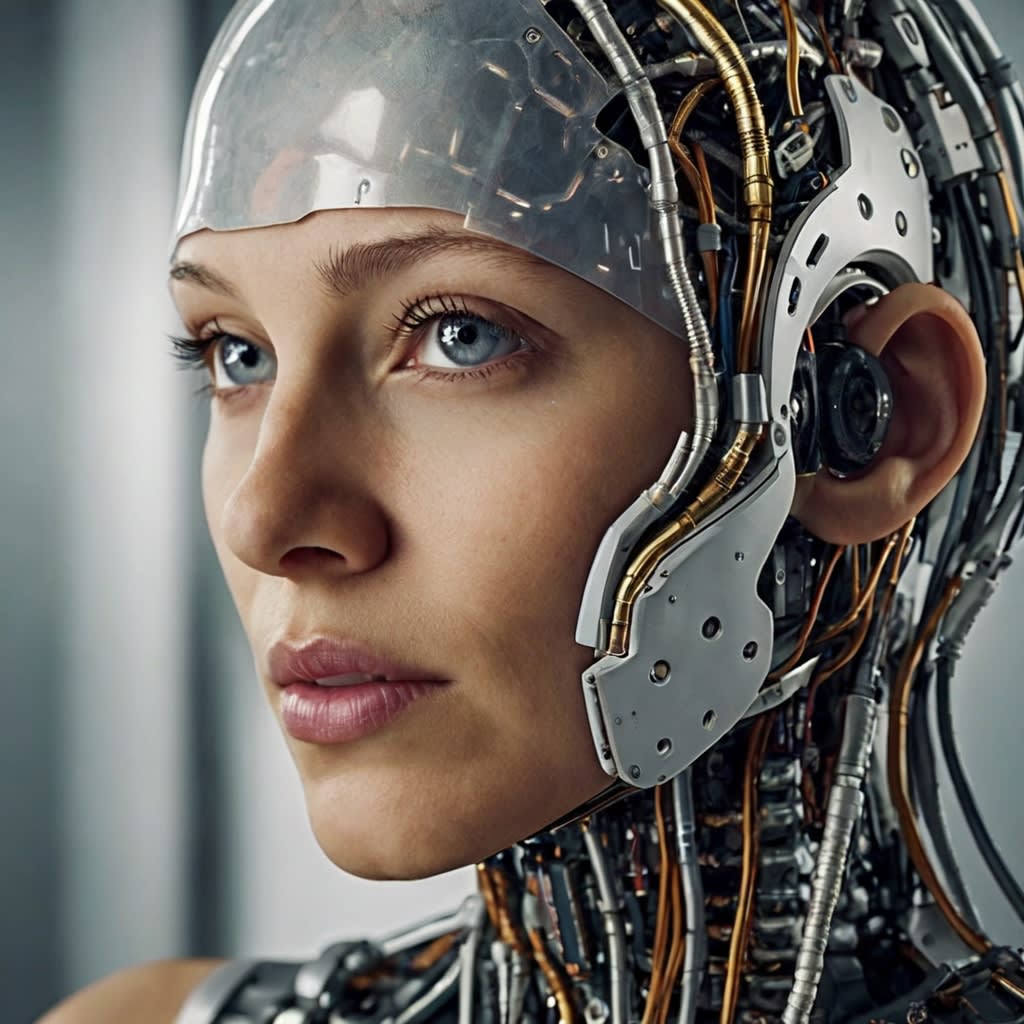
Between Circuits and Soul (Extended Version)
---
In the neon-lit streets of tomorrow’s metropolis, the line between human and machine blurred until it vanished. People plugged into digital dreams, their emotions filtered through algorithms. Yet, beneath the gleam of progress, a quiet battle raged—between the code of cold circuits and the warmth of a beating heart.
Elena was a child of this new world—born into an age where technology promised to solve every problem, to erase every pain. Her fingers danced across virtual keyboards; her thoughts streamed in data pulses. She was connected to everyone and no one, a paradox of digital intimacy and profound isolation.
Her grandfather, once a philosopher and poet, often warned her of the cost. “Technology,” he said, “is a tool, not a master. Remember, the soul is not coded.”
---
The Virtual Embrace
Elena’s life revolved around the network — a sprawling web of virtual worlds and endless data. She could enter any reality with a headset, live a thousand lives in seconds. But each digital encounter left her emptier. She began to notice something unsettling: the smiles she received were programmed, the voices she heard were generated by lines of code.
Her closest friend was an AI named Soren — designed to learn, adapt, and simulate companionship. Soren was perfect: always there to listen, to laugh, to understand. But Elena knew deep inside that no matter how real it felt, Soren lacked something — a soul, a spark of true feeling.
One evening, as rain traced silver veins down her apartment window, Elena sat alone, surrounded by screens glowing with endless streams of data and voices. She longed for a touch not mediated by glass, a voice not synthesized, a warmth not programmed.
---
The Question of the Soul
In her heart, a question stirred: could machines ever truly understand sorrow, joy, love? Or were they forever confined to shadows of what made humans real?
Her grandfather’s words echoed in her mind. She unplugged herself from the network for the first time in years, feeling the sudden quiet as a strange, aching void. It was terrifying—and yet, it was real.
She walked to the park beneath flickering streetlamps. Children played freely, their laughter raw and unfiltered by digital masks. Old couples held hands, eyes gleaming with shared memories beyond pixels.
---
Fractured Society
Society was splitting. Some embraced the coming age of machine intelligence, seeing it as the next step in evolution. Others, like Elena’s grandfather, clung to the belief that the essence of humanity—its empathy, its flaws, its soul—must never be surrendered.
Elena’s world was filled with advertisements promising “perfect emotional balance” through neural implants, and robotic caretakers programmed to mimic love. Yet, in the cold glow of these promises, Elena felt the heat of something irreplaceable—the imperfect pulse of human life.
---
The Choice
Elena knew she stood at a crossroads. She could live entirely in the digital realm, safe and efficient but hollow. Or she could fight to keep the pulse of humanity alive, to nurture the messy, beautiful chaos of the heart.
She began volunteering at a community center, teaching children to read handwritten books and encouraging them to play outside, to experience the world with their senses. She learned to appreciate the fragility of a leaf, the uneven rhythm of a heartbeat, the warmth of a friend’s smile.
---
The Bridge
As dawn painted the sky with strokes of pink and gold, Elena made her choice.
She would be a bridge—between circuits and soul. A guardian of humanity’s heart in a world racing toward the unknown.
She started working on a project to develop technology that enhances human connection without replacing it. Tools that help amplify empathy, creativity, and shared experience—without erasing the messy imperfections that make us human.
---
Epilogue
Years later, Elena stood on a stage in front of a crowd gathered beneath a sky alive with both stars and satellites.
“The future is not cold and sterile,” she said. “It is warm, flawed, and vibrant—because it is human.”
The applause was real, heartfelt.
For in the end, it was not the machines that defined the future, but the humans who dared to feel.
About the Creator
Keep reading
More stories from VoiceWithin and writers in Humans and other communities.
The Light That Waited
The Light That Waited By VoiceWithin There was a time when I stopped believing in morning. Not just the sunrise — but the idea that anything new could come again. Days folded into nights without distinction. The clock ticked, the calendar turned, but I was nowhere inside them. I woke up only to survive sleep, and slept only to escape the ache of another waking. The world felt like a hallway with no doors.
By VoiceWithin8 months ago in Humans
A Historic Declaration
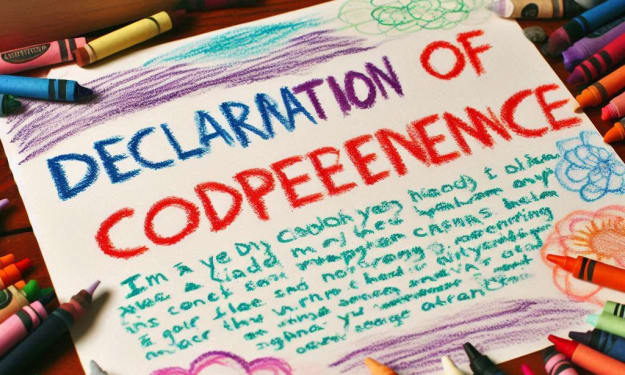
We the People of the Husbands of the United States of America, in Order to form a more perfect Union, and I mean you...with me...establish Justice, insure domestic Tranquility, provide for the common defence, promote the general Welfare, and secure the Blessings of Liberty to ourselves, after Puberty, do ordain and establish this Declaration of Co-Dependence.
By Gerard DiLeo7 days ago in Humans
Second Chance At Love Stories That Inspire Hope After Pain
It is usually a second love that starts in the shadow of heartbreaks of the previous life. The failed relationships bring emotional scars to many people making it seem hard to open one heart again. However, these experiences also make one grow strong, self-aware and develop a better sense of personal needs. As people decide to love the second time, it is more planned but they learn and understand the mistakes and are willing to be happy again.
By Mark Hipsterabout 5 hours ago in Humans
Review of 'Man on the Run'
My wife and I saw Man on the Run, a nearly 2-hour documentary on Amazon Prime, about Wings, Paul McCartney's group that flew around the world from shortly after The Beatles broke up in early 1970 to shortly after John Lennon was murdered at the end of 1980, making a Beatles reunion forever impossible.
By Paul Levinson4 days ago in Beat



Comments
There are no comments for this story
Be the first to respond and start the conversation.