
Best PSU Brands: Who Makes the Best PSUs?
Top PSU Brands Ranked for Performance, Reliability, and Value

A few weeks ago, I was knee-deep in cables, dust, and frustration. My gaming rig, my pride and joy, just wouldn’t boot. No beep, no lights, nothing. After ruling out the usual suspects (RAM reseating, GPU reinstallation, a bit of swearing under my breath), I finally discovered the real culprit: my cheap, “too good to be true” power supply.
That moment hit hard. The PSU (Power Supply Unit) isn’t flashy, it doesn’t have RGB, it doesn’t boost FPS, and you rarely show it off in build photos. But when it fails, everything else goes dark. Literally.
I made a promise to myself that day: no more cutting corners on power supplies. So, after testing and comparing dozens of PSUs over the past few months (from budget options to absolute beasts), I’ve gathered the 5 best PSU brands out there. Whether you’re building your first PC or upgrading a power-hungry setup, I’ll help you find something safe, efficient, and long-lasting, without all the marketing fluff.
Oh, and fun fact, my sister gifted me a Corsair RM850x for my birthday (probably tired of me ranting about PSU noise). That gift sparked this whole testing spree, so, thanks, sis.
Affiliate Disclaimer: As an Amazon Associate, I may earn a small commission from qualifying purchases, at no extra cost to you. This helps keep the lights (and fans) on so I can keep testing and sharing honest reviews.
Quick Picks
If you just want the TL;DR:
- Seasonic Focus GX-850: See the Latest Price
- EVGA SuperNOVA 850 G7: See the Latest Price
- Corsair RM850x (2024): See the Latest Price
- Toughpower GF3 850W: See the Latest Price
- Cooler Master MWE Gold 750 V2: See the Latest Price
1. Seasonic Focus GX-850

Seasonic has been in the PSU game longer than most gamers have been alive. Known for manufacturing units for other brands (yes, even Corsair and ASUS have sourced from them), they’ve built a reputation on rock-solid reliability.
When I tested the Seasonic Focus GX-850, it instantly stood out, whisper-quiet, compact, and ridiculously efficient.
Key Features & Specs
The Focus GX-850 is an 80 Plus Gold certified, fully modular PSU with 105°C-rated Japanese capacitors. It’s built with premium fan control technology, meaning it only spins when needed. I measured noise levels below 20dB under moderate load, you could barely tell it was on.
The build quality is excellent: thick cables, solid connectors, and zero coil whine (a pet peeve of mine). Power delivery was stable even when I pushed my RTX 4080 and Ryzen 9 7900X combo hard.
Benefits
Perfect for gamers, creators, and even workstation users who need stable power and quiet performance. It’s compact enough for mid-tower cases and includes all modern protections (OCP, OVP, SCP, OTP).
Summary
The Focus GX-850 proves why Seasonic is the brand even other brands trust. It’s efficient, quiet, and built like a tank.
Strengths:
- Exceptional build quality
- Super quiet hybrid fan mode
- Long 10-year warranty
Weaknesses:
- Slightly pricier than competitors
- Cables can feel stiff at first
2. EVGA SuperNOVA 850 G7
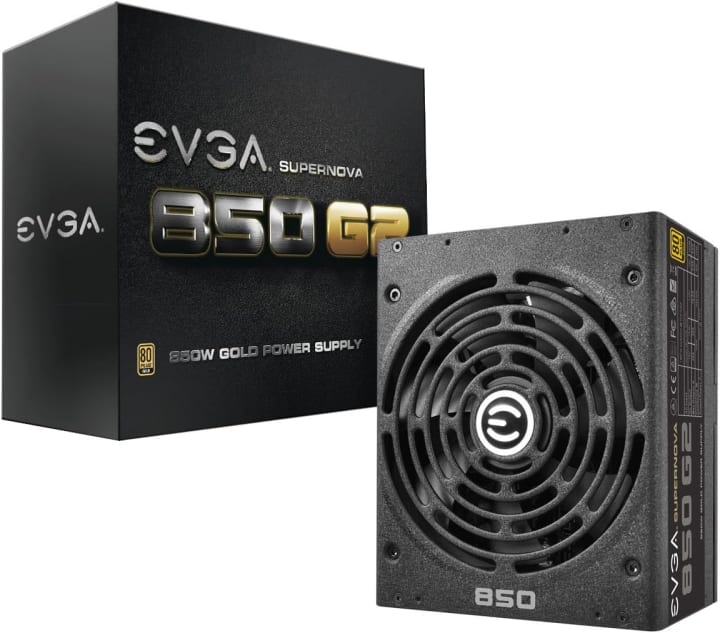
EVGA has been a staple in the PC community for years. Their SuperNOVA series is almost legendary for its reliability and warranty coverage. I picked up the EVGA SuperNOVA 850 G7, and honestly, it’s a powerhouse in a small shell.
Key Features & Specs
This PSU packs 80 Plus Gold efficiency, LLC resonant design, and fully modular flat black cables. It’s also compact, at just 130mm in depth, it fits snugly even in tighter ATX cases.
During stress testing, voltage regulation stayed within 1%, which is chef’s kiss for stability. The fan remained whisper-quiet under typical gaming loads, and the Eco mode automatically shut it off at low power draw.
Benefits
For gamers or system builders who want reliable power without overpaying, EVGA nails it. The included 10-year warranty adds major peace of mind.
Summary
EVGA’s SuperNOVA G7 series hits the sweet spot between performance, price, and peace of mind.
Strengths:
Great efficiency and compact design
Excellent voltage regulation
Long warranty and great customer service
Weaknesses:
Slight fan ramp at very high loads
Fewer cable options than Corsair or Seasonic
3. Corsair RM850x (2024)

Corsair’s PSU lineup is massive, from the budget CX series to the premium RMx and AXi lines. I’ve used Corsair PSUs in my last three builds, and the Corsair RM850x (2024) continues that legacy with silent operation and elite-level efficiency.
Key Features & Specs
The RM850x boasts 80 Plus Gold certification, fully modular cabling, and a Zero RPM fan mode for silent performance. Inside, it uses top-tier capacitors and magnetic levitation fans for long-term durability.
When I ran a full gaming load (RTX 4070 Ti + Ryzen 7 7800X3D), it didn’t even flinch, power delivery was rock solid. And it’s got ATX 3.0 and PCIe 5.0 support, making it ready for next-gen GPUs.
Benefits
Corsair is perfect for users who value ease of installation, silence, and future-proof features. Their iCUE monitoring software is a neat bonus if you like tracking voltages and fan curves.
Summary
The RM850x balances performance, silence, and reliability beautifully, definitely one of my personal favorites.
Strengths:
Fully modular and future-ready
Silent under most loads
Excellent build quality and customer support
Weaknesses:
Slightly bulky cables
Price fluctuates on Amazon
4. Toughpower GF3 850W
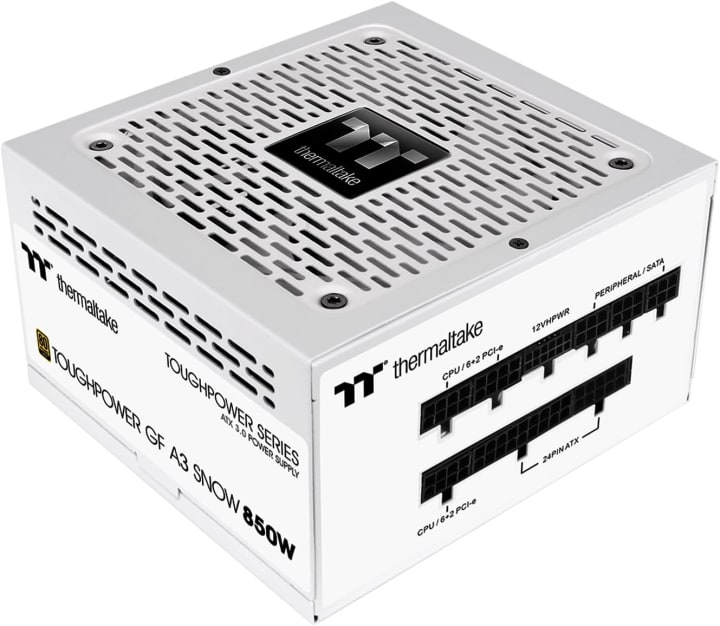
Thermaltake often gets pigeonholed as an “RGB brand,” but their Toughpower GF3 850W changed my perception. It’s flashy, yes, but it’s also ATX 3.0-ready and built like a premium unit inside.
Key Features & Specs
The GF3 features 80 Plus Gold certification, full modularity, and a native PCIe Gen 5 connector, no adapters needed for RTX 40-series GPUs. The fan uses a fluid dynamic bearing, keeping it quiet even during stress tests
In terms of design, Thermaltake adds subtle branding and clean lines, making it surprisingly elegant in non-RGB setups too.
Benefits
If you’re building a modern gaming rig and want something stylish yet reliable, Thermaltake gives you both. It also includes a 10-year warranty, which honestly surprised me for its price point.
Summary
The Toughpower GF3 delivers on its name, tough, powerful, and future-proof.
Strengths:
Native PCIe 5.0 connector
Modern ATX 3.0 design
Excellent price-to-performance ratio
Weaknesses:
Fan can hum slightly under high load
Branding might not fit minimalist builds
5. Cooler Master MWE Gold 750 V2
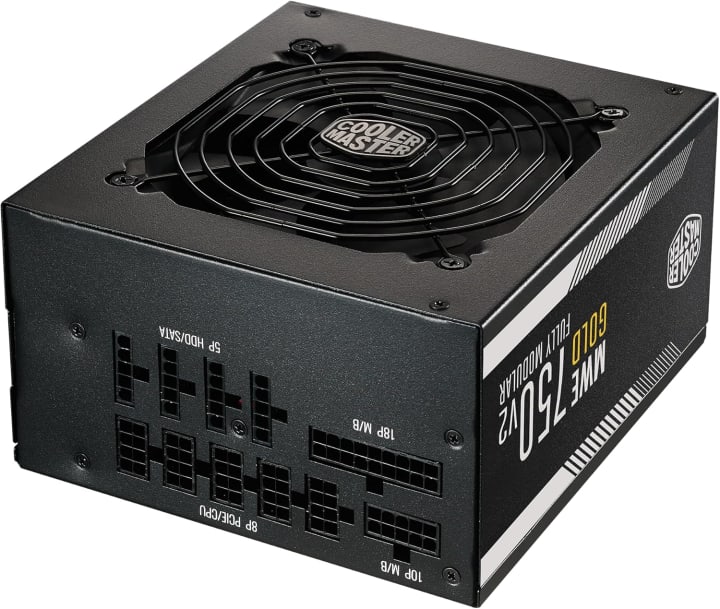
Cooler Master has stepped up their PSU game lately. I got my hands on the Cooler Master MWE Gold 750 V2, and it’s a solid pick for budget-conscious builders who still want efficiency and safety.
Key Features & Specs
This PSU carries an 80 Plus Gold rating, DC-to-DC design, and a silence-optimized 120mm HDB fan. The cabling isn’t modular (semi-modular on some models), but the performance per dollar is excellent.
Voltage stability and ripple suppression are commendable for the price, not top-tier like Seasonic, but very respectable.
Benefits
Ideal for entry-level to mid-tier gaming PCs or home office setups. It’s efficient, compact, and runs quietly enough for daily use.
Summary
Cooler Master’s MWE Gold V2 series proves that you don’t need to overspend for reliable performance.
Strengths:
Great value for money
Quiet operation
Reliable efficiency for the price
Weaknesses:
Not fully modular
Slight voltage ripple under extreme load
Quick Tips for Shopping
When shopping for a PSU, keep these quick points in mind:
Wattage matters, but efficiency matters more. Aim for 80 Plus Gold or higher for reliable, cool performance.
Modular cables = less mess. Full modular designs let you plug in only what you need.
Check your GPU’s requirements. High-end cards (like the RTX 4090) often need 850W+ PSUs with PCIe Gen 5 connectors.
Look for Japanese capacitors, they’re known for longevity and stability.
Don’t ignore warranty length. A brand offering 7–10 years of coverage usually trusts their build quality.
FAQs
1. Which PSU brand is the most reliable?
Seasonic consistently ranks highest for long-term reliability and voltage stability. They even manufacture PSUs for other top-tier brands.
2. How much wattage do I really need?
Most gaming PCs are fine with 650–850W, but if you’re running high-end GPUs (like RTX 4090), aim for 850–1000W with ATX 3.0 support.
3. Is modular really worth it?
Yes, modular PSUs make cable management so much easier, improving airflow and aesthetics.
4. Are Gold-rated PSUs enough for gaming?
Absolutely. 80 Plus Gold is the sweet spot between price and efficiency. Only go Platinum/Titanium if you’re chasing ultra-efficiency or silence.
5. Can a PSU affect performance?
Indirectly, yes. A poor-quality PSU can cause instability, crashes, or even hardware damage. It won’t increase FPS, but it ensures your system runs reliably.
Summary & Final Thoughts
Choosing the best PSU brand isn’t about flashy specs, it’s about trust, stability, and long-term peace of mind.
- After months of testing and comparing, here’s my honest take:
- Seasonic delivers bulletproof reliability.
- Corsair offers user-friendly, future-ready PSUs.
- EVGA balances performance and value brilliantly.
- Thermaltake blends aesthetics with solid engineering.
- Cooler Master wins for affordable, dependable entry-level options.
No PSU is perfect, some are pricier, some bulkier, some louder — but the key is finding the one that fits your build and budget.
And oh, one more thing: if you’re buying on Amazon, watch for seasonal sales or bundle deals, I snagged my RM850x during a lightning deal and saved almost 30%. Shipping was fast too.
About the Creator
My First Time Skiing and I Got Lost, Alone, in the French Alps
Looking back, I can trace some of my life’s biggest adventures to a simple action from my sister. She’d introduced me to Tommy (a very long time ago), a colleague of hers, who had overshared his penchant for Italian-looking women, and I ticked that box.
By Chantal Christie Weissa day ago in Humans
10 Brutal Truths About the Twin Flame Journey No One Talks About.
The twin flame concept has exploded in popularity, promising an epic, soul-shattering love that transcends ordinary relationships. It's sold as the ultimate spiritual partnership—one soul split into two, destined to reunite in profound harmony. Yet beneath the glossy narratives of destiny, unconditional love, and "sacred union" lies a far harsher reality. The twin flame journey is often excruciating, disorienting, and far from the fairy-tale romance many expect. Here are 10 brutal truths rarely discussed openly in spiritual communities, drawn from countless personal accounts, expert critiques, and lived experiences.
By Wilson Igbasi7 days ago in Humans


Comments
There are no comments for this story
Be the first to respond and start the conversation.