
Benesogno
Massimo hosts a dinner party to reveal something only two strangers can counsel him on.
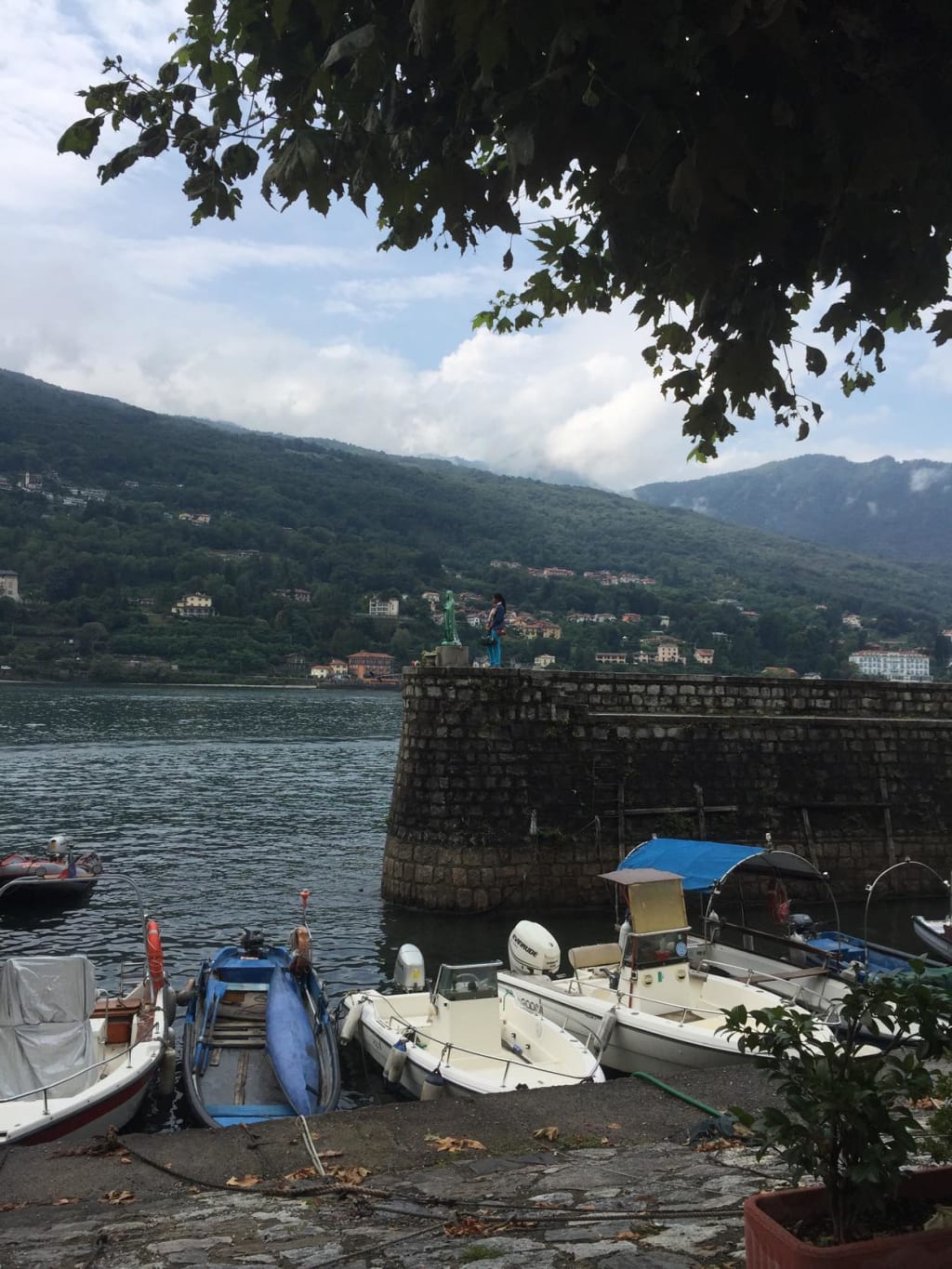
Layers of summer piled thick on the bay of Benesogno. Even the serenity upheld by the old and their riches felt strained, and Carlotta Siffredi was neither old nor rich.
On her sunset walk, Carlotta scarcely passed a face she did not know. She would dream up the vivid lives that lay behind the eyes of strangers, and felt starved when she could not pin her stories to people. At nearly thirty years old and cursed by routine, she feared regressing under the chronic familiarity of everything around her.
When a man swimming between the shore and a jetty caught her attention, she presumed he was a figment, for his dark head merged with the waves that turned to ink as the night fell.
Over the coming days she watched out for him to prove to herself that he was real: lean from youth, browned by the sun. Where he came from and what he wanted were questions with answers he hid between long, lonesome swims and broody walks on the beach.
Carlotta saw many stories etched into the rust of his van that rested on the cobbles beside the bungalow of Lorenzo Lombardo — the town stationer. As a child she had always likened the property’s perch on the ridge as the best box seat at the theatre: the sea, an endless stage, the town below filling the stalls eager to watch.
At her job between the cool walls of the postal office, Carlotta asked patrons what they made of the man within guised small talk. Her happy spies reckoned his accent was ‘an aria from the South:’ one had overheard his transaction with the grocer, giving away his taste for bonarda, orzo, and stuffed peppers.
‘Why do people come here for solace? Do they not see the other footprints in the sand tracking their every move?’ Carlotta said, spieling to her family over the dinner table.
Her father smirked, his hooded gaze unfocused.
The next day, Lorenzo Lombardo came to ship his orders. The predictably neat stack of cushioned envelopes placed on the counter were filled with his signature black leather notebooks. Carlotta usually pored over the addresses shipped out across the world. That day she wasted no time.
‘Who’s this mooch you have in your rental Lorenzo?’
Lorenzo’s olive eyes fell into slits, before his old face creased up in delight.
‘You like the look of Massimo, huh?’
‘No, not that...’ she said, holding her poker face steady, ‘just a bored postwoman too curious for her own good.’
Lorenzo slapped his palms on the counter, shocking them both. A lightning strike of an idea.
‘Why spy Signorina?! Join us tonight. He invited me to dinner,’ Lorenzo said, his thrill fading to a whisper, the novelty of the meal too pleasing and prided to be offered up as town gossip.
Carlotta felt seized by his stare. She tried to laugh before retreating to the mail bags. Inside she panicked.
Deaf to her protests, Lorenzo retreated to the door empty-handed, save for his anticipation for the meal ahead.
At eight, Lorenzo met her at the bottom of the ridge and peered up at her dewy face framed by the sun’s encore. He handed her a basket of antipasti covered in doilies to carry, whilst a bottle rested in the crook of his blazered arm. They ascended at a set pace for his seniority and basked in the musk and silence, leaving Carlotta’s mind to whir untethered.
Lorenzo marched through the unlocked door without knocking, and motioned for a fidgety Carlotta to follow. They were greeted by the offerings of their host in his absence: gentle smells danced for them, a table lay inviting three. After placing their wares down, taking off their coats and holding them idly, the veranda door ricketed.
Massimo thumbed herbs in his palm, only looking up after he ducked under the threshold. Surprise stamped his face before he strode over to make spirited handshakes pulled into cheek kisses.
‘Meet my good friend Carlotta Siffredi,’ motioned Lorenzo, ‘she has been looking forward to welcoming you to Benesogno.’ He cocked his head as if toiled by the inflated size of it.
Carlotta could only form a pained smile, forcing up the corners of her lips, accepting Massimo’s cheek. Under the low light, his head looked sheenier, with enough curls to gift every bald man in the bay. Pukka lines dared to track his boyish face, a sundial spoked from beside his eyes marking years of squinting under the sun. A young man beginning to age.
‘Come. Sit, please,’ Massimo said, resting a hand on his chest.
His voice held a bashful joy Carlotta did not foresee, already setting him apart from the sickly-assured men she had met in nearby towns, men who hid their appetites and enjoyment.
Banal introductions and niceties were soon discarded for more itching sleeves of discussion. After a glass of Lorenzo’s wine, Massimo’s shoulders dropped, and his snakebite hips took rest against the counter. The risotto he stirred with a constant hand was his mother’s recipe, ‘her name was Claudia,’ he told them.
With a creased smile, Massimo regarded the odd pair relaxed at his table, latched onto every spun thread of discussion without a shade of motive or judgement. He spoke in lazy free-form, describing towns like theirs’ as tiled pools full of lolling bodies, wherein people gently collide and define themselves by the lack of current. He marvelled how it was not so dissimilar to his own home, where his family lived and laboured in the valleys.
‘Why escape a place, only to find its sister?’ Carlotta mused.
‘I was not escaping,’ he said, in a tone that ruled how they had become fast friends who could swallow ephemeral offence.
He abandoned the risotto, turning the flame to a flicker, and left for the adjacent room. In the same inquisitive way he had held the fresh herbs, a puckered black notebook was retrieved. Cradled in his open palms like an ancient artifact, his finger traced the sewn spine holding strong against the bursting contents.
‘One of yours, Lorenzo?’ Carlotta said with a glance.
The notebook thudded on the table as if made from marble.
Lorenzo bared a wicked smile. ‘Is the maker also the keeper?’
‘I found your name, Lorenzo, embossed on the front. I thought it belonged to you, as an old friend of my father perhaps…’
Lorenzo held and soothed the notebook from its long journey.
‘Ah, one of my first hatches. Forgive my beginner’s mistake of pressing my own name into the leather as my craftsman’s mark.’
Placing it back on the table, the old man wrung his hands of it, ‘mistakes are just one joke of the journey,’ he said.
‘Alas, it was a small chance, too good to be true…’ Massimo trailed off, narrowing his eyes.
All the while Carlotta sat reeling from the pull she felt to the strange notebook.
‘Is it not your father’s Massimo? Why don’t you ask him?’ she said.
‘I wish I could.’
They lowered their eyes. Massimo returned to the pan and dished out the risotto. Their new table centrepiece and the potential return to the dreaded low-hanging fruit of small talk all felt like a source of torture for Carlotta.
Massimo traced her eyeline with his own and spluttered, ‘Forgive me. See for yourself why this notebook haunts me.’
Wiping her hands, she manoeuvred wine stems to channel a safe passage for the notebook into her lap. She opened at random, skimming aged ivory pages filled with scrawls. Inside the odd words jotted hastily met long accounts stretching to the death of a pen.
Grid-locked cities, drizzle and mist, jazz bar, the heat of a lyric shared by lonely romantics.
Stories exchanged on a floating jetty with a stranger; long, wet hair, an arresting smile, dangling legs in the crystal blue.
Time washing over long train journeys. Hurtling plains.
Carlotta’s brows crumpled, her eyes dilated, supping up all she could as if the entries would become ungraspable. Her finger feathered over dates stretching long into the unfamiliar past.
‘A dead man’s dreams,’ she exhaled.
‘Imagine a father leaving his son nothing but a book of his unfulfilled fantasies, as if I’d want them.’
Carlotta and Lorenzo wore taut faces but Massimo did not notice, surged with the pent-up loss that led to his place at this faraway table.
‘I was expected to continue my family’s azienda vinicola. I was raised in the solitude of the vines and valleys; the changing earth that whispered secrets about the next harvest.’
His story began how many stories began in their country: ancestry tied to beautiful places.
‘Allora - my father sold everything. Now I am a rich man with nothing but an old book.’
Lorenzo excused himself and took refuge on the veranda.
Carlotta was stuck with the fresh ghost of Massimo’s voice echoing. The careful metronome he used to mask pain, his novel accent, all so consuming in the shrinking kitchen. Clarity of why he had travelled: clinging in hopes to find some mythic dream-scrawler, one whom he could not accept as his own father. No longer could Carlotta handle the solvent of silence in her throat, and sought to find anything in her distant thoughts that could be useful.
‘It’s often said that you regret the things you don’t do, more so than the things you do.’
‘Bah. Is that supposed to make me feel better?’ Massimo spat unfairly.
‘No.’
For a while they cleaned whilst watching Lorenzo who stood transfixed by the horizon. Carlotta pointed to the slope of the old man's shoulders through the window above the sink.
‘Massimo, you rub your youth in his face and dare to be miserable. You might be paralysed now, by the grief, or the vulnerability that comes with having no fixed path, but I think your father was trying to give you the options he didn’t have.’
As Carlotta spoke, Massimo fell back into memories of the rare days he spent with his mother Claudia in their red house. Imagining what his father did out of sight: finding a moment between tending to valleys of crops, a notebook and pen obscured beneath the tractor’s seat, a quick scribble of a distant dream, somewhere enlivening, far beyond the demands of the land.
The meals became a tradition, or rather the time of the week where Massimo’s grief became an elaborate wine tasting for the table. He valued Carlotta’s unspoilt honesty, the intimate humanity she saw within the daydreams of a respite his father desired, but could never afford. In time Massimo hoped he could make peace with the father he knew in union with his father, the secret writer.
Lorenzo protested his continued presence, claiming he spoilt their fun with his silent watching eye, but the pair saw how he glowed under their storytelling, their nonsensical rambling, and the chase of raw truths that made the tiny kitchen pulse. It was his house after all.
When harvest time approached, Massimo felt the anticipation bred into him for the seasonal workload ahead, now a sizzle of surplus energy. Or was this feeling of falling in love? he thought. Any allure Carlotta held for the life she lived before Massimo had sunk like an oyster with a faded pearl.
The people of Benesogno were just about sick of Massimo and Carlotta. They joked about them having drunk acqua pazza, crazy water, whilst within they stoked furnaces of envy for their own spent youth.
A decision was made. At their last meal in the quaint bungalow, Lorenzo knew he could no longer sit back and observe the catalyst he had set in motion.
His parting words: ‘We Italians are rich whether we have money or not. Go find out why.’
Massimo and Carlotta were to take long train journeys, play strangers on a floating jetty, and feel the heat of a lyric, at least for a little while.
About the Creator
Keep reading
More stories from writers in Humans and other communities.
Whiskey At Dusk
Guess the whiskey was more important to you in the end, wasn’t it? It was more than the well-being of your friends; more vital than showing up to the places you promised you would and could come to; more critical of a matter than fulfilling your damn responsibilities and getting the press off your back.
By Snarky Lisa3 days ago in Humans
Who am I?
I’m in a crowd of people, all I hear is noise surrounding me. Words echo like rolling thunder. Facial expression are vast like waves in the ocean. Im battling to drown out the chaos. This is me, and this is what daily life looks like for me. I am a woman, daughter, sister, mother, partner, friend, confidant, and every single title a woman can carry in a world that we need to be identified in with a word. Do I know who I am? Do these words that describe me, make me who I am? Or do the opinions and perception of others and maybe one. Make me who I am?
By Deana Cabison6 days ago in Humans
The Duelist
The rays of a dying red sun flashed against the onrushing blade. The grey beards say the key to dueling lies in size, speed, reach, righteous fury, whatever the person in front of them pays them to say. Matteo knew better than any it was none of these and had an undefeated record on these sands to prove it.
By Matthew J. Fromm3 days ago in Fiction


Comments
There are no comments for this story
Be the first to respond and start the conversation.