
Beneath the Surface: Understanding Anxiety
A Journey Through the Causes, Symptoms, and Strategies for Managing Modern-Day Stress
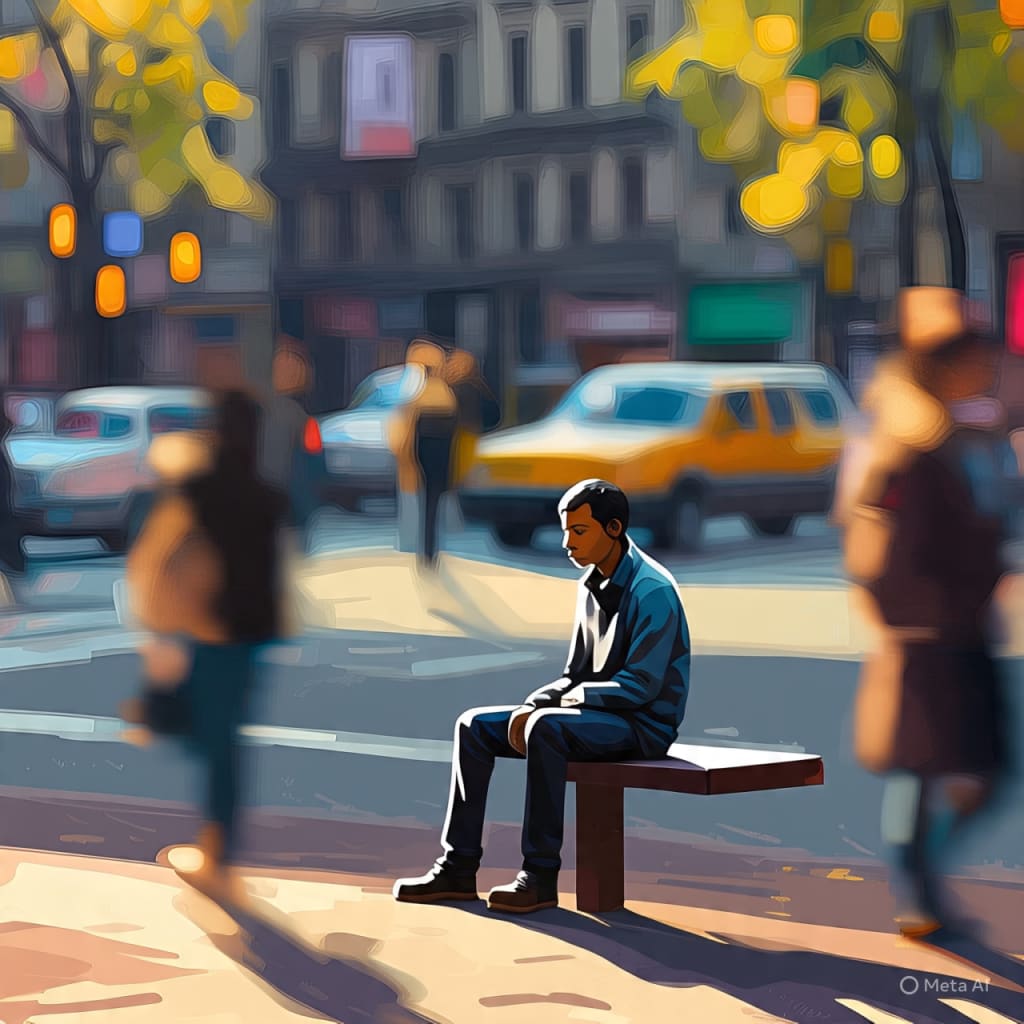
Maya stood at the edge of the subway platform, gripping her tote bag tightly. The train was on time, the platform wasn't too crowded, and she was on her way to a job she liked. By all accounts, things were going well. Yet her chest felt tight, her hands clammy. A swirl of irrational fears buzzed in her head like bees trapped in a jar. What if I faint on the train? What if I forget something important at work? Why can’t I just relax?
Anxiety had become her invisible shadow.
An estimated 301 million people globally live with an anxiety disorder, according to the World Health Organization. It’s one of the most common mental health conditions, yet still largely misunderstood. For some, like Maya, it feels like a low hum always in the background—manageable, but draining. For others, it crashes in like a tidal wave, bringing panic attacks, chest pain, and an overwhelming sense of dread.
“Anxiety is a normal response to stress,” explained Dr. Leila Thomas, a clinical psychologist. “It’s our body’s alarm system—alerting us to danger. But when that system is always ‘on’ or overreacting to situations that aren’t truly threatening, it becomes a problem.”
There are many faces to anxiety: generalized anxiety disorder (GAD), social anxiety, panic disorder, specific phobias, and more. Each one has its own triggers and symptoms, but they all share a common thread—persistent, excessive worry that interferes with daily life.
For Maya, it started in college. She always felt pressure to succeed, to make her immigrant parents proud, to land a good job. The sleepless nights and racing thoughts were easy to dismiss as “just stress.” But the anxiety didn’t leave once school ended. It followed her into her career, friendships, even quiet Sunday mornings.
One of the hardest parts, she found, was that no one could see what she was going through.
“On the outside, I looked fine,” she said. “But inside, I was constantly on edge. I'd replay conversations in my head, worry about things that hadn’t happened, and feel physically sick from the tension.”
Like many people, Maya hesitated to get help. There’s still stigma around mental health, and anxiety can often be mistaken for weakness or overthinking. But when her sleep began to suffer and she started avoiding social events, she realized she needed support.
Therapy was the turning point. With the help of cognitive behavioral therapy (CBT), Maya learned to challenge her anxious thoughts and reframe them. She began journaling, meditating, and setting realistic expectations for herself. It didn’t cure her anxiety—but it gave her tools to manage it.
“Recovery doesn’t mean eliminating anxiety entirely,” said Dr. Thomas. “It means learning how to live with it in a healthy way. Think of it like learning to swim—you can’t control the waves, but you can get better at staying afloat.”
Lifestyle also plays a role. Regular exercise, sleep, balanced nutrition, and reducing caffeine and alcohol can all help reduce anxiety symptoms. Some people benefit from medication, particularly when symptoms are severe or interfere significantly with daily functioning.
Importantly, connection matters. Talking to trusted friends, joining support groups, or even just hearing stories from others with similar struggles can ease the sense of isolation anxiety often brings.
Today, Maya still has anxious days. But they no longer define her. She’s more self-aware, more forgiving of herself, and better at reaching out when she needs help.
“I used to think I had to hide it—that no one would understand,” she said. “But now I know anxiety doesn’t make me weak. It makes me human.”
The story of anxiety is different for everyone. But whether it whispers or roars, one truth remains: you're not alone. And with time, support, and the right tools, it is possible to find calm beneath the surface.
About the Creator
Keep reading
More stories from Muhammad Saad and writers in Humans and other communities.
Thin Air
The fog clung to the mountainside like breath on cold glass. Lila’s boots crunched on loose gravel as she climbed higher, each step an effort in the thinning air. Behind her, the valley stretched in quiet shades of green and gray, but ahead—only mist, white and swallowing. She stopped by a crag of stone, catching her breath, and looked back. No one followed. Just like she’d planned. For the last hour, the only sound had been the rasp of her own breath and the occasional caw of a distant crow. But the silence wasn’t comforting. It pressed in, heavier than the pack on her back. Lila had grown up on this mountain. Her father used to bring her here in the summers, leading her along goat trails and whispering stories about the wind spirits who lived in the cliffs. He said the mountain remembered everything—every footstep, every secret. As a child, she’d believed him. She hadn’t been back since the accident. She found the old cabin just beyond the ridge, half-swallowed by overgrowth and time. Its slanted roof had caved in at one end, and the door hung loosely on rusted hinges. She pushed it open, the creak echoing too loudly in the stillness. Inside, the air was stale, thick with dust and old pine. But everything was just as it had been. The metal lantern on the table. The cracked ceramic mug. And the small, black leather-bound journal tucked under the floorboard—a hiding spot she hadn’t thought about in over a decade, but somehow remembered with painful clarity. She sat on the wooden bench, her fingers tracing the cover of the journal. Her father's handwriting waited inside. Not letters or stories, but entries—daily logs filled with weather patterns, trail notes, and… that last summer. The one before the fall. Lila turned the pages slowly until she found the final entry. > July 16 “Lila followed again today. She’s too curious. I told her not to ask questions, but she keeps poking around near the old mine shaft. I warned her it’s dangerous. She doesn’t know the truth yet. God help me.” Her chest tightened. She remembered the mine shaft—long sealed and forgotten. Or so she’d believed. The truth. That was what had eaten at her for years. The way her father’s stories had changed. How he’d grown quiet and strange. The accident had only deepened the mystery. She had fallen. That part was true. But someone had been there. Someone had grabbed her hand—and then let go. Her father said it was an accident. A slip. But the guilt in his eyes had said otherwise. The fog outside thickened, brushing through the broken windows like fingers. Lila stood, taking the journal with her. She walked out toward the cliff’s edge. The mine wasn’t far. Just beyond the clearing, through a trail nearly swallowed by moss. It had been sealed with wood and stones, a crude blockade that dared anyone to ask why. Lila dropped to her knees and began to pull it apart. The air grew colder. The silence deeper. Behind her, branches cracked. She turned sharply, heart thudding. “Lila.” The voice was low, familiar. She hadn’t heard it in years. Her father stepped through the mist, older, thinner. His face was the same mixture of strength and sorrow she remembered. “You shouldn’t be here,” he said. “I need to know.” He looked past her, at the opened mine entrance, then at the journal in her hands. “You read it.” “I did.” His shoulders slumped. “It wasn’t supposed to happen like that. I thought if I kept it quiet… buried it…” His voice trailed off. “You let me fall.” “I tried to save you.” He stepped closer. “But if I’d told you what was down there… what I found…” Lila stared at the darkness within the shaft. “Then tell me now.” He hesitated, then said, “It wasn’t gold or coal. It was something else. Something old. The locals used to say it whispered. That it knew who you were.” She remembered the cold that had rushed over her the day she fell. The voice that had called her name—not her father’s. “You heard it too.” He nodded. “And you tried to silence it.” “I had to. No one would’ve believed us.” Lila looked into the dark and felt it stir again—something ancient, watchful. It hadn’t forgotten. Neither had she. She took a step toward the shaft. “Lila—don’t,” her father warned. But she had already made her choice. In the thin air, where truth and silence could no longer live side by side, she stepped into the dark. And the mountain remembered
By Muhammad Saad 8 months ago in Humans
Sangita Patel: Husband, Net Worth, Age, Biography, Career, Children & More
Sangita Patel is one of Canada’s most recognizable television personalities — known for her charisma, intelligence, and inspiring story. From being an engineer to becoming one of the leading faces on Canadian TV, her journey is a story of talent, hard work, and passion.
By Enoch Sagini6 days ago in Humans



Comments
There are no comments for this story
Be the first to respond and start the conversation.