

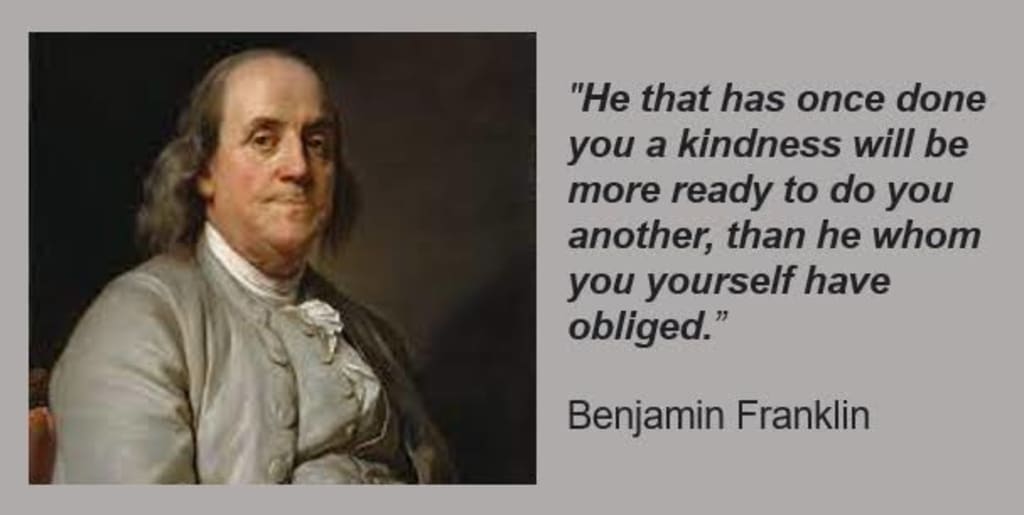
The Ben Franklin Effect is a psychological phenomenon that occurs when a person begins to like someone more after doing a favor for them. This effect is named after Benjamin Franklin, one of America's founding fathers, who famously used this technique to win over an adversary in the Pennsylvania state legislature. In this blog post, we will explore the history and scientific explanation of the Ben Franklin Effect, as well as its practical applications.
History
The story of how Benjamin Franklin discovered the Ben Franklin Effect is an interesting one. Franklin was running for re-election in the Pennsylvania state legislature when he was faced with a particularly difficult opponent. Despite his best efforts, he could not win over this adversary. One day, he had an idea: he asked the man to lend him a rare and valuable book from his personal library. The man agreed, and Franklin returned the book a few days later with a note thanking him for his kindness. From that point forward, the man was much more friendly towards Franklin and even became a supporter of his political agenda.
Scientific Explanation
The Ben Franklin Effect may seem counterintuitive at first glance. After all, it is natural to assume that we do favors for people we already like, not the other way around. However, the psychology behind the Ben Franklin Effect is more complex than that. It is based on the principle of cognitive dissonance, which is the mental discomfort we experience when we hold two conflicting beliefs or values at the same time.
When we do a favor for someone, we are essentially telling ourselves that we must like that person, otherwise we would not have gone out of our way to help them. This rationalization helps to resolve the cognitive dissonance and makes us feel more positively towards the person we have helped. In other words, we are more likely to change our attitudes and beliefs to match our actions, rather than the other way around.
Practical Applications
The Ben Franklin Effect has a number of practical applications, both in our personal and professional lives. Here are some examples:
Networking: If you want to build a relationship with someone, try asking them for a small favor. This could be as simple as asking for their opinion on a project or asking them to introduce you to someone in their network. By doing so, you will create a sense of indebtedness and increase the likelihood that they will be willing to help you in the future.
Sales: If you are in sales, try asking your potential customer for a small favor before making your pitch. This could be as simple as asking them to fill out a survey or sign up for a free trial. By doing so, you will create a sense of investment in your product or service and increase the likelihood that they will make a purchase.
Conflict Resolution: If you are dealing with someone who is difficult or hostile towards you, try asking them for a small favor. This could be as simple as asking them to help you with a task or giving you advice on a problem you are facing. By doing so, you will create a sense of common ground and increase the likelihood that they will be more cooperative and friendly towards you in the future.
Conclusion
The Ben Franklin Effect is a fascinating psychological phenomenon that has numerous practical applications. By understanding the underlying principles behind this effect, we can use it to build stronger relationships, increase sales, and resolve conflicts more effectively. Whether you are a salesperson, a manager, or just someone looking to build stronger relationships, the Ben Franklin Effect is a powerful tool that can help you achieve your goals.
About the Creator
Raj’s Vocal
Welcome to my channel :)
Keep reading
More stories from Raj’s Vocal and writers in Humans and other communities.
Thief In The Night
To the thief in the night that took and replicated what once was mine: Honestly, I feel kind of bad for you. It’s funny, because we hardly know each other. I only know of you through the magazines you’ve written and the broadcasts you have televised in the past — as well as through the public mentions of you from your show business connections there.
By Snarky Lisa6 days ago in Humans



Comments