
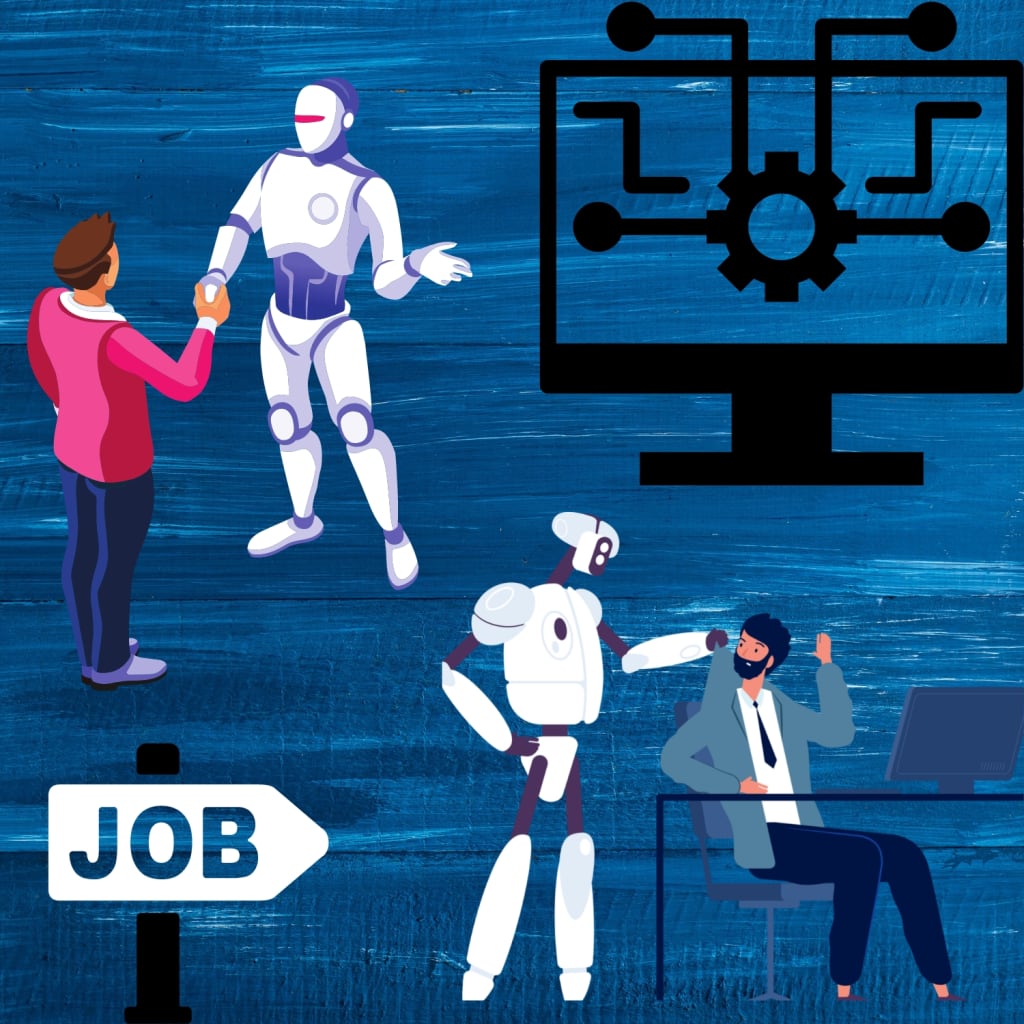
Explanation of the concept of the "automation revolution"
The "automation revolution" refers to the increasing use of technology, particularly artificial intelligence (AI) and automation, in various industries and sectors. This has led to the automation of many tasks and jobs that were previously performed by humans. The automation revolution has the potential to greatly improve efficiency and productivity in many industries, but it also poses significant challenges for the job market and the economy as a whole. The automation revolution has been driven by advances in technology, such as machine learning, natural language processing, and robotics, which have enabled machines to perform tasks that were previously thought to be the exclusive domain of humans. This has led to the automation of jobs across a wide range of industries, including manufacturing, transportation, retail, and healthcare. The effects of the automation revolution on the job market are still being studied and debated, with some experts predicting significant job displacement and others seeing potential for job creation and economic growth.
Overview of how AI is changing the job market
AI is changing the job market in a number of ways, including:
Automating tasks: AI is being used to automate many tasks that were previously performed by humans. This includes tasks such as data entry, customer service, and even some aspects of decision-making.
Changing the nature of jobs: AI is also changing the nature of some jobs. For example, in some industries, AI is being used to augment human abilities, such as by providing doctors with real-time diagnostic assistance.
Displacing jobs: As AI automates tasks and changes the nature of jobs, it is also causing job displacement. Some jobs that were previously performed by humans are now being done by machines, leading to unemployment and underemployment.
Creating new jobs: AI is also leading to the creation of new jobs, particularly in industries related to technology and data analysis. As companies invest in AI, they will need to hire workers with the skills to develop, implement, and manage AI systems.
Changing the skills required for jobs: As AI changes the job market, it is also changing the skills that are required for jobs. Many jobs of the future will require skills related to AI, such as data analysis and programming.
Impacting wages: There is some debate about whether AI will lead to increased or decreased wages. Some experts believe that AI will lead to increased wages for workers with the skills to work with AI, while others believe that AI will lead to decreased wages as jobs are automated.
Overall, AI is having a profound impact on the job market, and its effects will continue to be felt in the years to come. As the technology develops and becomes more widespread, it will likely continue to reshape the job market in significant ways.
Impact on Specific Industries
Transportation and logistics jobs
The transportation and logistics industry is being heavily impacted by the use of AI, with the technology being used in a variety of applications, including:
Autonomous vehicles: AI is being used to develop self-driving cars and trucks, which have the potential to greatly improve efficiency and safety in the transportation industry.
Route optimization: AI is being used to optimize routes for delivery trucks and other vehicles, which can lead to reduced fuel consumption and lower transportation costs.
Inventory management: AI is being used to help manage inventory in warehouses and distribution centers, which can improve efficiency and reduce the need for human labor.
Predictive maintenance: AI is being used to predict when vehicles and equipment will need maintenance, which can help prevent breakdowns and reduce downtime.
Fraud detection: AI is being used to detect and prevent fraud in the transportation and logistics industry, such as by analyzing financial transactions for suspicious patterns.
However, not all jobs in the transportation and logistics industry will be replaced by AI. jobs that involve human interaction and decision-making, such as customer service and sales, will still be in demand. Additionally, jobs that involve maintaining and repairing the equipment and vehicles used in transportation will also be in demand.
Moreover, the use of AI and automation in transportation and logistics can lead to the creation of new jobs such as data analysts, software engineers and other IT positions.
Overall, the use of AI in the transportation and logistics industry has the potential to greatly improve efficiency and reduce costs, but it also poses significant challenges for the job market. As the technology continues to develop, it will be important for workers in the industry to adapt and acquire the necessary skills to work with AI and automation.
Manufacturing and assembly line jobs
Manufacturing and assembly line jobs have been heavily impacted by the use of AI and automation. Many tasks that were previously performed by humans, such as welding, painting, and assembling, can now be done by robots and other automated systems. This has led to increased efficiency and productivity in manufacturing, but it has also led to job displacement for many human workers.
Additionally, AI is used for quality control and inspection, reducing the need for human labor in these areas as well.
However, it's important to note that not all jobs in manufacturing and assembly lines will be replaced by AI and automation. Some jobs will still require human skills, such as problem-solving, creativity, and critical thinking. Additionally, jobs that involve maintaining and repairing the equipment and robots used in manufacturing will also be in demand.
Furthermore, AI will bring new opportunities to the manufacturing industry. As AI-controlled machines can operate 24/7, manufacturers will be able to increase their production capacity. The use of AI in manufacturing also allows for more accurate and faster decision-making, which can improve production planning and logistics.
Therefore, it's crucial for workers in the manufacturing and assembly line industry to adapt to new technologies and acquire the necessary skills to work with AI and automation.
Healthcare and medical jobs
The healthcare industry has also been impacted by the use of AI, with the technology being used in a variety of applications, including:
Diagnosis: AI is being used to assist with diagnostic tasks, such as analyzing medical images and identifying patterns in patient data. This can help doctors make more accurate diagnoses and treatment decisions.
Treatment planning: AI is also being used to help plan treatment for patients, such as by identifying the best course of action based on a patient's medical history and current condition.
Robotic surgery: AI-controlled robots are being used in surgeries, which can lead to increased precision and reduced recovery time for patients.
Electronic health records: AI is being used to help manage and analyze electronic health records, which can improve patient care and reduce administrative tasks for healthcare workers.
Medical research: AI is being used in medical research, such as to analyze vast amounts of data to identify new drugs and treatment methods.
As with manufacturing and assembly line jobs, not all jobs in healthcare will be replaced by AI. In fact, AI can enhance the work of healthcare professionals, such as radiologists and pathologists. AI can also help with administrative tasks, such as scheduling appointments, freeing up time for healthcare professionals to focus on patient care.
However, the use of AI in healthcare also raises ethical concerns, particularly regarding the potential for errors and bias in the technology. Therefore, it's important for healthcare professionals to understand the limitations and potential risks of AI and to work with IT and data experts to ensure that AI is used responsibly and ethically.
Potential Solutions
Government policies and programs
There are several government policies and programs that can be implemented to address the challenges posed by the automation revolution and AI's impact on the job market:
Job retraining programs: Governments can provide funding for job retraining programs to help workers who have lost their jobs due to automation to acquire new skills and find new employment.
Income support: Governments can provide income support to workers who have lost their jobs due to automation, such as through unemployment insurance and other social welfare programs.
Investment in education: Governments can invest in education to ensure that workers have the skills needed to succeed in a future economy that is increasingly dependent on AI and automation.
Tax incentives for companies: Governments can provide tax incentives for companies that invest in retraining programs for their workers or that hire workers who have been displaced by automation.
Investment in infrastructure: Governments can invest in infrastructure projects that create jobs and stimulate economic growth.
Support for small businesses: Governments can provide support for small businesses, which are often hit hard by automation and technological change, to help them adapt and succeed in the new economy.
Encourage ethical use of AI: Governments can create laws and regulations to ensure that AI is used ethically and responsibly, and to protect workers from potential negative impacts of AI.
It's important to note that there is no one-size-fits-all solution, and different policies may be more effective in different contexts. Governments should consider the specific needs and challenges of their own economies when developing policies to address the impact of AI on the job market.
Education and retraining initiatives
Education and retraining initiatives are an important part of addressing the challenges posed by the automation revolution and AI's impact on the job market. Some examples of education and retraining initiatives include:
Vocational training: Governments and private organizations can provide vocational training programs to help workers acquire the skills needed to succeed in industries that are growing as a result of automation and AI.
Online learning: With the rise of online learning platforms and MOOCs, it has become easier for individuals to acquire new skills and knowledge from anywhere, at any time.
Lifelong learning: Governments and private organizations can encourage lifelong learning by providing resources and incentives for individuals to continue to acquire new skills and knowledge throughout their careers.
STEM education: Governments can invest in STEM education to ensure that future generations have the skills needed to succeed in an economy that is increasingly dependent on technology and automation.
Encourage private sector initiatives: Governments can encourage private sector initiatives in education and retraining, such as through partnerships between companies and educational institutions or through tax incentives for companies that invest in education and retraining.
Skills recognition: Governments can create schemes to recognize the skills and experience of workers who have been displaced by automation, to help them find new employment.
Upskilling existing workforce: Companies can provide education and training opportunities to their existing workforce to adapt to the changes brought by AI and automation.
It's important to note that education and retraining initiatives should be tailored to the specific needs of the workers and the industries that are being impacted by automation and AI. Additionally, education and retraining initiatives should be flexible and responsive to the rapidly changing technological landscape.
Private sector efforts to address job displacement
The private sector can also play an important role in addressing job displacement caused by automation and AI. Some examples of private sector efforts to address job displacement include:
Job retraining and upskilling: Companies can provide job retraining and upskilling programs to help their workers acquire the skills needed to succeed in an economy that is increasingly dependent on AI and automation.
Investment in new technologies: Companies can invest in new technologies that create jobs and stimulate economic growth, such as by developing new products or services that utilize AI.
Corporate social responsibility: Companies can take steps to address job displacement as part of their corporate social responsibility efforts, such as by investing in education and retraining programs for workers who have been displaced by automation.
Employee retention and engagement: Companies can also implement employee retention and engagement programs, such as flexible working arrangements, to keep their employees motivated and engaged, thus reducing the risk of losing them to job displacement.
Collaboration with governments and educational institutions: Companies can collaborate with governments and educational institutions to develop education and retraining programs that prepare workers for the changing job market.
Job rotation: Companies can implement job rotation programs, allowing employees to gain diverse skills and experiences, and be prepared for the changing job market.
Job sharing: Companies can implement job sharing programs, where employees can share a job and reduce the risk of job displacement.
Overall, the private sector has a significant role to play in addressing job displacement caused by automation and AI. Businesses can take steps to adapt to the changing job market and to support their employees through education and retraining initiatives. Collaboration with governments and educational institutions can also be beneficial in addressing job displacement.
Conclusion
Discussion of potential future developments in the field of AI and its impact on the job market.
As AI continues to evolve, it is likely to have an even greater impact on the job market. Some potential future developments in the field of AI and their potential impact on the job market include:
Increased automation: As AI becomes more advanced, it will likely automate an increasing number of tasks and jobs, leading to further job displacement.
New job creation: As AI becomes more widely adopted, it will also likely lead to the creation of new jobs, particularly in industries related to technology and data analysis.
Changes in the nature of work: AI will also change the nature of work for many jobs that are not fully automated. For example, AI can be used to augment human abilities, such as by providing doctors with real-time diagnostic assistance.
Greater demand for AI skills: As AI becomes more prevalent, there will be a growing demand for workers with skills related to AI, such as data analysis and programming.
Changes in the structure of the job market: AI could lead to changes in the structure of the job market, such as by reducing the number of jobs in certain industries and increasing the number of jobs in others.
Ethical concerns: With the increasing use of AI, there will be a growing need for ethical guidelines to ensure that the technology is used responsibly and does not lead to negative consequences for society.
Economic and societal impacts: As AI continues to impact jobs and industries, it will also have an effect on the economy and society as a whole. For example, it may lead to increased income inequality or changes in the way we work and live.
It's important to note that the impact of AI on the job market is not a one-time event, but a continuous process that will evolve as technology and society change. It's important to anticipate and adapt to these changes in order to mitigate negative impacts and capitalize on new opportunities.
About the Creator
Se
I am a content writer and story writer but only what's on my thought.


Comments
There are no comments for this story
Be the first to respond and start the conversation.