
Astrology is not a Belief System

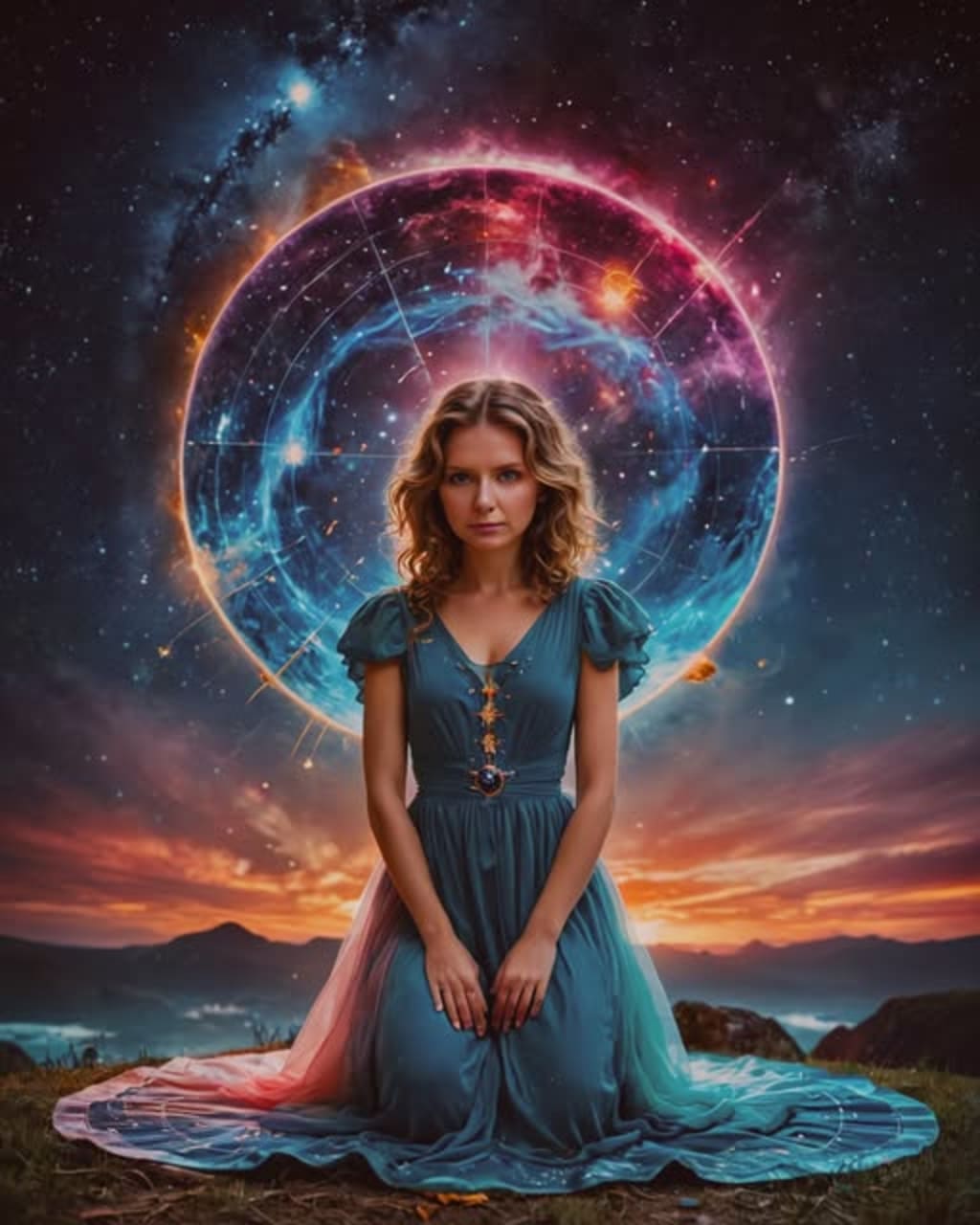
Astrology is often misunderstood and sometimes conflated with religion due to its focus on celestial bodies and their influence on human life. However, astrology is fundamentally different from religion. Here’s a concise exploration of why astrology is not a religion, emphasizing its nature as a study of human behavior through mathematical and astronomical principles, alongside sacred geometry.
1. Definition of Religion vs. Astrology
Religion typically involves a belief system endowed with doctrines, rituals, a moral framework, and often a divine entity or entities. It encompasses worship, community practices, and narratives about the universe's creation and purpose. Key characteristics of religion include:
- Faith-based beliefs: Adherents maintain faith in doctrines without empirical evidence.
- Rituals and worship: Involves communal practices to honor deities or sacred texts.
- Morality and ethics: Offers guidelines for behavior and moral standards derived from divine commandments.
In contrast, astrology is not faith-based. It doesn't require belief in deities or dogmas. Instead, astrology operates on the premise that celestial positions and movements correlate with earthly events and human behavior. It can be categorized as a symbolic language that interprets the relationships between humans and the cosmos.
2. Astrology as a Study of Patterns
Astrology is based on mathematical calculations and astronomical observations. The principles of astrology rely heavily on the following elements:
- Celestial Bodies: The positions and movements of planets, stars, and other celestial entities are tracked and analyzed.
- Mathematical Relationships: Astrologers use mathematical computations to derive charts (e.g., natal charts), which illustrate a person's characteristics and life patterns based on planetary positions at birth.
- Cycles and Trends: Astrology recognizes recurring cycles (like lunar phases) that influence human emotions and behaviors. Understanding these cycles is akin to studying patterns in nature.
3. Human Behavior and Astrology
Astrology claims to illuminate the intrinsic connections between celestial movements and human psychology. Various astrological components contribute to this understanding:
- Zodiac Signs: Twelve signs relate to different personality traits, motivations, and behaviors, offering insights into one's character and potential challenges.
- Planetary Influences: Each planet symbolizes various aspects of life and personality. For example, Venus relates to love and relationships, while Mars relates to aggression and action.
- Houses: The twelve houses in astrology represent different areas of life, such as career, relationships, and spirituality, indicating how and where planetary influences manifest.
4. Astronomical Basis of Astrology
Astrology's foundations lie in astronomy, as it depends on the observation of celestial phenomena. Key astronomical aspects include:
- Ecliptic and Zodiac: The ecliptic path of the Sun intersects with various constellations, forming the basis of the zodiac system.
- Ephemeris: Astrologers utilize ephemerides—a table detailing the positions of celestial bodies—to understand the timing and influences of planetary movements.
- Retrogrades and Transits: Astrological events like retrogrades or transiting planets influence how energies are perceived on Earth.
This scientific aspect positions astrology as an observational study rather than a belief system.
5. Sacred Geometry and Astrology
Sacred geometry plays a role in astrology through the understanding of shapes, patterns, and structures in the cosmos:
- Geometric Relationships: Astrologers consider the geometric angles between planets (aspects) significant, demonstrating how energies interact.
- Symbolism of Shapes: Shapes like the circle symbolize wholeness, while angles correspond to various astrological influences, participating in the broader cosmic order.
Through sacred geometry, astrology illustrates how overarching cosmic patterns reflect the microcosm of human experience.
6. Conclusion
Astrology is not a religion, as it does not demand belief, worship, or moral adherence. Instead, it serves as a long-standing system of interpreting celestial influences through mathematical, astronomical, and geometric foundations. By exploring the connections between the universe and human behavior, astrology provides insights that seek to illuminate life’s complexities and foster self-awareness.
In essence, astrology acts as a bridge between humanity and the cosmos, offering a language of patterns that speaks to our shared experiences and behaviors, rather than enforcing doctrines or beliefs that characterize religious systems.
I am a global nomad/permanent traveler, or coddiwombler, if you will, and I move from place to place about every three months. I am currently in Peru and heading to Chile in a few days and from there, who knows?. I enjoy writing articles, stories, songs and poems about life, spirituality and my travels. You can find my songs linked below. Feel free to like and subscribe on any of the platforms. And if you are inspired to, tips are always appreciated, but not necessary. I just like sharing.
YouTube Top Song List.
https://www.YouTube.com/results?search_query=julia+o%27hara+top+songs
Amazon PlayList
https://www.amazon.com//music/player/artists/B0D5JP6QYN/julia-o'hara
Spotify PlayList
https://open.spotify.com/artist/2sVdGmG90X3BJVn457VxWA
You can also purchase my books here:
https://www.lulu.com /spotlight/julie-ohara
I am also a member of Buy Me A Coffee – a funding site where you can “buy me a cup of coffee”
https:www.buymeacoffee.com/JulieOHara
About the Creator
Julie O'Hara - Author, Poet and Spiritual Warrior
Thank you for reading my work. Feel free to contact me with your thoughts or if you want to chat. [email protected]
Keep reading
More stories from Julie O'Hara - Author, Poet and Spiritual Warrior and writers in Humans and other communities.
The Profound Benefits of Astrology in Personal Growth and Understanding
Astrology, often dismissed as a superficial parlor game or mere entertainment, possesses a wealth of depth that can play a meaningful role in personal development. When embraced as a genuine tool for self-awareness and growth, astrology opens the door to profound insights about oneself, relationships, and life purpose. This exploration delves into the benefits of astrology for personal growth, its relationship with the concept of a soul contract, and common pitfalls in its usage.
By Julie O'Hara - Author, Poet and Spiritual Warrior4 months ago in Humans
The CEO of Everything
They say "jack of all trades, master of none," but they forgot to mention the part where the jack of all trades is also the camera woman, the makeup artist, and the person currently yelling at a tangled Wii microphone cable in a her own bathroom while recording herself singing and trying to make it look realistic and professional. (As professional as you can make it with nothing but a cell phone camera and a mic that doesn't work)
By Sara Wilson7 days ago in Humans
When Earth Sign Twin Flames Face Emotional Pressure.
Earth sign twin flames appear calm on the surface. Taurus, Virgo, and Capricorn value structure, security, and predictability. They build slowly. They commit carefully. They trust through consistency. When twin flame intensity enters their lives, emotional depth shakes their foundation. Astrology explains why stability feels challenged instead of comforting.
By Wilson Igbasi2 days ago in Humans



Comments
There are no comments for this story
Be the first to respond and start the conversation.