
"Applesauce in Orbit: The Pioneering Culinary Journey Beyond Earth".
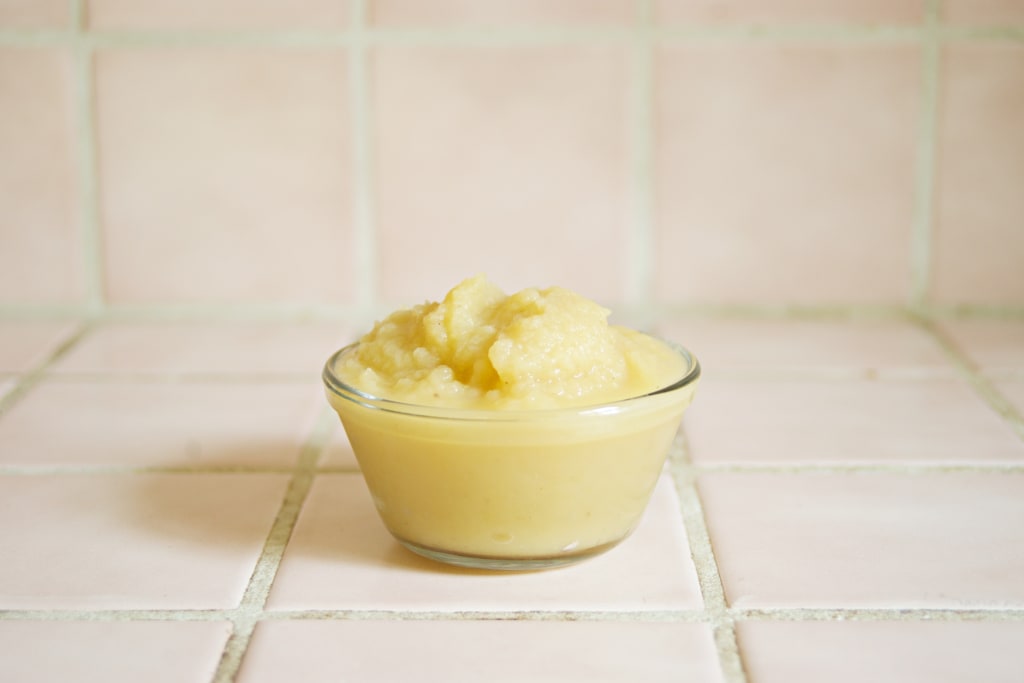
The fact that applesauce was the first food eaten in space.
Introduction:
The vast expanse of space, a realm once deemed beyond the reach of human exploration, witnessed a culinary milestone that transcended the boundaries of earthly kitchens. In the early days of space travel, as astronauts embarked on the extraordinary journey into the cosmos, a humble and familiar food item became the inaugural bite in the realm beyond our atmosphere. Applesauce, a quintessential comfort food, etched its name in the annals of space history as the first food consumed in the weightlessness of outer space. In this exploration, we unravel the captivating tale of applesauce's celestial debut, reflecting on the ingenuity, challenges, and significance of this culinary venture into the great unknown.
Chapter 1: The Birth of Space Cuisine.
As humans ventured beyond the confines of Earth, the need to address the complexities of sustenance in microgravity became a paramount concern for space agencies. The early days of space exploration, marked by missions such as Mercury and Gemini, presented astronauts with the challenge of adapting terrestrial food for consumption in a weightless environment. Traditional foods were scrutinized for their suitability in the unique conditions of space travel, and the journey into space became an exploration not only of the cosmos but also of culinary frontiers.
Chapter 2: The Challenges of Eating in Space.
Eating in microgravity presents a myriad of challenges that Earth dwellers often take for granted. On Earth, gravity keeps food anchored to plates and utensils, but in space, objects float freely, making the act of eating a complex affair. Traditional utensils, such as forks and knives, were deemed impractical, and new tools, like squeeze tubes and vacuum-sealed containers, were introduced to contain and dispense food without creating a mess.
Moreover, the altered sense of taste experienced by astronauts in space prompted a reevaluation of flavor profiles. The reduced sensitivity of taste buds in microgravity led to the adjustment of recipes to enhance the palatability of space food, ensuring that astronauts derived both nutrition and satisfaction from their meals.
Chapter 3: Applesauce Takes Flight.
Amid these challenges, applesauce emerged as a reliable and practical choice for the inaugural space meal. NASA, known for its meticulous planning and attention to detail, selected applesauce as part of the menu for the Gemini missions in the mid-1960s. Applesauce's smooth texture and the absence of crumbs made it an ideal candidate for consumption in the microgravity environment.
On February 20, 1962, during John Glenn's historic orbital flight aboard Friendship 7 as part of the Mercury-Atlas 6 mission, the first American to orbit the Earth, he became the first person to consume food in space. The menu for this groundbreaking mission included pureed applesauce packed in a squeezable tube. This moment marked not only a feat in space exploration but also a pioneering step in the evolution of space cuisine.
Chapter 4: Beyond Applesauce: The Evolution of Space Food.
The successful integration of applesauce into the space diet set the stage for further advancements in space food technology. Over the years, space agencies have continuously refined and expanded the menu for astronauts, introducing a variety of foods that can withstand the rigors of space travel while providing the necessary nutrients.
Freeze-drying, vacuum-sealing, and thermal-stabilization technologies have been employed to preserve the flavor and nutritional content of foods while minimizing their weight and volume. Today, astronauts aboard the International Space Station (ISS) can choose from a diverse menu that includes soups, stews, fruits, vegetables, and even specially designed desserts, showcasing the remarkable progress made in space culinary endeavors.
Chapter 5: The Psychological Role of Food in Space.
Beyond the nutritional and practical aspects, the role of food in space extends to the psychological well-being of astronauts. Sharing a meal, even in the sterile environment of a spacecraft or space station, fosters a sense of camaraderie and normalcy. The carefully curated space menu includes familiar items that connect astronauts to their terrestrial roots, providing a sense of comfort and continuity amidst the vastness of space.
Conclusion:
Applesauce, with its humble origins on Earth, transcended its commonplace status to become the first food consumed in the boundless reaches of space. This culinary feat, achieved during the early days of space exploration, reflects not only the adaptability of food in the face of challenging environments but also the spirit of innovation that propels humanity into uncharted territories.
As we marvel at the technological achievements that enable astronauts to dine beyond our planet, it is worth reflecting on the significance of a simple squeeze tube of applesauce. In that single bite taken by John Glenn aboard Friendship 7, the essence of human exploration and the conquering of new frontiers is encapsulated—a testament to our capacity to adapt, innovate, and savor the familiar even in the extraordinary environment of outer space.
About the Creator
Keep reading
More stories from fatima zahra ajankar and writers in Humans and other communities.
"Pistachios Unveiled: More Than Meets the Nut".
Introduction: In the realm of snacks and culinary delights, pistachios stand out as both a flavorful treat and a source of nutritional goodness. These small, green gems have long been categorized as nuts, finding their way into countless recipes and snacking rituals. However, the truth about pistachios is far more intriguing—they aren't nuts at all; they are fruits. In this exploration, we delve into the botanical intricacies that distinguish pistachios from true nuts, unraveling the journey of these delectable fruits from tree to table.
By fatima zahra ajankar2 years ago in Humans
Whiskey At Dusk
Guess the whiskey was more important to you in the end, wasn’t it? It was more than the well-being of your friends; more vital than showing up to the places you promised you would and could come to; more critical of a matter than fulfilling your damn responsibilities and getting the press off your back.
By Snarky Lisaa day ago in Humans



Comments
There are no comments for this story
Be the first to respond and start the conversation.