
Ancient History of Subcontinent
Civilization and Society in Ancient India
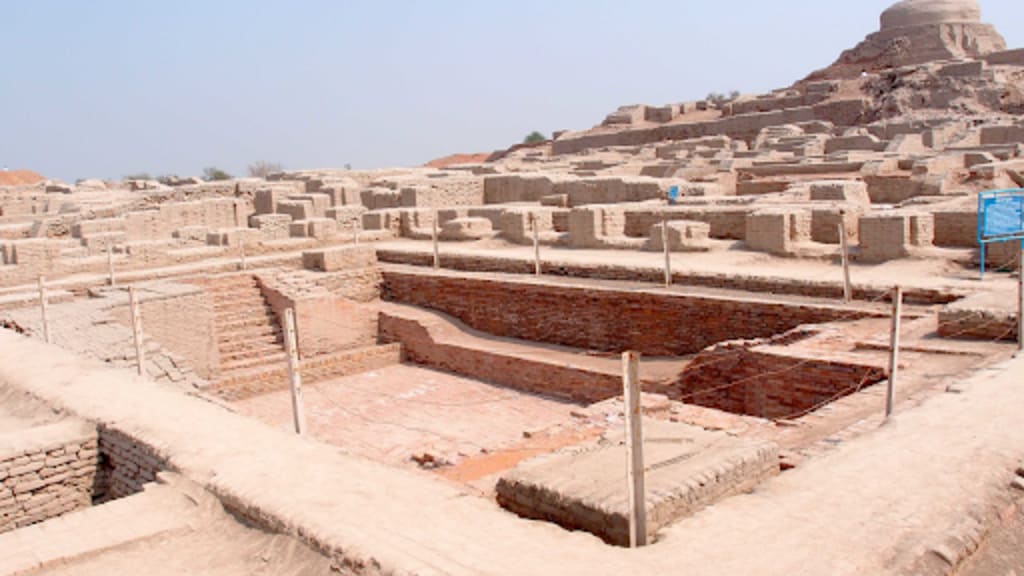
All of the fundamental pillars of Indian culture had already been established by this point. India's ancient past is crucial to understanding modern history. Its accomplishments are still strongly felt today, with modern India having a growing global influence.
Early in the third millennium BCE, in what is now Pakistan and north-west India, urban civilisation initially emerged in ancient India with the Indus Valley civilization. One of the first civilizations in recorded history, it coexisted with other ancient civilizations in Mesopotamia and Ancient Egypt. It is renowned for having sizable, well-designed cities.
In the middle of the second millennium BCE, the Indus Valley civilization perished. Aryans, who spoke an Indo-European language, migrated from central Asia into northern India in the following millennia. They were pastoral, semi-nomadic tribes with warrior chieftains when they entered India. Over time, they established tribal kingdoms over the local Dravidian communities they had discovered.
As it was described in the earliest Indian literature, known as the Vedas, this era of ancient Indian history is known as the Vedic age. The majority of the fundamental aspects of traditional Indian culture were also established during this time of its formation. These include the early development of Hinduism as India's primary religion and the social and theological problem of caste.
The time span was around 1500 BCE to 500 BCE, or from the beginning of the Aryan migrations to the age of the Buddha. The more sophisticated culture of Ancient India's Classical Age replaced the primitive tribal society of the early Aryans. During this time, literary culture and urban civilization both reemerged on the Indian subcontinent. Jainism and Buddhism were two new faiths that came into existence during one of India's most creative periods.
With the establishment of the Mauryan empire in 320 BCE, the first major imperial power in ancient India, this era of history came to an end.
Actually, the Magadha kingdom grew into the Maurya empire. This kingdom significantly expanded to encompass a significant portion of northern India under a line of rulers of the Nanda dynasty (reigned around 424–322 BCE), and under the succeeding Maurya dynasty, the empire went on to encompass all of north and central India.
Ashoka was the most well-known Maurya emperor, as well as the most well-known king ever to rule over ancient India and one of the most significant figures in all of antiquity. He was a remarkable and alluring ruler who sought justice and the welfare of all his subjects while also being tolerant, compassionate, and firm.
About fifty years after Ashoka's passing, the enormous Mauryan empire started to fall apart. By the middle of the second century BCE, the empire's peripheral provinces had vanished, leaving only its core regions. The Satavahana kingdom was among the other strong states that had emerged in the ruins of the empire.
Another significant state, the Indo-Greek kingdom of Bactria, emerged in the northwest of the subcontinent, in what is now Afghanistan. The country was afterwards captured by the Scythian people from central Asia, known in Indian history as the Saka, after this quickly broke up into several nations. The Kushana people, who established a strong empire spanning portions of northern India and central Asia, in turn drove them out of the northwest.
This slew of northwestern republics fostered what contemporary researchers refer to as the Gandhara civilization—a separate culture. It combined Persian, Greek, and Indian influences. Buddhism was the most common religion in this area, and thanks to Gandhara's location astride the Silk Road, its influence was widely felt. Its missionaries are most notable for bringing Buddhism to China.
The Indian subcontinent was significantly influenced by Gandhara in terms of culture. It had a significant influence on the Gupta empire's art and architecture.
About the Creator
Keep reading
More stories from Muhammad Haroon Arshad and writers in Humans and other communities.
SEDENTARY LIFESTYLE AMONG YOUNG ADULTS DURING COVID-19 PANDEMIC
INTRODUCTION The coronavirus disease 2019 (COVID-19) has spread swiftly over the world since its first outbreak in Wuhan, China, in early December 2019.According to the World Health Organization (WHO), this epidemic has lately infected more than 20 million people in over 200 countries, resulting in over 730,000 deaths. As a result, unheard-of efforts have been undertaken by Quarantine, social isolation, and other measures taken by governments around the world to contain the pandemic. Individuals who have been infected are isolated.
By Muhammad Haroon Arshad3 years ago in Journal



Comments
There are no comments for this story
Be the first to respond and start the conversation.