
An Unexpected Find
A poetical discovery that brought back memories

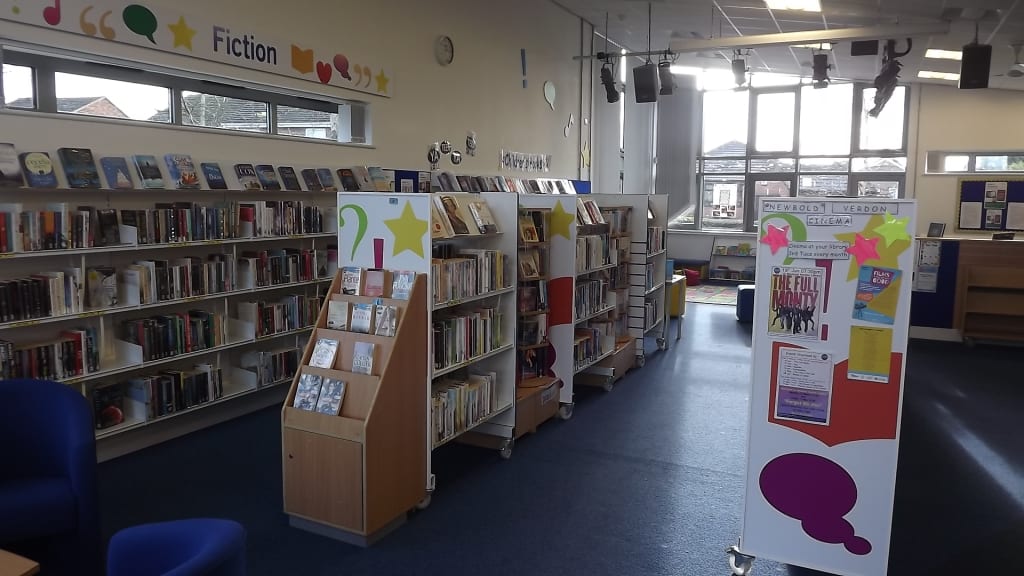
I did a recent voluntary shift at Newbold Verdon Library alongside Grace, who is a final-year A-level student at Bosworth Academy, Desford. While we were there a friend of hers called in, this being a fellow student who is in the first year of her A-level studies. We got talking about the various things they were working on, which interested me in particular because the friend – whose name I failed to get – is doing English, which fascinates me far more than Grace’s Maths and Chemistry!
I asked about the poetry that was on the English syllabus, mainly because I regularly write poetry analyses for my Google blog and would prefer to write about poems that students might want some help with. I know from past experience that these pieces are widely read and many get a first-page listing when searched for on Google.
The young lady told me that they were studying an anthology with the title “Poems of the Decade: An Anthology of the Forward Books of Poetry”. When I got home, I promptly bought and downloaded a copy for my Kindle.
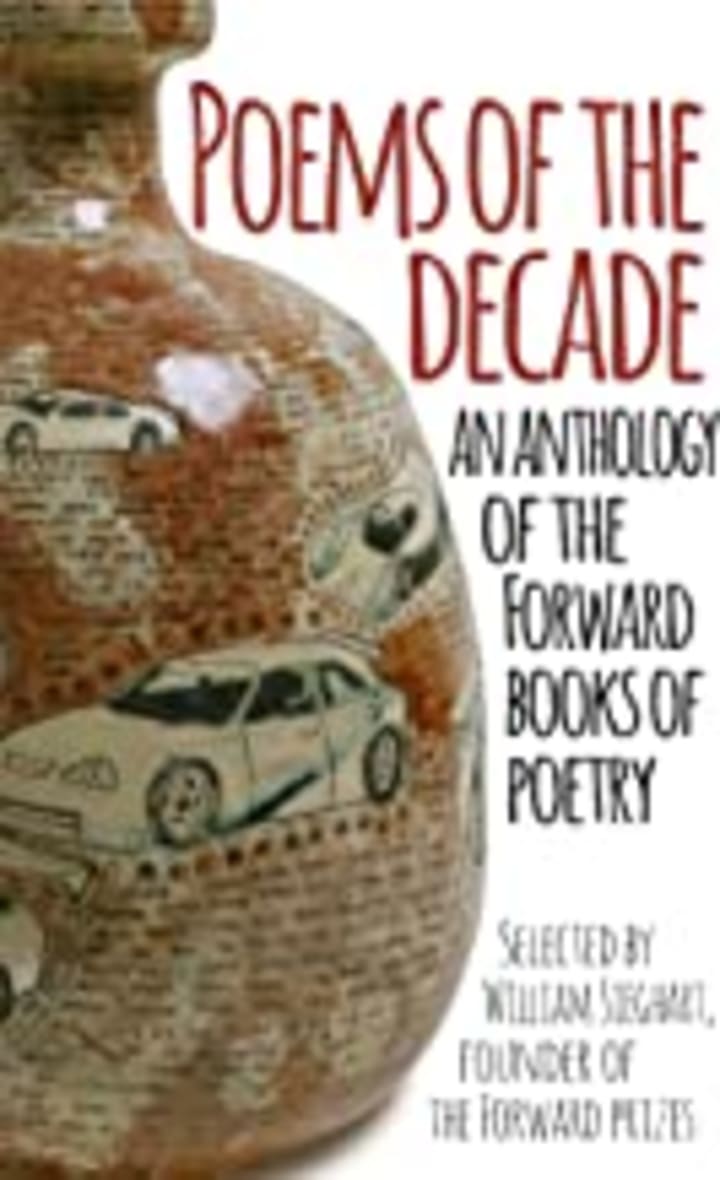
The anthology contains more than 100 poems, all of them having been winners or runners-up of the Forward Prizes for Poetry, which have been awarded every year since 1992 by the Forward Arts Foundation with the aim of celebrating and promoting the best contemporary British poetry. The anthology to hand covers the years 2001 to 2010.
A glance down the contents list is enough to show the quality of the work on offer. Poets who are represented here include three Poets Laureate - Andrew Motion, Carol Ann Duffy and Simon Armitage – plus many other well-known names, including Jo Shapcott, Wendy Cope, Derek Mahon and Roger McGough.
But that is just the start. Most of the poets listed are far from being household names but they have written poems that are sufficiently highly regarded to enable them to rub shoulders in this book with much better-known poets. If you get a poem into this sort of anthology, you are clearly on your way up!
So that was how I made my first unexpected find. Listed here is the name of someone I once knew very well. This is Lydia Fulleylove, whose poem “Night Drive” is included as one of the “Poems of the Decade”.
I first came across Lydia at the first lecture I attended on my English degree course at UCNW Bangor in 1971. While we were waiting for Professor Danby to return from his liquid lunch to introduce himself and the course to a new generation of students, there was much chatter in the lecture theatre between lots of young people who were meeting for the first time. I overheard someone in the row behind say that they came from Southampton, so I turned round in my seat to introduce myself as a fellow Southerner who hailed from Poole – only 30 miles from Southampton - and we therefore had some common ground to talk about.
I made sure of sitting close to Lydia at subsequent lectures and we became quite good friends. We had a mutual liking for country walks and soon made a habit of meeting up on Sunday mornings to walk across the Menai Bridge and along the Anglesey shore for a mile or so before turning back.
We were never more than “just good friends” and there was no romantic attachment between us. Indeed, when I did start a kissing and cuddling affair with a girl, named Hilary, in my second year at Bangor, Lydia became friends with Hilary and there was no sign of embarrassment or resentment on anyone’s part.
These friendships continued after we left Bangor and Hilary and I got married. Lydia moved to the Isle of Wight (where she still lives) and we once spent a very enjoyable holiday on the island as her guest.

I have known for some time that Lydia had found a modicum of fame as a poet. She trained as a teacher after finishing at Bangor, and discovered her talent as a poet through her use of poetry in the classroom and being inspired by the scenery of the Isle of Wight. She abandoned full-time teaching in favour of working on a variety of Arts-based projects to develop the use of literature to benefit people with various needs, including mental health and learning difficulties. She was a Writer in Residence for several years at HMP Isle of Wight.
I have kept contact with Lydia – off and on – in more recent years, and this has included writing reviews of some of her poems and – at her request – her book “Estuary” which was published in 2014, which was also the last time I saw Lydia, when on an Isle of Wight holiday.
I mentioned above that finding Lydia’s poem in the book was my first unexpected find. The second came when I read the poem, which had been shortlisted in the Forward Best Single Poem category in 2010. The poem is “Night Drive”, which concerns the desperate drive she and her father – in separate cars – had to take to reach the bedside of her dying mother.
The unexpected aspect of the poem was the fact that I had met all the people involved in the poem, back in the early 1970s when I was invited to spend an afternoon at Lydia’s home in Southampton. It had been a very pleasant day, including conversations with her parents, who were both college lecturers. It was something of a shock to read the lines:
*
“… my mother, the bones stretching
her beautiful skin and her left eye almost
closed, her face as clear as the rear lights
of my father’s car … “
*
I suppose the shock comes in part from the knowledge that words about real people, whom I remember well, are now subject to the literary analysis of A-level students – just the sort of thing I am used to doing in terms of words written about people I do not know but who are or were very real to strangers past and present.
About the Creator
John Welford
John was a retired librarian, having spent most of his career in academic and industrial libraries.
He wrote on a number of subjects and also wrote stories as a member of the "Hinckley Scribblers".
Unfortunately John died in early July.
Keep reading
More stories from John Welford and writers in Humans and other communities.
What are human rights violations?
Once we fully appreciate what human rights are, we can understand what counts as a violation of them. We can, for example, turn to the Universal Declaration of Human Rights, formulated in 1948, and read a whole list of rights of individuals that governments are urged not to violate.
By John Welford5 years ago in Humans
A Historic Declaration
We the People of the Husbands of the United States of America, in Order to form a more perfect Union, and I mean you...with me...establish Justice, insure domestic Tranquility, provide for the common defence, promote the general Welfare, and secure the Blessings of Liberty to ourselves, after Puberty, do ordain and establish this Declaration of Co-Dependence.
By Gerard DiLeo6 days ago in Humans



Comments
There are no comments for this story
Be the first to respond and start the conversation.