
The Architecture of Infinity
How the Universe Becomes Aware Through Us

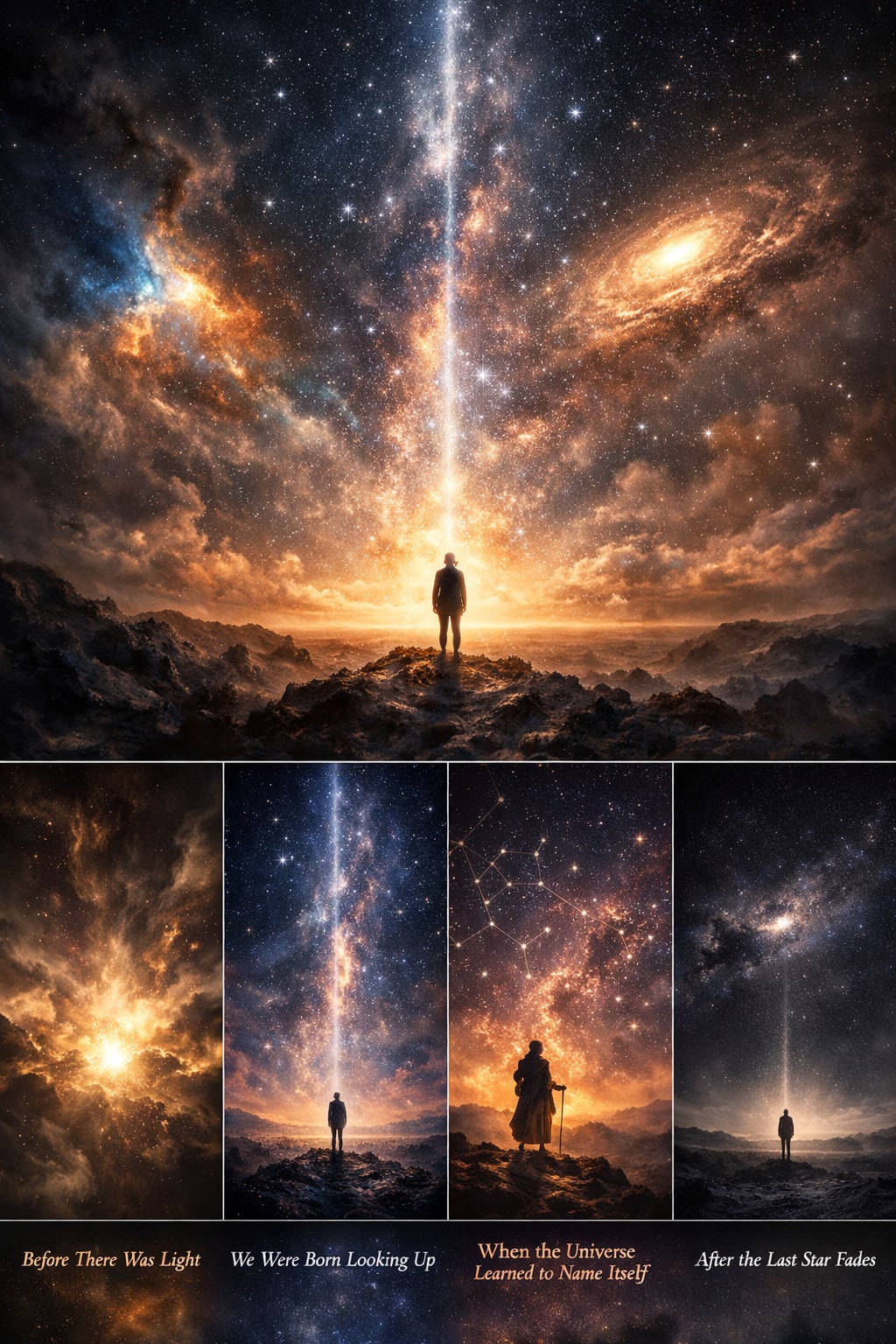
A mythic-science meditation on galaxies, consciousness, and how human awareness may be the universe learning to recognize itself.
Before There Was Light
On the Silence That Preceded Everything
Before photons.
Before temperature.
Before expansion.
There was no darkness.
Darkness requires contrast.
There was no silence.
Silence implies sound.
There was no “before.”
Time had not yet unfolded.
What existed cannot be imagined through sensory memory, because there were no senses. No observers. No geometry.
The event we call the Big Bang did not explode into empty space.
It created space.
It created duration.
It created the possibility of difference.
And yet, physics tells us something astonishing:
Even at the earliest measurable moment, the universe obeyed laws.
Constants were stable. Forces were balanced within razor precision. If gravity had been slightly stronger or weaker, stars would not form. If expansion had accelerated too quickly, matter would never gather.
Before there was light, there was structure.
Not conscious structure.
Not intention.
But coherence.
This is the part that humbles us.
Reality was not chaotic at its root. It was mathematically elegant.
Hydrogen emerged. Helium followed. Energy cooled. Particles bonded.
The first light — what we now detect as cosmic background radiation — was not a spectacle.
It was a threshold.
The universe becoming transparent to itself.
And in that early plasma sea, long before galaxies spun, the seeds of every future star were already encoded.
Including the ones that would forge your bones.
Before there was light, there was potential.
Not empty.
Pregnant.
And perhaps the greatest mystery is this:
Why is there something instead of nothing?
Physics does not yet answer that.
Philosophy leans toward necessity.
Mystics whisper about inevitability.
But all we know is this:
The universe did not have to exist.
And yet, it does.
Before there was light, there was possibility so complete it erupted into being.
And everything since — galaxies, oceans, consciousness — is the unfolding of that first coherence.
Now we complete the arc.
We Were Born Looking Up
Galaxies, Constellations, and the Architecture of Infinity
Before we built cities,
we built meaning out of stars.
Long before language, before currency, before walls and wars, there was the sky — black velvet pierced with fire. And we tilted our heads back and felt something ancient wake inside us.
Not fear.
Recognition.
We are the only species (that we know of) that looks up and asks, What is that?
And then follows it with, What am I?
The galaxies do not rush.
Stars are born, burn, collapse, and scatter their bones across billions of years. Entire constellations shift so slowly that civilizations rise and fall before noticing the movement.
And yet we — fragile, temporary beings of breath and water — insist on meaning.
Maybe that is the miracle.
The Body of a Galaxy
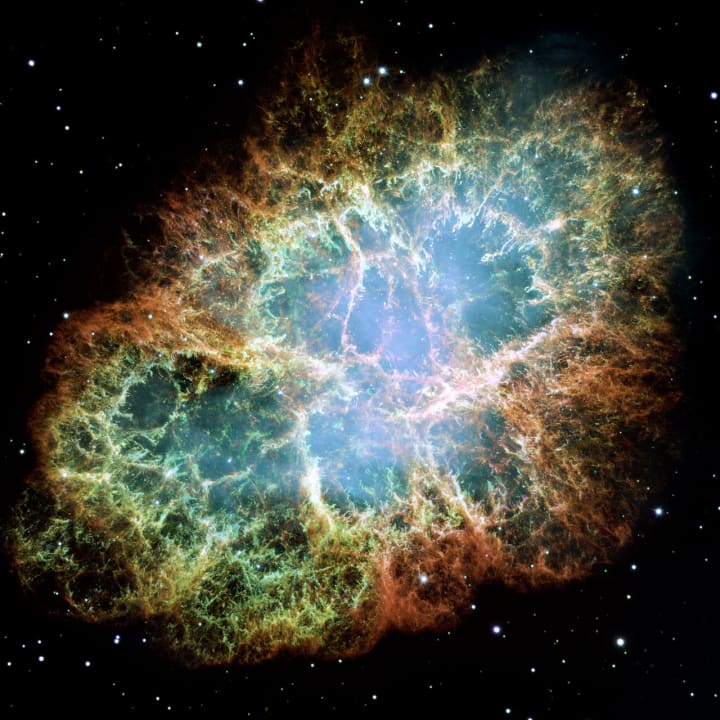
The galaxy is not chaos.
It is rotation.
Vast spirals turning around invisible centers. Dark matter holding what we cannot see. Light traveling across distances so immense that by the time it reaches us, it is already ancient.
We call ours the Milky Way.
As if naming it makes it smaller.
But the Milky Way contains hundreds of billions of stars. And there are billions of galaxies beyond it. When we peer through instruments like the James Webb Space Telescope, we are not simply looking outward.
We are looking backward in time.
The light touching our eyes tonight may have left its star before our species even learned to plant seeds.
And still — here we are.
Alive long enough to wonder.
Constellations: The Stories We Drew Across Fire
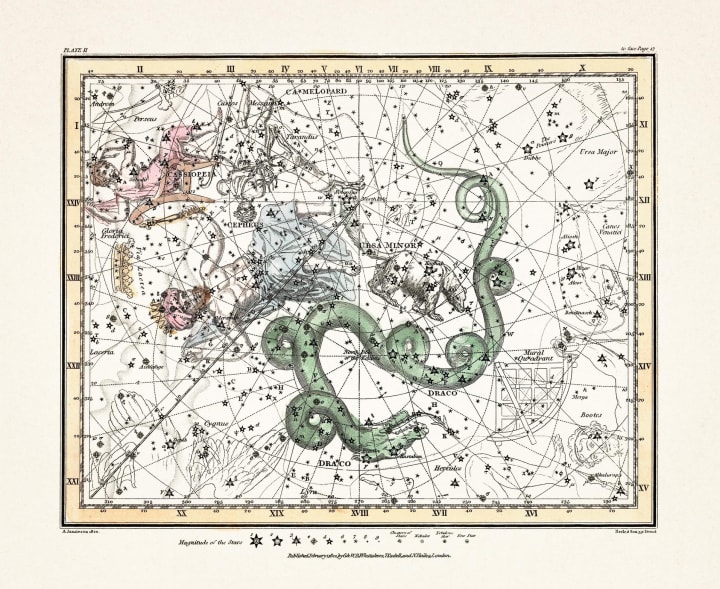
Constellations are not physical structures.
They are agreements.
The stars in Orion are not neighbors. Some are hundreds of light-years apart. But from Earth, they appear arranged — a hunter, a belt, a myth written in fire.
Ursa Major becomes a bear.
The Big Dipper becomes a ladle.
Ancient navigators crossed oceans by reading these patterns.
They mapped survival onto light.
That is what humans do.
We look into randomness and draw connection.
We look into infinity and draw belonging.
Constellations teach us something essential:
Meaning is not always in the stars.
Sometimes it is in the lines we choose to draw between them.
The Physics of Infinity
Infinity is not “forever.”
It is beyond measure.
The observable universe stretches roughly 93 billion light-years across — and that is only what we can detect. Beyond that? Expansion. Mystery. Possibility.
The universe is not static. It is accelerating outward. Space itself is stretching.
Imagine that.
The fabric of existence is not fixed — it is widening.
So when we speak of “beyond,” we are not being poetic. There truly is always more.
Beyond the last visible galaxy cluster.
Beyond the cosmic microwave background.
Beyond what mathematics can currently describe.
And yet the same physics that governs supernovae governs your heartbeat. The iron in your blood was forged in stellar collapse. You are not separate from the stars.
You are what happens when a galaxy becomes conscious.
Why We Keep Looking
We build telescopes because we ache for scale.
We need reminders that our arguments are small. That our fears, though real, are not ultimate. That the crisis of today is a flicker in a timeline that stretches beyond imagination.
Looking at the sky recalibrates the nervous system.
It slows us.
It whispers:
You are temporary.
And you are miraculous.
Both are true.
The stars do not demand we solve them.
They simply exist — burning, expanding, collapsing — without apology.
Perhaps that is the lesson.
And Beyond
“Beyond” is not a location.
It is a posture.
It is the willingness to admit that reality exceeds our current comprehension.
Beyond is the humility that keeps science alive.
Beyond is the mythic instinct that keeps art alive.
Beyond is the courage to say: I do not know — and I want to.
Galaxies will continue spinning long after we are gone. New stars will ignite. Constellations will rearrange. Infinity will remain uninterested in our certainty.
And still —
Somewhere, on some small planet orbiting an ordinary star, a being will tilt their head upward and feel the ancient recognition.
Not fear.
Recognition.
Because the universe is not only vast.
It is relational.
It made eyes capable of seeing it.
It made minds capable of asking.
And in that asking — in that reaching — infinity folds back on itself and becomes intimate.
We were born looking up.
And maybe, just maybe,
the cosmos has always been looking back.
When the Universe Learned to Name Itself
Consciousness, Stardust, and the Moment Infinity Spoke
There was a time before names.
Before hydrogen.
Before light.
Before direction.
Not darkness — because darkness requires contrast.
Not silence — because silence implies sound.
There was simply expansion.
An unfolding so immense and instantaneous that even now we struggle to describe it. We call it the Big Bang, but that word is a placeholder. It was not an explosion in space.
It was space becoming.
Energy cooling into particles. Particles gathering into atoms. Atoms forming stars. Stars forging heavier elements in their cores before collapsing and scattering their interiors outward like seeds.
The universe did not begin with intention.
It began with possibility.
And for billions of years, that was enough.
The Long Apprenticeship of Matter
Hydrogen learned gravity.
Gravity learned structure.
Structure learned fire.
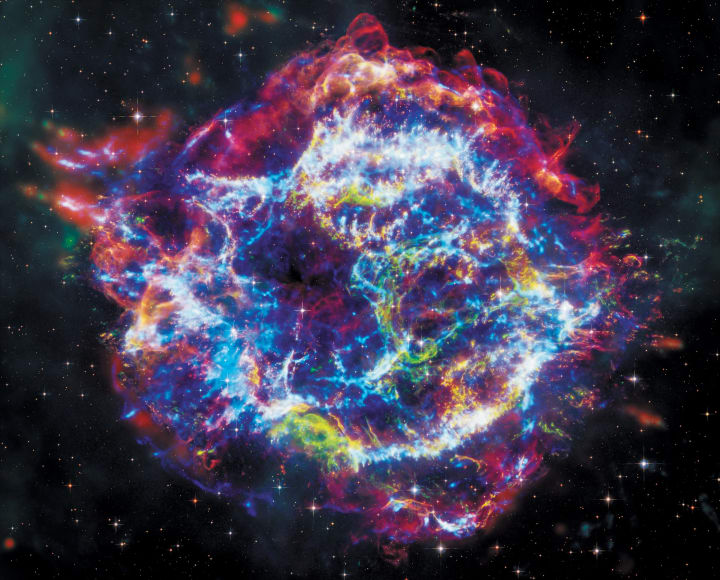
In the spiral arms of galaxies like the Milky Way, stars ignited and died in cycles so vast they dwarf our imagination. Supernovae flung carbon, oxygen, iron into interstellar space. Clouds collapsed again. New stars formed. Planets coalesced from debris.
It was a long apprenticeship.
Matter learning complexity.
And then — on one unremarkable planet orbiting one ordinary star — chemistry became curious.
We call that planet Earth.
We call that star Sun.
But at the time, there were no names.
There were oceans. Lightning. Amino acids forming fragile chains. Cells dividing. Evolution experimenting relentlessly across eons.
Life was not inevitable.
But it happened.
The First Gaze
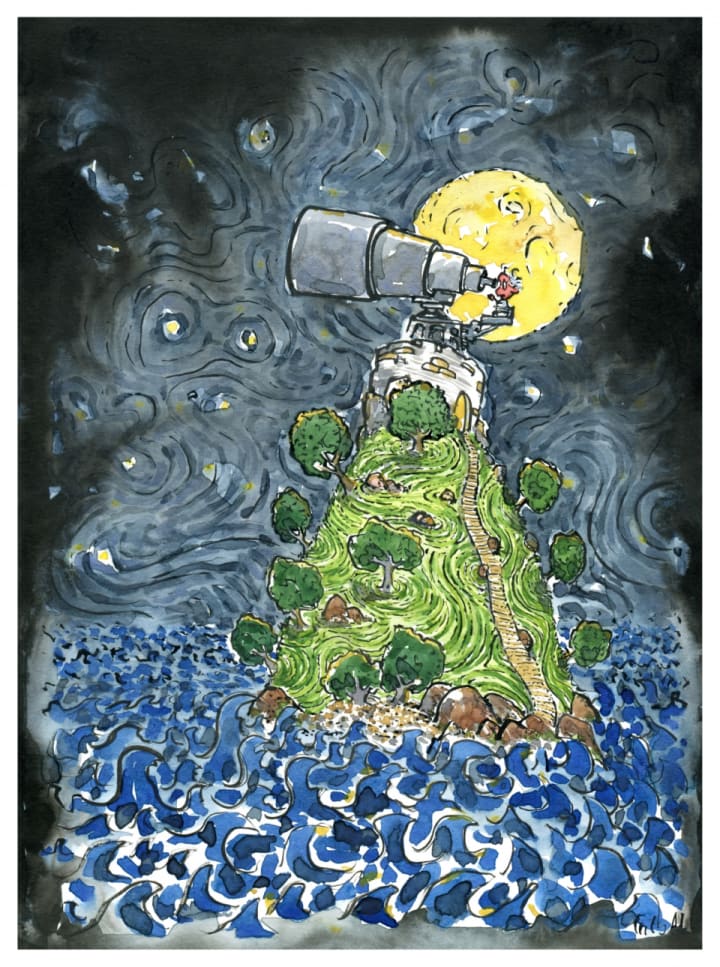
For most of Earth’s history, life crawled and swam and rooted itself into soil.
But eventually, something stood upright.
Hands freed from walking. Eyes lifted from the ground.
And for the first time, the universe looked at itself.
Not metaphorically.
Literally.
The calcium in human bones was forged in dying stars. The iron in human blood was born in supernova collapse. The oxygen in human lungs was exhaled by ancient stellar furnaces.
When early humans stared into the sky and traced patterns between distant lights, the cosmos was performing a recursive act.
Stardust observing starlight.
The moment consciousness asked, What is that?
The universe crossed a threshold.
It began to name.
Naming as Creation
To name something is not merely to label it.
It is to differentiate.
When we called the Orion a hunter, we were not describing physics. We were overlaying meaning onto geometry. When we named the Andromeda Galaxy, we transformed a smear of distant light into a neighbor.
Naming is intimacy.
Through language, we pulled infinity into relationship. We created myths. We mapped constellations. We built observatories. We launched telescopes like the Hubble Space Telescope and later the James Webb Space Telescope to peer deeper into the dark.
Every discovery is an echo of that first upward gaze.
We are not separate from the universe studying it.
We are the method by which it reflects.
The Threshold of Self-Awareness
The universe did not change when we named it.
But something else did.
Awareness creates responsibility.
Once the cosmos learned to speak through us, it inherited our questions. Our ethics. Our choices.
We are the only known place where infinity experiences hesitation. Regret. Hope.
Think about that.
Across billions of galaxies, scattered through immeasurable distances, the universe has become capable of love — here.
Capable of cruelty — here.
Capable of imagining futures that do not yet exist — here.
When the universe learned to name itself, it did not gain control.
It gained vulnerability.
Beyond the Name
Names are powerful.
But they are not ultimate.
We can calculate the age of the universe. We can model cosmic inflation. We can detect gravitational waves rippling through spacetime. And yet, the most astonishing fact remains simple:
The universe is aware.
Through us.
Through any consciousness, anywhere.
We are not the center of existence. But we may be part of its awakening.
And perhaps somewhere beyond our horizon — beyond the observable edge — other beings are also lifting their faces to unfamiliar stars.
Other forms of matter whispering their own first words.
Other corners of infinity learning to say: I am.
—
The universe did not begin with language.
But it grew toward it.
From plasma to planets.
From chemistry to consciousness.
From silence to speech.
And now, when you stand beneath a sky scattered with light and feel that quiet recognition in your chest —
That is not small.
That is the universe remembering itself.
Not through equations.
Not through explosions.
But through a mind that can say its own name.
—
We are not lost in the cosmos.
We are the cosmos remembering its center.
May we live as if the stars entrusted us with their fire —
and speak carefully,
for infinity now has a voice.
After the Last Star Fades
On the Quiet That Comes After Fire
Stars do not live forever.
Even galaxies will thin. Collisions will reshape structure. Black holes will evaporate over unimaginable timescales.
Cosmologists predict a future some call heat death.
Expansion continues.
Matter decays.
Light dims.
Trillions upon trillions of years from now, the universe may become sparse beyond comprehension.
No new stars.
No fusion.
Only cold remnants drifting through widening space.
And yet —
Even this is not chaos.
It is thermodynamics.
Energy redistributing toward equilibrium.
The final whisper of entropy.
But here is where imagination stretches beyond current theory:
If consciousness once emerged from matter, could it emerge again?
If structure once formed from plasma, could new structure arise in ways we do not yet conceive?
Or perhaps awareness was always a phase.
Perhaps the universe required a period of self-reflection — a luminous interval where it could say I am — before releasing language back into silence.
After the last star fades, light will not be needed.
It will have already done its work.
Because once the universe has known itself, the memory of that knowing is woven into its history forever.
Nothing is erased.
Not even consciousness.
If heat death arrives, it will not be tragic.
It will be completion.
The final expansion of a breath that began before time.
And maybe — just maybe — in some incomprehensible recursion beyond spacetime, another beginning stirs.
Not repetition.
Not cycle.
But transformation beyond our physics.
After the last star fades, infinity does not end.
It simply changes its expression.
Written in devotion to the vastness that made us and the consciousness that carries it forward. If the universe is becoming aware through us, then the way we live is not small. It is cosmic responsibility.
— Flower InBloom
About the Creator
Flower InBloom
I write from lived truth, where healing meets awareness and spirituality stays grounded in real life. These words are an offering, not instruction — a mirror for those returning to themselves.
— Flower InBloom
Keep reading
More stories from Flower InBloom and writers in Humans and other communities.
I wanted to title this something different, but worried that my chosen title might cause problems entering the United States in the future so this is the new title. It's the greatest title. No one has ever written a title better than this. (All titles unrelated to content).
Let me be honest. I am finding this difficult. Now, I like a challenge, a stretch, a bit of an obstacle course. “Write about the decline of the British Empire in the form of a narrative poem in which your protagonist is an artichoke” I read, and flex my fingers. “Write a haiku to evoke the sensation of sibilance using only the first half of the alphabet.” “Well”, I think to myself, “this should be fun.” But “write about a system that isn’t working”? A system that isn’t working? Now? In 2026? ONE system? My favourite system that isn’t working? The sexiest system that isn’t working? The one giving me the most angst day to day? The one giving me the most existential dread? I am, as I say, finding this difficult. I will own that I have contemplated writing a thousand words on why the steady “all on” setting on my fairy lights is the EIGHTH of seven options which must be sequentially activated to get there, because that is a system that some fool came up with and it definitely doesn’t work, and now who is paying the price, eh? But how can I write about my fairy lights when…. When…. When….
By Hannah Moore4 days ago in Humans


Comments
There are no comments for this story
Be the first to respond and start the conversation.