
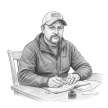

The hog killing always came after the first hard freeze, when the temperatures stayed low enough to keep meat from spoiling and the work could proceed without flies buzzing around the carcass. In the mountains of Western North Carolina, this usually meant late November or early December, though some years we waited until January if the weather stayed warm.
My family had been doing this for generations. Every winter, the men would gather before dawn, their breath visible in the cold mountain morning, and prepare for a day of work that would feed us through the lean months ahead. This tradition connected us to something older than memory, a practice born of necessity that had transformed into ritual.
I was ten the first time Mama let me stay for the whole process. Before that, I'd been sent inside when the actual killing started, considered too young to witness what she called "the hard parts." That year, though, she relented. "You eat the meat," she said. "You should know where it comes from."
The preparation began days before. We'd set up long tables in the yard, scrubbed the big iron kettle until it shone, and gathered every knife in the house for sharpening. The grindstone came out, and the men would take turns working the blades until they could split a hair. Sharp knives made the work easier and safer, they said. Dull blades caused accidents.
On the morning itself, we rose while stars still filled the sky. Woodsmoke drifted from chimneys up and down the holler as other families began their own preparations. This was communal work. What one family accomplished alone in a full day, three families could finish by noon when working together. The hogs would be divided fairly, with choice cuts going to those who'd contributed the most labor.
The men handled the killing and the initial butchering, work that required strength and a certain hardness of spirit. I watched them work with practiced efficiency, their movements economical and sure. There was respect in how they approached the task, an acknowledgment that taking a life, even for food, demanded seriousness.
My job, along with the other children old enough to help, came later. We carried buckets of water from the spring, keeping the washing station supplied. We minded the fire under the kettle, making sure the water stayed at the right temperature for scalding. We ran messages between the work stations and fetched tools when needed.
The women did the detail work. They transformed the raw meat into food we could preserve and store. Hams and shoulders went into the smokehouse. Fresh sausage got made from scraps and seasonings passed down through families. Lard rendered in huge pots, the smell filling the holler with something rich and sustaining. Nothing went to waste. Even the organs found use, the liver fried up fresh for dinner, the heart and tongue saved for later meals.
Mama worked the grinding table, feeding meat through the hand-cranked grinder while her best friend Rachel mixed spices for sausage. Their hands moved with the kind of knowledge that lives in muscle and bone, the measurements more feeling than science. A pinch of sage. Some red pepper. Salt to taste. Each family had their own recipe, jealously guarded and carefully taught.
I learned to trim fat from meat that afternoon, my hands growing tired from the unfamiliar work. An older woman my great-aunt named Florence worked beside me, showing me the proper angle for the knife, how to follow the natural lines in the meat. "You do it wrong, you waste good eating," she said. "You do it right, you honor the animal that gave its life."
That phrase stayed with me. Honor the animal. The ritual of hog killing carried weight beyond simple food preparation. It acknowledged our place in the natural order, our dependence on other creatures for survival. The ceremony of it, the gathering of community, the giving thanks prayer for the animal, the careful attention to each step, transformed necessity into something almost sacred.
By late afternoon, the work was done. The smokehouse held its precious cargo. Jars of lard lined the shelves in our cellar. Fresh meat filled the icebox and whole hams hung in the smoke house. Exhausted adults sat on overturned buckets, drinking coffee and talking about weather predictions for the coming months.
The children, released from our duties, ran wild through the yard until someone called us in for supper. That night we ate fresh tenderloin, fried crispy and served with biscuits and gravy made from the pan drippings. The table held more food than we'd seen in months. Everyone ate until they were stuffed, a celebration of abundance after the hard work.
As I grew older, my role in the ritual expanded. By twelve, I worked the cutting tables alongside the women. At fifteen, I helped with the grinding. At seventeen, I learned to make sausage, mixing the spices by feel the way Mama had taught me.
The ritual taught me things beyond butchering technique. I learned about interdependence, how survival in the mountains required cooperation. I learned about respect for food and the creatures that provided it. I learned that hard work shared with others became something more than labor, it became fellowship.
I also learned the stories. While we worked, the older generation talked. They told about hog killings from their youth, about the year the weather turned warm mid-process, and they had to work through the night to finish before the meat spoiled. About the time someone's prize hog escaped right before killing day and led half the holler on a chase through the woods. About families who'd helped each other through hard times, sharing meat when one family's hog died before it could be properly fattened.
These stories wove us into the fabric of the community. They reminded us that we belonged to something larger than ourselves, a continuity of people and practice stretching back generations and forward into an uncertain future.
The ritual changed over time. Refrigeration made the timing less critical. Store-bought meat became more available and affordable. Some families stopped raising hogs altogether, finding it easier to buy from the grocery. The gatherings grew smaller as young people moved away for work and older folks passed on.
My last hog killing happened thirty years ago. Granny had gotten too old for the heavy work, and I'd moved to town for a job that paid better than anything available in the holler. We went through the motions that final time, a handful of us keeping tradition alive more from habit than necessity.
The meat tasted the same. The work felt familiar. The fellowship warmed me like it always had. Yet something had shifted. We all knew we were participating in an ending, performing a ritual that might die with this generation.
I think about those winter mornings often now. The cold mountain air. The sound of knives being sharpened. The steam rising from the scalding kettle. The laughter of people working together toward a common goal. The satisfaction of hard work completed and sustenance secured.
Those winter gatherings taught me who I was and where I came from. They grounded me in a reality that predated modern convenience, a time when community meant survival and ritual meant respect. The lessons I learned at those cutting tables have stayed with me through decades of change.
Sometimes, in the dead of winter, I catch myself looking out at the snow-covered mountains and remembering. The memory arrives complete, all senses engaged. I can almost feel the cold numbing my fingers, almost hear the murmur of voices around the work tables, almost taste that first bite of fresh tenderloin.
The ritual may be gone, the practice abandoned. Yet it lives on in me, in the values it taught and the connections it forged. That might be the truest purpose of any ritual: to bind us to each other and to our past, to teach us what matters, and to remind us that we are part of something greater than ourselves.
Winter still comes to the mountains. The cold still settles into the hollers. Families still gather, though now they meet in warm houses over store-bought ham. The old ways fade like footprints in melting snow.
I carry those winter mornings with me wherever I go. They shaped my understanding of work and community, of sacrifice and gratitude, of the complex relationship between humans, animals, and the land that sustains us.
Winter remembers, even if we forget. And in remembering, we honor those who came before and the rituals that made us who we are.
About the Creator
Tim Carmichael
I am an Appalachian poet and cookbook author. I write about rural life, family, and the places I grew up around. My poetry and essays have appeared in Beautiful and Brutal Things, My latest book. Check it out on Amazon
Keep reading
More stories from Tim Carmichael and writers in Humans and other communities.
The Map of the Holler
Some maps are drawn on paper and some are drawn in memory. The first kind shows you how to get from one place to another. The second shows you who you are and where you come from. The holler where I grew up never appeared in an atlas, though it shaped every turn of my life.
By Tim Carmichael4 months ago in Humans


Comments (1)
"You do it wrong, you waste good eating," she said. "You do it right, you honor the animal that gave its life." I love this, Tim, and the time and attention you gave this piece! 😊 Community and traditions may fade over time, but in the heart, they remain forever. This story took me back to my grandparents' farm in the Berkshires. They were always such hard workers and never wasted anything.