
The Map of the Holler
A Journey Drawn in Memory and Mountain Dirt
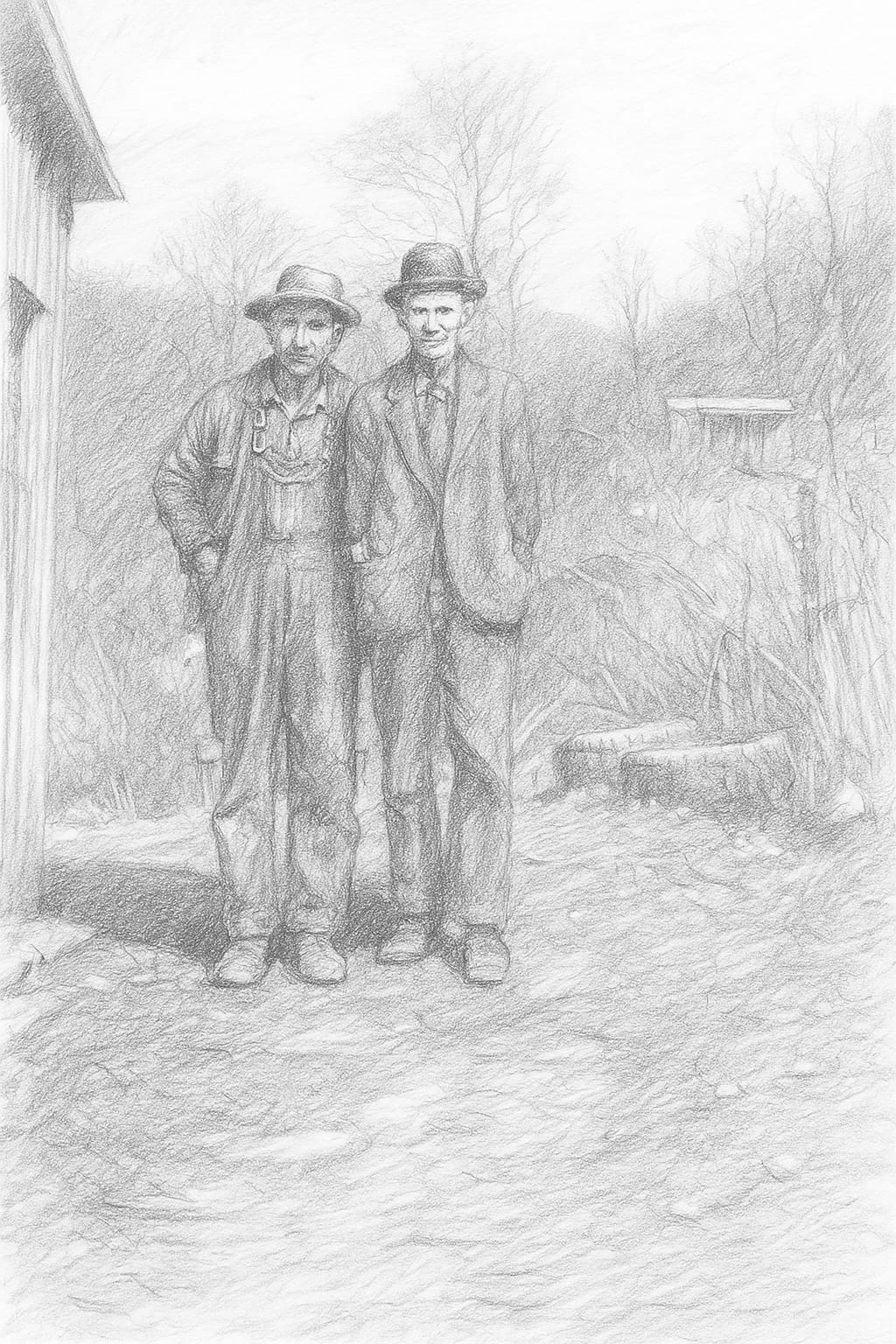
Some maps are drawn on paper and some are drawn in memory. The first kind shows you how to get from one place to another. The second shows you who you are and where you come from. The holler where I grew up never appeared in an atlas, though it shaped every turn of my life.
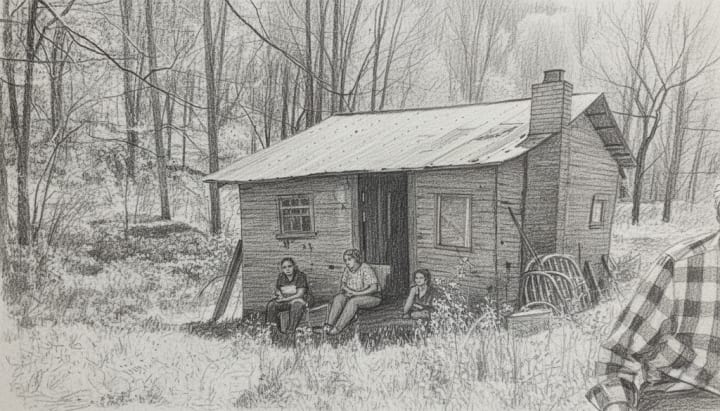
I was born in the Appalachian Mountains of western North Carolina. Our home was a small two-room house that stood close to the edge of the woods. There were eight of us living there, and every inch was filled with life. The stove glowed red in winter, and its warmth reached every corner. The smell of cornbread drifting through the house meant that we had made it through another hard day.
The dirt road that wound through our holler ran straight into the mountain. It took about forty minutes to walk to the bus stop each morning. We started out before sunrise, our shoes crunching on frost and our breath showing like smoke. The bus waited at the bottom of the hill, and it always felt like it belonged to another world entirely.
My father was a moonshiner. That trade was his way of keeping us fed and clothed. His still sat deep in the woods where few would think to look. He built it from oak barrels and copper lines, and he knew every sound that fire made as the mash turned to shine. His eyes were blue, clear and piercing, and when he looked at you, you paid attention. He was a stern man who believed in the saying "spare the rod and spoil the child". His word carried authority, and every one of us knew it.
My mother worked in a shoe factory in town. She left before daylight carrying her lunch in a paper bag and came home long after dark. The factory was loud, the kind of place that wore a person down. When she returned home, her hands were stained with polish, though her spirit stayed strong. While she cooked, she sang. Her voice filled the house, gentle and steady, carrying both strength and comfort. Those songs made the small space feel like a sanctuary.
When I was ten, my parents divorced. That change shook the ground beneath us, though Mama never allowed it to break her resolve. She raised all of us by herself from then on. We visited Daddy on the weekends, and though his place felt different, he remained a part of our lives. He kept running his still, and I believe that work gave him peace.
Weekends meant work for us too. The mountains were our storehouse, and we took from them what we could. My brothers and I gathered moss, bark, ginseng, and leaves to sell to the traders who came through the valley. I learned early which roots to dig and which to leave to grow again. The dirt paths through the forest became as familiar as the lines on my hand. I can still see the way sunlight fell through the trees and hear the creek running beside us while we worked.
The holler was filled with family and neighbors who lived by the same creed, help when help is needed. If a roof needed patching, everyone came. When a hog was butchered, each home received a share. When someone fell ill, food showed up without a word being said. We had little in the way of money, though we had an abundance of fellowship.
As I grew older, I began to see the mountains differently. They had always protected me, though they also kept me tied close. From the ridge behind our house, I could see the train tracks far in the valley. On clear evenings, the whistle reached across the hills. I used to stand there and wonder where those trains were heading and what kind of people lived beyond the next ridge.
When I turned eighteen, I left home to work in a textile mill two towns over. The mill was a constant roar of machines turning thread into cloth. At first, I felt proud to earn my own money. It seemed like freedom, though over time, I knew it was not the life I wanted. The days ran together, and I could feel something in me longing for more.
I decided to go to college. No one in my family had ever done that, though I could not let go of the idea. With what little I saved and a small grant, I enrolled in a state college. It felt like stepping onto another planet. I carried one suitcase and a strong will. The days were long and the work hard, though I learned to keep pushing forward. Slowly, I began to build a new kind of life, one based on education and hope.
I was the only one in my family who went to college. That choice did not make me better, though it gave me a chance to work my way out of poverty. Every class and every late night of study felt like laying one more brick in a road that had started long ago on that mountain trail to the bus stop. When I graduated, I stood on that stage and thought about Mama, who had sung her way through endless days so that her children might have a chance.
Time moved on. I built a life away from the holler, though the mountains never left me. Every visit back home brought the same feeling of belonging. Mama had grown older, though her spirit stayed bright. Her hair had turned silver gray, her eyes carried wisdom, and when she sang, the sound brought back every memory of our childhood.
Mama died unexpectedly at sixty-five. The news reached me like a hard wind that takes your breath before you can stand against it. She had gone peacefully in her sleep, and though her body was gone, the strength she gave us remained. We buried her up on the mountain beside her parents and grandparents. Nearly all our family rests there now.

I go back to visit her grave about once a month. The path leading up that hill feels both familiar and sacred. The trees sway gently, and the sound of the creek carries through the valley below. I bring fresh flowers, sometimes wild ones, and I talk to her as if she is still sitting at the table back home. I tell her about my writing, about the changing world, about how her lessons still guide me. Standing there among those old stones, I can feel her presence as sure as the sun warming my shoulders.
Daddy lived many years after she passed. He reached ninety-three before his time came, and by then I was fifty-four. He is buried in the Veterans cemetery, far from the mountain where Mama lies. When I visit him, I sometimes bring a handful of dirt from the old homeplace, so a piece of the holler stays near him. In his later years, he softened some, though the sternness that had defined him never faded completely. We spent evenings on his porch, watching the light fade across the hills. Every now and then he would nod toward the horizon and say, “Son, these mountains raised us right.”
After his funeral, I walked the old path behind our house. The trees had grown thicker, and vines covered the clearing where his still once stood. I followed the trail up to the ridge, stopping where I used to stand as a boy. From there, the valley stretched wide before me, green and endless.
That day, I realized the holler had drawn its own map inside me. Each bend in the trail, each face I had known, each moment of work or loss had formed a landmark of its own. The sound of my mother singing while she cooked, the clear blue of my father’s eyes, the long walk to the bus stop on cold mornings, the laughter of my brothers and sisters, the pride of graduation day, all of it formed the landscape of my life.
The holler taught me that strength grows from struggle. It showed me that love can live inside hardship, and that faith does not need fine words to stay alive. It comes through action, through presence, through working and believing when there is little reason to.
If I could draw that holler on a map, it would show no towns or rivers. It would be made of sounds and memories, the song of the creek, the slam of the screen door, the boiling of the still, the voices of kin sharing supper. It would show the trail that led to the bus stop, the ridge where the train called through the valley, and the two-room house that somehow held eight lives and enough love to keep them steady.
I once thought maps were meant to lead you to new ground. Now I understand the truest ones lead you home. The holler lives in my speech, in the way I write, in the way I remember those who came before me. No matter how far I travel, I can close my eyes and find my way back.
That place made me who I am. The mountains gave hard lessons, though they also gave us each other. I came from a land that demanded much and rewarded endurance. It shaped a family that held together, a boy who dreamed beyond the ridge, and a man who learned that the road forward always leads through memory.
That is the map I carry.
The map of the holler.
Authors Note: All pencil drawings were done by my brother
About the Creator
Tim Carmichael
I am an Appalachian poet and cookbook author. I write about rural life, family, and the places I grew up around. My poetry and essays have appeared in Beautiful and Brutal Things, My latest book. Check it out on Amazon
Reader insights
Outstanding
Excellent work. Looking forward to reading more!
Top insights
Heartfelt and relatable
The story invoked strong personal emotions
Compelling and original writing
Creative use of language & vocab
Easy to read and follow
Well-structured & engaging content
Excellent storytelling
Original narrative & well developed characters
Masterful proofreading
Zero grammar & spelling mistakes
On-point and relevant
Writing reflected the title & theme
Keep reading
More stories from Tim Carmichael and writers in Humans and other communities.
The Map that Carries Me
When I was a young boy, my Mama taught me to move through life with dignity and grace. She prepared meals on a wood burning stove while keeping an eye on her four children, each demanding in their own way. I watched her combine handfuls of flour, water, and whatever vegetables we had, and somehow it became a nourishing meal. She measured care with her hands, her tone, her love, the way she paused before answering each of our questions. I learned from her that survival required creativity, patience, and, above all, a willingness to love fully, even when circumstances tried to make that impossible.
By Tim Carmichael6 months ago in Humans
iPhone 17e: A Quiet Shift in Apple’s Future
Every year, people wait for the next iPhone as if it carries a promise. A promise of better photos. A promise of smoother performance. A promise that this small object in our pocket will feel just a little closer to what we need. The conversation around iphone 17e feels different. It is not only about speed or camera numbers. It is about direction. Where is Apple heading? Who is this phone truly for? And why does the name itself suggest something slightly unexpected? The iphone 17e has sparked curiosity long before release, and that curiosity reveals something deeper about how we see technology in our daily lives.
By Muqadas khan7 days ago in Humans


Comments (5)
This is beautiful!
Thank you for sharing this map of sacred places
This is so touching and personal. I love getting to know people through these stories. Congratulations on graduating college!
So many memories tied up in this. Wonderful story.
Tim, a wonderful story! Thanks for sharing. I wish you would read sme of my poems. What exactly is a holler?