
America’s Top 10 Biker Gangs: Outlaws of the Open Road
Wave Wednesday Edition
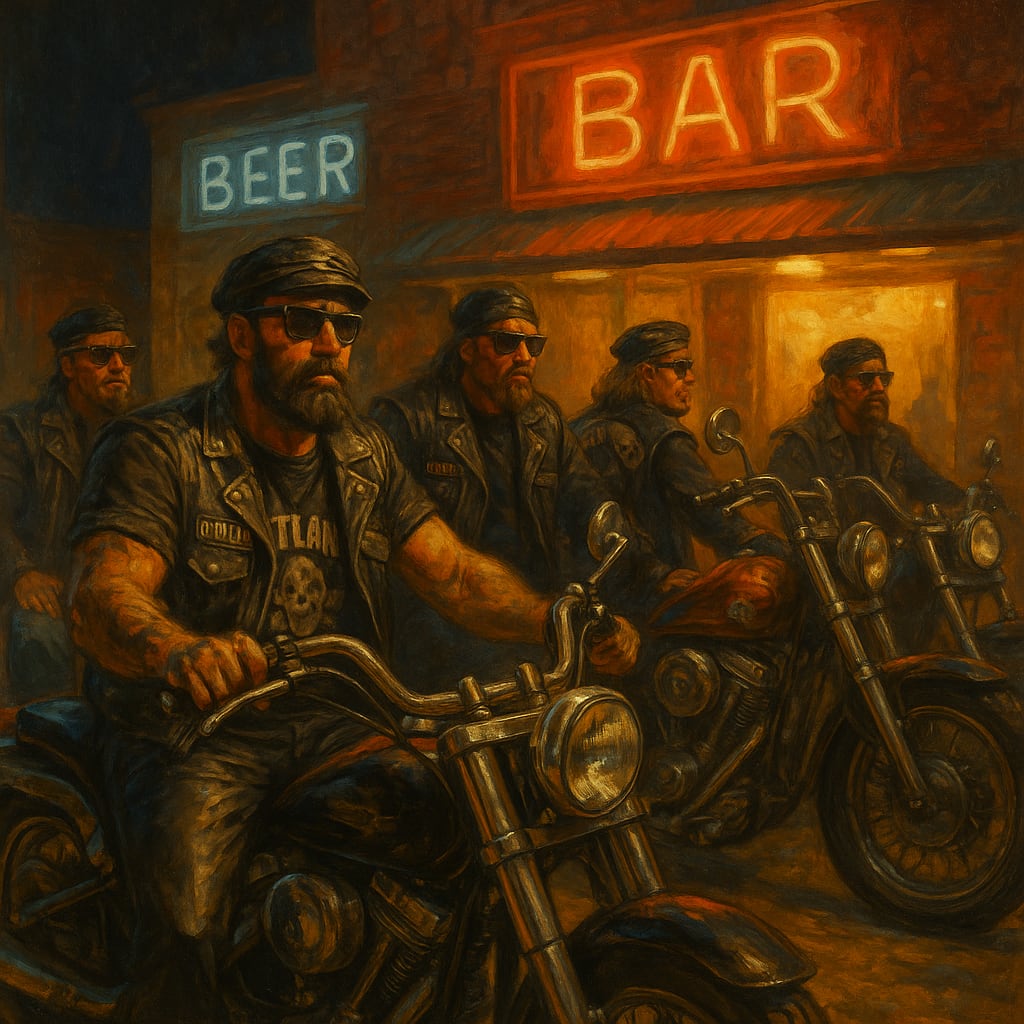
The night hums with anticipation. A low rumble builds on the horizon, like thunder rolling across asphalt. Then you see it: a swarm of chrome and leather, engines growling in unison, headlights burning like fireflies in formation. They roar past, the smell of gasoline and cigarettes trailing in their wake. No introductions needed. You already know what they are.
For decades, biker gangs have been both feared and romanticized, painted as outlaws, freedom seekers, criminals, patriots, and everything in between. They were born from postwar disillusionment, forged in the camaraderie of veterans who traded uniforms for denim and steel. Over time, they became symbols of rebellion, family, and sometimes infamy.
This is the story of the Top 10 biker gangs in America... where they came from, what they stood for, and how they ride today.
1. Hells Angels MC – California, 1948
The undisputed kings of outlaw motorcycle clubs, the Hells Angels began in Fontana, California, formed by WWII veterans looking for brotherhood on the road. Their winged skull logo is iconic worldwide, and their reputation rides on equal parts myth and mayhem.
They became legends in the 1960s thanks to Hunter S. Thompson’s Hell’s Angels and their infamous role at the Altamont Free Concert, where violence cemented their image as the ultimate outlaws. Today, they have chapters on nearly every continent, fiercely protective of their brand and brotherhood.
Then: Patriotic, rebellious, anti-establishment.
Now: A global powerhouse — both motorcycle club and cultural icon.
2. Mongols MC – Los Angeles, 1969
Founded by Latino Vietnam veterans excluded from Hells Angels membership, the Mongols MC grew into the Angels’ fiercest rivals. Known for their black-and-white logo of Genghis Khan, they carved a reputation as ruthless and territorial.
The Mongols dominated Southern California, often clashing violently with rival clubs. Federal investigations in the 2000s targeted their leadership, but the club still thrives, its outlaw culture intact.
Then: Born from exclusion, fueled by pride.
Now: Still one of the most feared clubs on the West Coast.
3. Outlaws MC – Illinois, 1935
Older than the Hells Angels, the Outlaws Motorcycle Club began outside Chicago in 1935, adopting the skull-and-crossbones “Charlie” logo. They’re often called the “original” outlaw club.
During the postwar biker boom, they expanded across the Midwest and beyond, becoming one of the “Big Four” outlaw clubs. Their motto? “God Forgives, Outlaws Don’t.”
Then: A blue-collar brotherhood born before the outlaw craze.
Now: Still thriving across the U.S. and abroad, one of the most enduring rivals to the Angels.
4. Bandidos MC – Texas, 1966
Founded in San Leon, Texas, by Marine vet Donald “Popeye” Chambers, the Bandidos quickly became infamous. Their red-and-gold colors and sombrero-wearing logo made them stand out, and their motto... “We are the people our parents warned us about”... said the rest.
The Bandidos grew into an international club with chapters across Europe and Australia. Alongside the Angels, Mongols, and Outlaws, they’re considered one of the most powerful outlaw clubs worldwide.
Then: A Texas-born rebellion.
Now: A global outlaw brand with southern grit.
5. Sons of Silence MC – Colorado, 1966
Smaller but ferocious, the Sons of Silence were founded in Colorado and quickly spread through the Rocky Mountains and Midwest. Their motto? “Donec Mors Non Seperat” — Until Death Separates Us.
Often overshadowed by the larger clubs, the Sons of Silence earned respect for their tight-knit brotherhood and fierce defense of territory.
Then: Quiet but deadly.
Now: Still running strong across the Rockies, fiercely independent.
6. Pagans MC – Maryland, 1959
The Pagans began as a motorcycle club for free spirits but evolved into one of the most violent outlaw gangs on the East Coast. With their Norse fire god logo and reputation for ruthlessness, the Pagans carved out territory from New Jersey to Florida.
They’re notorious for clashes with the Hells Angels, including brutal wars in the 1980s. Unlike some rivals, the Pagans remain largely East Coast-based, but their influence there is absolute.
Then: A free-spirited club turned hardcore outlaw force.
Now: The dominant MC of the East Coast.
7. Vagos MC – California, 1960s
With their green colors and Loki mascot, the Vagos MC grew from California’s desert highways into an international club. They’re often called the “green nation,” and their reputation for drug trade connections made headlines in the 1970s and ’80s.
Despite repeated law enforcement crackdowns, the Vagos remain resilient, their chapters stretching across the Southwest, Mexico, and even Europe.
Then: Rebels with a desert edge.
Now: International, still thriving in the shadows.
8. Gypsy Jokers – Oregon, 1950s
The Gypsy Jokers started in San Francisco but found their true home in Portland, Oregon. Known for their colorful, menacing jester logo, they became the quintessential Northwest outlaw club.
Their history is full of clashes with law enforcement and rival gangs, but they remain one of the oldest surviving clubs, fiercely loyal to their Pacific Northwest roots.
Then: A product of 1950s counterculture.
Now: A hardened outlaw presence in the Northwest and Australia.
9. Highwaymen MC – Detroit, 1954
Born in Detroit, the Highwaymen were built for toughness. Known for their skull-and-wings logo and aggressive reputation, they became the largest outlaw club in Michigan.
Their history includes everything from charity rides to federal indictments, but their roots remain in Detroit’s working-class neighborhoods.
Then: Detroit muscle on two wheels.
Now: A resilient regional power, still feared on their home turf.
10. Warlocks MC – Florida, 1960s
Founded by Vietnam veterans in Orlando, the Warlocks are a Southern powerhouse. Their fiery phoenix logo symbolizes rebirth and survival, and their chapters spread through Florida and the Southeast.
The Warlocks are known for their close ties to veteran culture, with many early members carrying combat experience straight into biker brotherhood.
Then: Soldiers turned bikers, finding freedom in chaos.
Now: A Southeastern stronghold with enduring legacy.
The Evolution of Outlaw Clubs
Biker gangs began as veterans’ clubs... groups of young men who missed the camaraderie of the military and found it on two wheels. But by the 1960s, they had become both cultural icons and lightning rods for law enforcement.
Hollywood mythologized them in films like Easy Rider and The Wild Angels, painting bikers as symbols of freedom, rebellion, and danger. The truth, as always, was more complicated. Some chapters embraced organized crime; others were simply about riding, brotherhood, and independence.
Today, many of these clubs still battle stigma. Law enforcement labels them criminal enterprises, but members argue they’re misunderstood... family first, freedom always. Modern chapters balance charity work, community rides, and a fierce defense of their outlaw traditions.
Closing Reflections
Biker gangs are contradictions on wheels. They’re brotherhoods built on loyalty, yet feared as outlaws. They’re both folk heroes and cautionary tales, symbols of the American love for freedom and its unease with those who live outside the rules.
Engines fade, reputations shift, but the myth of the biker gang endures. Whether you see them as criminals or cowboys, one truth remains: when the thunder of Harleys fills the air, America listens.
Because in the end, the outlaw motorcycle club is more than just men on machines. It’s a rolling piece of Americana... loud, defiant, and unforgettable.
About the Creator
The Iron Lighthouse
Where folklore meets freeway. A guide to the strange heart of the American backroads...
Keep reading
More stories from The Iron Lighthouse and writers in Humans and other communities.
The Neon Road: America’s Last Glowing Sign Towns
It’s midnight on an empty stretch of Route 66. The desert is quiet, the stars endless, and just when you wonder if you’re truly alone, it happens: a flicker of pink and turquoise appears on the horizon. As you get closer, the hum of neon grows louder, buzzing like a heartbeat from another age. There it is... a diner promising “Open 24 Hours”, a motel with a giant glowing arrow pointing toward its cracked asphalt parking lot, a bowling alley marquee promising leagues on Tuesday nights.
By The Iron Lighthouse5 months ago in Wander
Kindred Spirits vs Soulmates: Key Emotional Differences.
The terms “kindred spirit” and “soulmate” are often used interchangeably, but they describe fundamentally different kinds of connections. Both are meaningful, but the emotional dynamics, depth, and purpose of each connection vary. Understanding these distinctions helps you recognize the nature of your relationships and navigate them with clarity, emotional balance, and intention.
By Wilson Igbasi7 days ago in Humans
The Devil's Cut
“Comrade, finally you’re awake.” The voice was smooth, sensual. A flickering incandescent bar was all that lit the white, sterile room. All Vladimir remembered was everything going black. He tried to move his arms and found them strapped to the gurney.
By Matthew J. Fromm4 days ago in Fiction


Comments
There are no comments for this story
Be the first to respond and start the conversation.