
Alone in the Crowd: Why Modern Life Makes Us Lonelier Than Ever
loneliness in modern life.
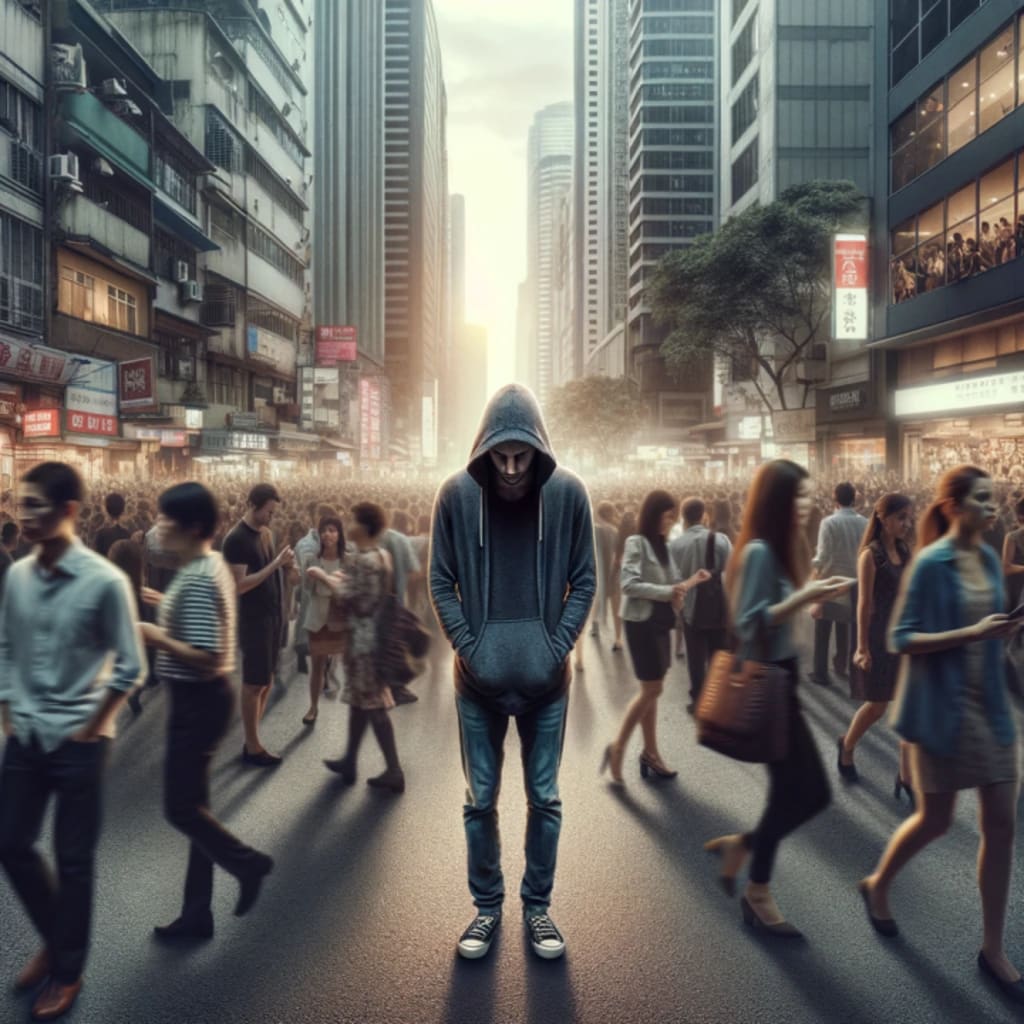
Walk into a bustling café on a weekday afternoon, and you’ll notice something curious. Every table is occupied, every seat filled, and yet the air feels oddly quiet. Heads are bowed, not in conversation but over glowing screens. Friends sit together, each absorbed in their own digital worlds. Strangers occupy the same space, but rarely share a word. We are surrounded by people, yet many of us feel profoundly alone.
Loneliness, once thought of as a problem of isolation, has become a paradox of modern life. Despite unprecedented levels of connectivity, rates of reported loneliness are rising worldwide. What is it about our modern lifestyle that makes us feel so disconnected, even when we are constantly “in touch”?
The Disguised Epidemic
Loneliness is often invisible. Unlike physical illness, it leaves no obvious scars, yet its effects are deeply felt. Studies have linked chronic loneliness to higher risks of depression, anxiety, cardiovascular disease, and even early mortality. Some researchers describe it as being as harmful as smoking fifteen cigarettes a day.
The surprising part is that loneliness does not always stem from being physically alone. Many people surrounded by family, coworkers, or classmates still report feeling lonely. This suggests that loneliness is not merely about proximity—it’s about connection. And this is where modern life, for all its conveniences, has complicated things.
Technology: Connection or Illusion?
Social media was designed to bring us closer together. In many ways, it has. We can message friends across the globe instantly, video call loved ones in other time zones, and share moments with hundreds of people at once. Yet this same technology often deepens loneliness rather than easing it.
Part of the problem lies in the curated nature of online life. Scrolling through endless images of friends traveling, succeeding, or celebrating can spark feelings of inadequacy. We compare our messy realities to polished snapshots and conclude—wrongly—that we are falling behind. Instead of feeling connected, we feel excluded.
Moreover, online interactions often lack depth. A “like” or emoji reaction is not the same as a heartfelt conversation. While digital tools provide quantity of connections, they don’t always provide quality. As a result, people can have hundreds of online friends and still feel emotionally isolated.
The Pace of Modern Living
Technology is not the only culprit. The relentless pace of modern life also plays a role. Many of us live in cities where neighbors are strangers and schedules are packed from morning to night. Work demands extend beyond the office, creeping into evenings and weekends. Even leisure time is often consumed by productivity-driven hobbies, fitness goals, or side hustles.
In this environment, relationships are often deprioritized. Meeting a friend for coffee can feel like a luxury rather than a necessity. Conversations are cut short, replaced by quick texts or delayed indefinitely. Slowly, meaningful connections erode, leaving behind a subtle emptiness that grows with time.
Shifting Social Structures
Another factor is the changing structure of society. In previous generations, people often lived close to extended family, attended community gatherings, or participated in religious groups. These institutions provided built-in networks of belonging.
Today, many of these bonds have weakened. Families are scattered across countries, religious affiliation has declined, and local communities are less cohesive. Without these anchor points, individuals must work harder to build and maintain social ties. For some, the effort feels overwhelming, leading to withdrawal and loneliness.
The Stigma of Loneliness
Ironically, loneliness itself can be isolating. Admitting to feeling lonely is often stigmatized, as if it were a personal failure rather than a human condition. People hesitate to talk about it, fearing they’ll be judged as needy or unpopular. This silence only reinforces the problem, trapping individuals in a cycle of isolation.
Modern culture also glorifies independence and self-sufficiency. While autonomy is valuable, it can create pressure to appear perfectly capable on one’s own. Asking for companionship, vulnerability, or emotional support is sometimes seen as weakness. The result? Many people suffer in silence, even when surrounded by potential sources of comfort.
The Biology of Belonging
What makes loneliness particularly painful is that it goes against our biology. Humans are social creatures, wired for connection. From our earliest ancestors relying on tribes for survival to the bonds of family and friendship today, belonging has always been essential.
When those connections are lacking, our brains interpret it as a threat, triggering stress responses. This is why loneliness often feels heavy, draining, and even physically painful. It isn’t just in our heads—it’s in our bodies. Recognizing this helps us understand that loneliness is not weakness, but a natural signal: just as hunger tells us we need food, loneliness tells us we need connection.
Finding Connection in a Lonely World
If modern life fuels loneliness, how do we resist it? The answer is not as simple as deleting social media or moving to the countryside. Instead, it requires intentional choices to prioritize meaningful connection.
Quality over quantity: Focus on nurturing a few deep relationships rather than chasing hundreds of shallow ones. A single heartfelt conversation can be more fulfilling than dozens of online interactions.
Be present: Put away the phone during meals or meetings. True connection requires undivided attention.
Rebuild community: Join groups based on shared interests—book clubs, sports teams, volunteer organizations. These create opportunities for authentic bonds.
Practice vulnerability: Open up about struggles, including loneliness itself. Sharing honestly invites others to do the same, breaking the silence around the issue.
Balance independence with interdependence: Strength lies not only in standing alone but also in leaning on others when needed.
A Personal Reflection
During one of my loneliest periods, I was living in a busy city, surrounded by thousands of people each day. Yet I felt invisible. My turning point came not from gaining more “followers,” but from reaching out to one friend for a long walk and conversation. That single connection reminded me that loneliness doesn’t vanish with numbers—it eases with authenticity.
It taught me that the antidote to loneliness is not constant connectivity but meaningful presence. Even in the digital age, the simple act of sitting across from someone, listening, and being heard remains profoundly powerful.
Conclusion: Together, By Choice
Loneliness in modern life is not inevitable, but it is widespread. The very tools and structures meant to connect us sometimes drive us further apart. But awareness is the first step toward change.
By recognizing loneliness not as a personal flaw but as a universal human signal, we can begin to respond with compassion—for ourselves and others. By slowing down, choosing presence over distraction, and rebuilding community, we can transform the paradox of being “alone in the crowd” into a renewed sense of belonging.
Modern life may be fast, digital, and fragmented, but connection remains timeless. The challenge—and the opportunity—is to reclaim it, one conversation, one friendship, and one act of presence at a time.
About the Creator
A Transparent Look at Vocal Challenges and Top Stories
Almost three years ago, we shared a resource article that served as a place for people to suggest new challenge prompts. We thought it would be a good idea to refresh that thread, and take the opportunity to answer a few common questions about top stories, how challenges are judged and how submissions are reviewed.
By Vocal Curation Team3 days ago in Resources


Comments
There are no comments for this story
Be the first to respond and start the conversation.