
Alone and Thriving: Why Smart People Love Their Own Company
How solitude fuels creativity, clarity, and sanity in a noisy world

Are You Alone or Simply in Good Company?
Ever wondered why some people seem to flourish when they’re alone? No, they’re not antisocial or broken — they might just be smarter than you think.
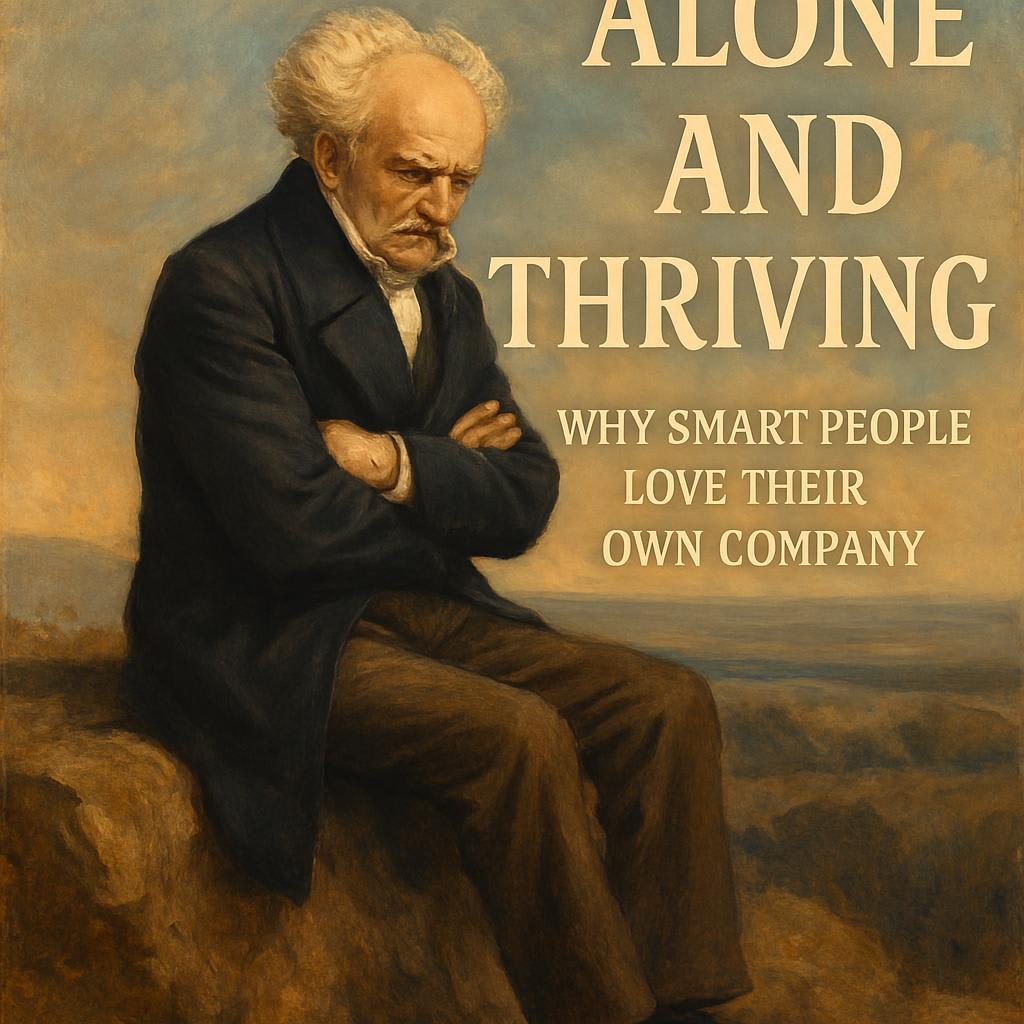
In the 19th century, philosopher Arthur Schopenhauer said, "Solitude offers to the intellectually superior individual a double advantage: first, to be with himself, and second, not to be with others." Brutal? Maybe. Insightful? Absolutely.
In an age obsessed with connection — likes, shares, messages, notifications — solitude is often mistaken for loneliness. But what if being alone isn't a punishment but a secret weapon? What if the thinkers, creators, and innovators of the world all share one guilty pleasure: a closed door?
This article explores how solitude, far from being a social failure, is actually a powerful tool for intellectual growth, creativity, emotional balance, and mental clarity. Whether you're an introvert, an extrovert in denial, or just craving peace, read on. You might discover your best companion has been with you all along: yourself.
The Genius of Solitude — Why the Smart Seek Silence
Intelligent people often prefer their own company. Not because they dislike others, but because they think deeply — and thinking deeply requires space.
A 2016 study published in the British Journal of Psychology found that smarter individuals tend to socialize less frequently and report higher life satisfaction when alone. They aren't lonely; they're selective. Their minds crave stimulation, but not the kind found in small talk or crowded rooms.
Consider Isaac Newton. During the Great Plague of London, Cambridge closed, and Newton returned to his family home. There, isolated, he developed the foundations of calculus and modern physics. Solitude didn’t hinder him; it propelled him.
Even in modern settings, high performers often carve out time alone — not out of arrogance, but necessity. Writers, scientists, entrepreneurs — they understand that focus and originality grow in quiet soil.
But solitude isn't just for the Einsteins of the world. You don’t need a Nobel Prize to benefit from time alone. Even short periods of intentional solitude can reset your brain, clarify your thoughts, and spark ideas.
Solitude benefits the intellect, but it also does wonders for the soul. Let’s dive into the emotional perks next.
Emotional Clarity — How Being Alone Helps You Feel More
Contrary to popular belief, solitude doesn't make you numb — it makes you more emotionally aware.
When you're constantly surrounded by people, it's easy to absorb their emotions, opinions, and energy. Alone, you tune back into your own frequency. You notice the subtle shifts in your mood. You ask yourself deeper questions: What am I feeling? Why?
This emotional attunement isn't abstract. According to research from the University of Rochester, people who spend regular time alone develop stronger emotional regulation skills. They’re better at naming their feelings, managing stress, and avoiding impulsive reactions.
Have you ever felt overwhelmed in a crowd but inexplicably calm during a solo walk? That’s your nervous system thanking you for a break.
Solitude also gives you space to process grief, heal from heartbreak, or reconnect with joy — without the pressure to perform or explain. Emotional independence is a muscle, and solitude is your gym.
Emotional insight is powerful, but solitude also sharpens a tool essential to modern life: creativity.
Alone With Your Thoughts — The Birthplace of Creativity
Great ideas rarely bloom in the middle of chaos. They thrive in stillness.
In solitude, your brain enters a state called the Default Mode Network (DMN), which activates when you're not focused on external tasks. This is where daydreams, deep insights, and connections between ideas arise. It's where creativity lives.
Virginia Woolf called it “a room of one’s own.” Steve Wozniak built the first Apple computer alone in his garage. J.K. Rowling conceived Harry Potter on a delayed train, not during a brainstorming session.
Being alone removes distraction. It lets your mind wander, play, and surprise itself.
In a world of constant noise, solitude becomes an act of rebellion — and of creation. Turn off your phone. Take a walk. Sit in silence. Let your thoughts run without a leash. You might stumble on your next big idea.
Creativity flourishes in solitude, but it also fortifies something often overlooked in today's world: self-reliance.
Building Inner Strength — How Solitude Makes You Self-Sufficient
Being alone teaches you something precious: you don’t need constant validation to feel whole.
Solitude reveals who you are without an audience. You stop performing. You stop editing. You just exist — and that’s liberating.
Psychologists call this "intrinsic self-worth" — the sense that your value comes from within, not from likes, applause, or approval. Spending time alone strengthens this belief.
A study from the University of Massachusetts found that individuals who embrace solitude tend to have higher self-esteem and resilience. They cope better with setbacks because they've practiced being their own anchor.
Think of it like emotional weight training. If you never spend time alone, your sense of self depends on others. But if you build a habit of solitude, you become your own source of peace, purpose, and direction.
Now that we’ve explored the gifts of solitude — intellectual, emotional, creative, and psychological — how do we bring this into our daily lives?
Conclusion: Solitude Isn’t Isolation — It’s Inner Connection
Solitude isn’t about cutting people off. It’s about reconnecting with yourself.
In a hyper-connected world, choosing to be alone can feel countercultural — even risky. But it’s often the most empowering choice you can make.
Schopenhauer may have sounded cynical, but his words hold truth: for those who seek depth, solitude is not a prison — it's a sanctuary.
So try it. Schedule time with yourself like you would with a dear friend. Take yourself on walks, write your thoughts, meditate, create something — or simply do nothing.
In the silence, you might meet someone you’ve been ignoring: you.
And who knows? You might like their company.
About the Creator
Alain SUPPINI
I’m Alain — a French critical care anesthesiologist who writes to keep memory alive. Between past and present, medicine and words, I search for what endures.
Keep reading
More stories from Alain SUPPINI and writers in Humans and other communities.
Mastering French Without Losing Your Sanity: A Realistic Guide for Beginners
Learning French can feel like solving a Rubik’s Cube blindfolded. The tricky pronunciation, the never-ending grammar rules, and the surprising exceptions make it seem impossible. But don’t worry—equipping yourself with key expressions and effective strategies can turn frustration into fluency. Let’s simplify French and make learning enjoyable.
By Alain SUPPINIExclusive • 11 months ago
The Girl Who Blinked: How a Sixteen-Year-Old Stopped a Massacre by Trusting the Knot in Her Stomach
The true story of Emily Carson, the Colorado high school student who prevented a school shooting by noticing a subtle detail and reporting it, highlighting the power of situational awareness.
By Frank Massey 3 days ago in Humans


Comments (1)
I agree with everything said here. There is a stark difference between selfishness and selflessness. Who can you actually be without knowing who you actually are, and that can only happen when you embrace solitude as the necessary tool to achieve self-awareness. Great article.