
AI in Healthcare 2025: Revolutionizing Diagnosis, Treatment, and Patient Care
How AI Will Transform Healthcare by 2025, Enhancing Diagnostic Accuracy, Personalizing Treatment, and Streamlining Patient Care

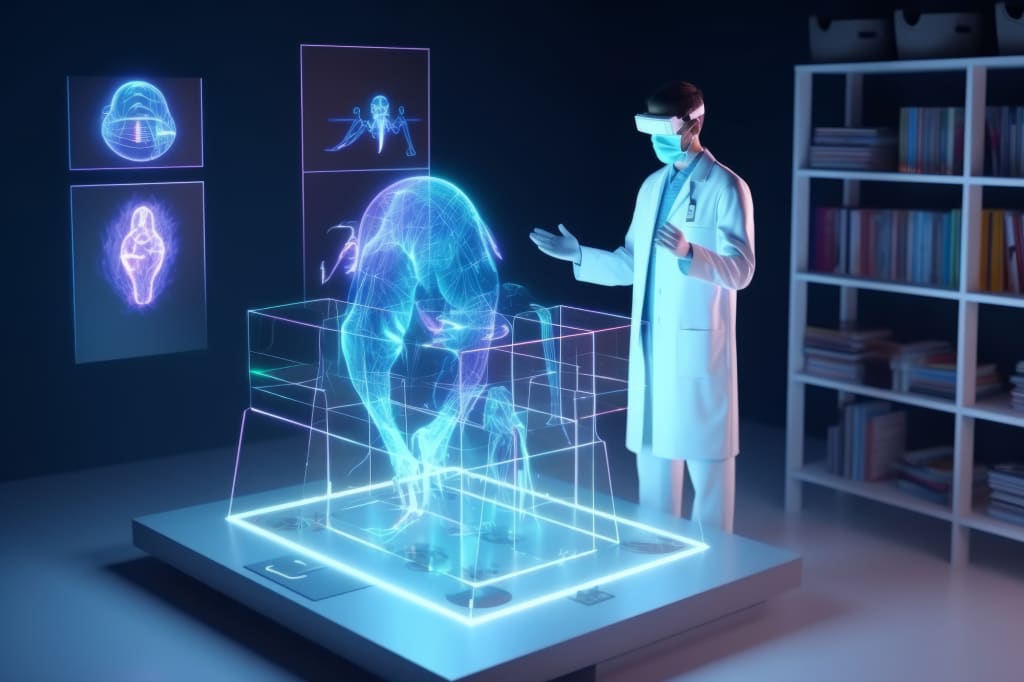
Artificial Intelligence (AI) is reshaping numerous industries, but nowhere is its impact more profound than in healthcare. By 2025, the integration of AI into healthcare will have advanced significantly, revolutionizing diagnosis, treatment, and patient management. So, what can we expect in the coming years, and how will AI enhance healthcare by 2025? Let’s dive into the future of AI-driven healthcare.
The Current State of AI in Healthcare
As we look toward 2025, it's essential to understand where we stand today. AI in healthcare is already making waves in 2024, with applications ranging from predictive analytics in diagnostics to AI-driven tools for drug discovery. Machine learning algorithms, natural language processing (NLP), and robotics are among the key technologies driving this transformation. Hospitals and clinics globally are starting to use AI to optimize workflows, reduce costs, and improve patient care.
AI in Diagnostics: Redefining Accuracy
One of the most transformative uses of AI in healthcare is its ability to diagnose illnesses quickly and accurately. AI-powered diagnostic tools can sift through thousands of medical records, test results, and images to detect patterns that may be invisible to human eyes. For example, AI algorithms trained to analyze mammograms have shown a higher accuracy rate in detecting breast cancer than traditional methods. By 2025, we can expect more AI systems deployed in diagnostic labs and clinics, improving early detection rates for conditions such as cancer, cardiovascular diseases, and neurological disorders.
AI and Personalized Medicine
Another major breakthrough AI is fostering in healthcare is the development of personalized medicine. Imagine getting treatment that's specifically tailored to your genetic makeup and lifestyle. AI's capability to analyze vast amounts of patient data allows it to recommend highly customized treatment plans. In 2025, this will be the norm, with AI analyzing everything from your genome to your medical history to determine the best course of action. Precision medicine will no longer be a niche approach but a mainstream option thanks to AI's predictive power.
AI in Medical Imaging
AI is already making headlines for its contributions to medical imaging, and by 2025, its role will be even more integral. AI can quickly scan through X-rays, MRIs, and CT scans to identify abnormalities like tumors, fractures, and internal bleeding. AI-assisted tools can highlight areas of concern for radiologists to review, improving both the speed and accuracy of diagnoses. A great example is Google Health’s AI model, which has been shown to outperform human radiologists in detecting breast cancer. This trend will only grow, enabling quicker diagnoses and improving patient outcomes.
AI and Drug Discovery: Speeding Up the Process
The drug discovery process, often lengthy and expensive, is being fast-tracked by AI. AI models can simulate how different drug compounds will interact with the human body, reducing the need for extensive clinical trials. Companies like Insilico Medicine have used AI to discover new drugs in a fraction of the time traditional methods would take. By 2025, AI will likely be a standard tool in pharmaceutical research, enabling the discovery of life-saving drugs at unprecedented speeds.
AI in Surgery and Robotics
AI-driven surgical robots are transforming the way surgeries are performed. In 2025, minimally invasive surgeries will be even more precise thanks to AI. These systems can assist surgeons by providing real-time insights, ensuring accuracy, and reducing human error. Robotic systems like the da Vinci Surgical System, already in use today, will become even more advanced, allowing for highly autonomous surgeries. Surgeons will be able to delegate repetitive or highly intricate tasks to AI, increasing the efficiency and safety of procedures.
AI for Healthcare Operations
Beyond clinical applications, AI is proving invaluable in streamlining healthcare operations. Hospitals and healthcare facilities are notoriously complex environments where efficiency can make or break patient outcomes. AI tools are helping to optimize scheduling, manage patient flow, and even predict bed occupancy rates. By 2025, we can expect AI to play an even larger role in administrative tasks, freeing up healthcare workers to focus on patient care rather than paperwork.
AI and Telemedicine: A New Era of Remote Care
Telemedicine has seen a massive surge since the COVID-19 pandemic, and AI is enhancing this sector by improving remote consultations. In 2025, virtual consultations will be more comprehensive, with AI-powered tools helping doctors diagnose conditions remotely. AI-driven chatbots, capable of conducting initial assessments based on symptoms provided by the patient, will make healthcare more accessible, especially in underserved areas. The combination of telemedicine and AI will bridge gaps in healthcare delivery, making it easier for people to receive care without leaving their homes.
AI in Mental Health
AI is also breaking new ground in mental healthcare, an area that has traditionally lagged in innovation. From AI-powered therapy bots to machine learning models that predict mental health issues based on behavioral patterns, AI is poised to fill critical gaps in mental healthcare. In 2025, AI-driven tools could be used to monitor patients' mental health over time, offering interventions when necessary, and providing more personalized mental health care plans.
Ethics and Privacy in AI Healthcare
While the benefits of AI in healthcare are clear, there are also challenges, particularly in ethics and privacy. As AI systems become more integral to healthcare, ensuring patient data privacy and addressing biases in AI algorithms will be critical. AI systems need vast amounts of patient data to function optimally, but this also raises concerns about data breaches and misuse. By 2025, regulations and frameworks should be in place to safeguard patient information while allowing AI to deliver its full potential in healthcare.
AI in Healthcare Workforce Training
AI is not only revolutionizing how care is delivered but also how healthcare professionals are trained. In 2025, AI will assist in medical education by providing simulations and virtual reality environments that mimic real-world medical situations. Medical students will be able to practice surgeries or patient interactions in a controlled environment, improving their skills before working with actual patients. This AI-assisted training will lead to a more skilled workforce, ready to tackle the complexities of modern healthcare.
Challenges Facing AI in Healthcare
Despite its many advantages, the widespread adoption of AI in healthcare faces several obstacles. High costs, limited data interoperability, and the need for specialized knowledge to implement AI systems are major challenges. Additionally, while AI can do amazing things, it cannot replicate the human touch that patients often crave in healthcare settings. Striking a balance between human empathy and AI efficiency will be key in 2025 and beyond.
Future Trends in AI for Healthcare Beyond 2025
Looking beyond 2025, the future of AI in healthcare looks even more exciting. We might see advancements like AI systems capable of not only diagnosing diseases but also predicting and preventing them before symptoms appear. AI will likely become a more integral part of patient care, with doctors and AI systems working together seamlessly to deliver the best outcomes.
Conclusion
AI is set to revolutionize healthcare by 2025, bringing faster diagnoses, personalized treatment plans, and more efficient operations. However, while AI will undoubtedly enhance healthcare delivery, it won't replace healthcare professionals. Instead, it will act as a powerful tool, complementing the expertise and empathy that human doctors provide. As we move into this exciting future, the synergy between AI and human caregivers will shape a new era in medicine.
FAQs
1. What are the main benefits of AI in healthcare?
AI improves diagnostic accuracy, streamlines operations, accelerates drug discovery, and personalizes treatment plans.
2. How secure is AI when it comes to patient data?
AI systems use advanced encryption techniques, but ensuring data privacy remains a challenge that needs continuous improvement.
3. Can AI replace doctors in the future?
No, AI is a tool to complement doctors, enhancing their decision-making and efficiency but not replacing human expertise and empathy.
4. How does AI improve patient outcomes?
AI can detect diseases early, recommend personalized treatments, and optimize healthcare processes, leading to better patient care.
5. What are the challenges in adopting AI in healthcare?
Barriers include high implementation costs, data privacy concerns, and the need for healthcare providers to adapt to new technologies.
About the Creator
Manikesh Tripathi
Top SEO Expert in India
Keep reading
More stories from Manikesh Tripathi and writers in Humans and other communities.
The Future of AI in 2025: Trends, Opportunities, and Challenges
Artificial Intelligence (AI) has rapidly evolved over the past decade, transforming industries and enhancing human capabilities. By 2025, AI is poised to revolutionize even more sectors, from healthcare and education to manufacturing and transportation. In this article, we'll explore the future of AI in 2025, discussing the key trends, opportunities, and challenges that lie ahead.
By Manikesh Tripathi2 years ago in Humans
Memento Mori
Life is not short. I’ll explain: we feel like it’s short because time passes by quickly. And if it isn’t, on hindsight, it did. But when we think we have quantified it quite well, we don’t, really. It happens to me. It happent to everyone. It’s human, actually. Because time is beyond our full comprehension.
By Maya Or Tzur6 days ago in Humans


Comments
There are no comments for this story
Be the first to respond and start the conversation.