
AI Art vs. Natural Art
Will Machines Replace Humans as the Next Great Artists?

In recent years, the art world has been abuzz with talk of artificial intelligence and its potential to revolutionize the way we create and appreciate art. On one side of the debate are those who argue that AI has the potential to surpass human artists in terms of skill and creativity, while on the other side are those who believe that AI will never be able to replicate the unique perspective and emotion that only a human artist can bring to their work.
One of the most prominent examples of AI art is the work of the Paris-based artist, Refik Anadol (https://aiartists.org/refik-anadol)
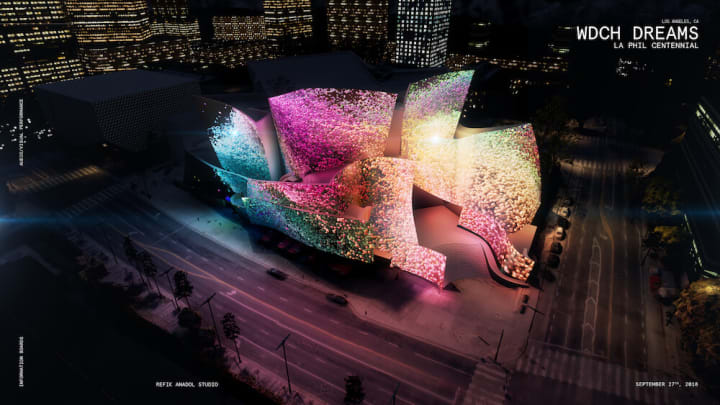
Anadol's installations use machine learning algorithms to analyze and interpret vast amounts of data, and then use that data to create visual and audio experiences that are unlike anything a human artist could create. Anadol's work has been met with both praise and skepticism, with some praising its innovative use of technology and others questioning its validity as "real" art.
In a creative AI experiment to explore human and machine collaboration, artist and researcher Sougwen Chung uses a Bayesian probability model generated by CausalNex from QuantumBlack, AI by McKinsey.
Also Sougwen Chung and Doyoung Lee collaboration, "Dialtones (A Telesymphony)," uses AI to analyze the unique vocal patterns of individual participants and then uses that data to create a unique musical composition in real time. The piece has been hailed as a groundbreaking example of how AI can be used to create truly collaborative art.
Despite the excitement around AI art, there are many who remain skeptical of its potential to replace human artists. Some argue that while AI may be able to replicate the technical skills of a human artist, it will never be able to capture the human experience and emotion that is at the heart of great art. Others point out that the very nature of AI is to follow rules and algorithms, which can lead to predictable and formulaic results, whereas human artists are able to break the rules and create something truly unique and unexpected.
Some experts predict that AI will eventually be able to create original works of art that are indistinguishable from those created by humans, potentially leading to the demise of traditional art forms.
AI art is often created using machine learning algorithms that are fed large amounts of data and then use that data to create new works of art based on patterns and trends that they have identified.
Some AI art projects have used data from social media or other online sources to create art that reflects the collective consciousness or sentiments of a particular group of people.
Some artists have begun using AI as a tool to augment their own creative process, rather than replacing it entirely. For example, some artists use AI to generate ideas or sketches that they can then refine and develop further.
There are some who argue that the rise of AI art could democratize the art world by making it easier for people with limited resources or access to traditional art education to create and share their work.
List of Famous artist using AI
Refik Anadol: Anadol is a Turkish-born artist based in Paris who is known for his installations that use machine learning algorithms to analyze and interpret data, creating visual and audio experiences that are unlike anything a human artist could create.
Sougwen Chung and Doyoung Lee: Chung and Lee are a duo of artists who have collaborated on a number of AI art projects, including "Dialtones (A Telesymphony)," which uses AI to create unique musical compositions in real time.
Mario Klingemann: Klingemann is a German artist who is known for his use of machine learning algorithms to create original works of art that blur the lines between the real and the surreal.
Tom White: White is an Australian artist who has used AI to create a number of projects that explore the relationship between humans and technology, including "The Deep Dream," a series of dream-like images generated by an AI algorithm.
Anna Ridler: Ridler is a British artist who has used AI to create a number of projects that explore the intersection of art, science, and technology, including "Mesmer," a series of images generated by an AI algorithm that was trained on a dataset of 19th century medical illustrations.
As the debate rages on, it remains to be seen whether AI will eventually replace human artists or whether it will simply be another tool in the artist's toolkit. One thing is certain: the role of technology in art is only going to continue to grow and evolve in the coming years.
About the Creator
Balaji Devadoss
Welcome, I'm an inquisitive mind exploring different subjects and bringing them to you in an engaging way. Please Like and subscribe for valuable insights and perspectives, it will help and motivate me to continue.
Keep reading
More stories from Balaji Devadoss and writers in Humans and other communities.
Real-World Strategies Couples Use To Balance Privacy And Romantic Connection
Just like any healthy relationship, there must be clear or individual boundaries so that individuality and emotional health is not lost. Situations where couples talk about their privacy properly save misunderstanding and bitterness. Boundaries can be the personal space, time to oneself, or restriction of sharing of personal devices. Trust and mutual respect are strengthened by the partners as they respect each other. Boundaries do not build distance but they serve to define a structure of safe connected intimacy. Once the two partners comprehend and respect these boundaries, they feel appreciated and have a chance to extend their self and eventually, to strengthen their love relationship and make sure that the proximity is not coerced.
By Mark Hipster5 days ago in Humans

Comments
There are no comments for this story
Be the first to respond and start the conversation.