
After the Storm: Living Through Hurricane Melissa’s Aftermath in Jamaica
Ten Days After Melissa: What Life Really Looks Like in Jamaica Now

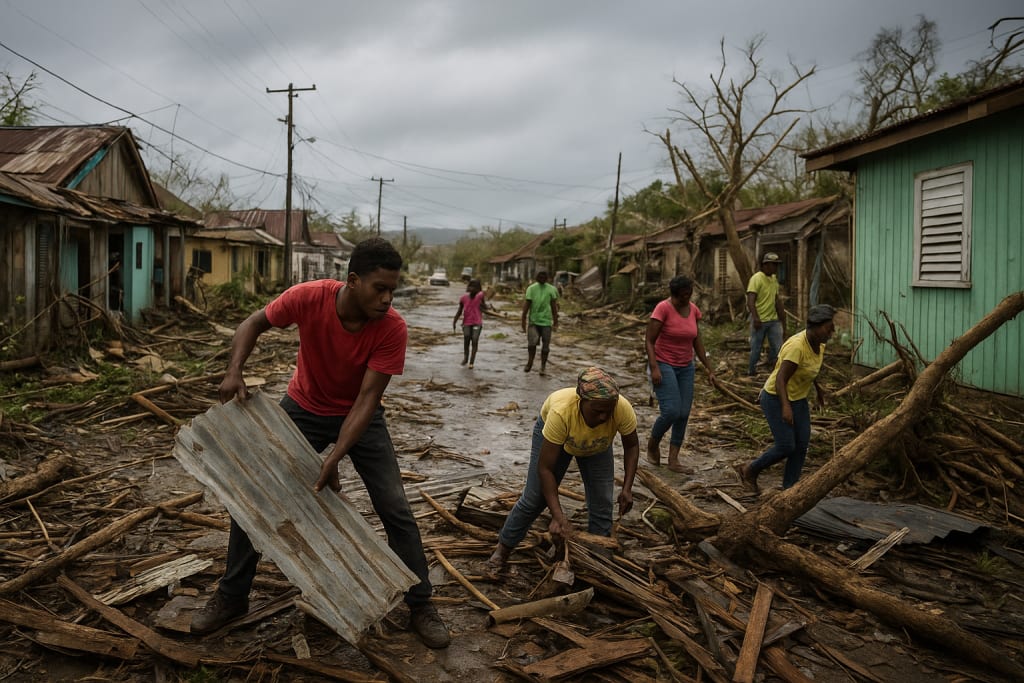
It’s been ten days since Hurricane Melissa tore across Jamaica, but it doesn’t feel like ten days. It feels like one long night that still hasn’t ended.
The sky is blue again, yes, but the world beneath it is broken. Most areas still have no power, no water, no internet, and no phone service. Many of us wake up each day hoping that the electricity will finally return, that the Wi-Fi light will blink again, or that we’ll hear the familiar buzz of a message notification. But the silence stays.
In some parts of the island, to make a single call, people walk miles just to find a signal or pay to charge their phones for a few minutes. I had to travel out of my parish just to update family and friends that I was alive. It’s strange how in a world full of technology, we’ve gone back to living like it’s the 1980s, candles, radios, and word of mouth.
When Hurricane Melissa hit, it wasn’t just the wind that scared us, it was the sound of everything breaking. Roofs lifted off like pages of a book. Trees crashed into roads and cars. The rain felt endless.
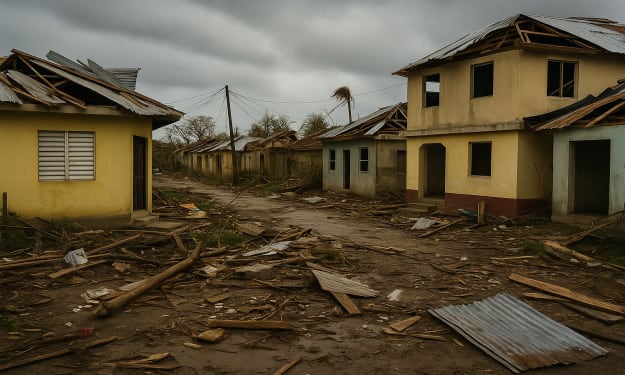
Now, when I walk through my community in St Mary, it looks like time froze in the moment the storm passed. Fallen light poles lie across the road. Wires hang low, swaying in the wind. Houses that once stood proudly are nothing but splintered boards and open walls. You can look straight through some homes and see the sky.
At night, everything disappears into darkness. No streetlights, no glow from windows, no hum of fans. Just silence, and sometimes the sound of someone hammering wood or the faint crackle of a radio running on batteries. The nights are long and heavy. Without power, the heat is unbearable. We sit outside to catch the little breeze that passes, talking softly under the moonlight. The darkness makes you think, about life, about loss, about how fragile comfort really is.
Water is gold right now. Some people collect rainwater in buckets. Others line up at community tanks or standpipes, hoping they’ll flow for a while before the pressure dies again. Food is another challenge. With no refrigeration, meat and milk spoil fast. Ice is expensive, if you can even find it. Gas is short in some areas, and cooking on coal pots has become normal again.
I’ve seen families using kerosene lamps for light, and children doing homework by candle. Parents are rationing what little food they have, and many farmers have lost everything, their fields flooded, their crops gone. It’s not just about rebuilding houses; it’s about rebuilding lives.
But here’s the part that keeps me going: Jamaicans never give up. Even when everything seems lost, we find a way to smile, to laugh, to share.
Every morning, I see people helping each other. Men cutting down fallen trees with machetes. Women cooking large pots of food and sharing with neighbours. Teenagers carrying water for the elderly. The spirit of community is alive, even stronger than before. I met a man yesterday who lost half his roof. He looked at the sky and said, “At least I still have the other half.” That’s Jamaica for you, always finding a reason to be thankful, even when the world feels upside down.
Church groups are organizing cleanup drives. Young people are volunteering to deliver food and check on those who can’t move around. We might not have much, but we have each other, and that’s something no hurricane can take.
The government has declared the entire island a disaster zone. Relief efforts are ongoing, but in many places, the help feels far away. Trucks can’t reach certain communities because roads are blocked or washed away. Some hospitals and schools were damaged. Farmers are counting heavy losses, bananas, coconuts, and crops destroyed in the fields. Businesses are struggling to reopen. And with communication still down in many areas, some people have no idea when help is coming.
It’s heartbreaking to see children standing outside in their uniforms, wondering when school will really start again. Or families sitting by the roadside, waiting for relief supplies that may or may not arrive that day.
But there are small victories too. Slowly, roads are being cleared. Volunteers are setting up collection drives. The Jamaican Red Cross and other groups are delivering food and hygiene kits to hard-hit communities. Some areas have started to get electricity back, little by little, light is returning.
One of the hardest parts isn’t just living without electricity, it’s living without connection. No internet means no news, no updates, no comfort from family abroad. For many, it’s like being trapped inside a bubble of silence.
But maybe this silence has taught us something too. It’s made us talk to each other again. It’s made neighbours check in face-to-face instead of through a screen. It’s made us realize how much we take for granted, the simple act of turning on a light switch or calling someone just to say, “I’m okay.”
Ten days after Melissa, Jamaica is still standing. Bent, bruised, battered, but standing.
When I walk through my community now, I don’t just see damage. I see resilience. I see people rebuilding one board at a time. I see children laughing again, chasing kites made from old plastic bags. I see hope growing where fear once lived.
Every night, before I blow out my candle, I whisper a small prayer: for light, for water, for peace, and for the strength to keep going. Hurricane Melissa took our roofs, our comfort, and our connection to the world. But she couldn’t take our spirit.
We are survivors. We are Jamaicans. And even in the dark, we still shine.
About the Creator
Diana Crooks
Storyteller with a knack for turning life’s chaos into compelling reads. Whether it’s quirky, thoughtful, or just plain unexpected, my content is here to entertain and inspire. Come for the words, stay for the vibes!
Keep reading
More stories from Diana Crooks and writers in Humans and other communities.
Hurricane Melissa Devastates Jamaica: My Firsthand Story of Survival
I remember the roar of the wind outside my window, a sound so fierce it felt like the world was tearing itself apart. Right now, we are all in total confusion. Hurricane Melissa hit us with such power and force that I am not sure when we will ever get back to normal. We have no power, no internet, and no water. It is just so hard and extremely difficult. We only had prayers that we’d make it through the storm.
By Diana Crooks2 months ago in Humans
What I Say vs What I Do
We all have attitudes, and psychology textbooks tell us that an attitude is defined by a "prevailing and consistent tendency to think, feel or act a certain way about something or someone in the world around us"( George, S. Kelly, B. Piferi,2023). Attitudes influence our behaviors, but can be altered by perception of the ability to change behaviors, which leads to the attitude being altered to accommodate the behavior. This leads to the question asked this week about how we say we would act and how we do act in situations.
By Colleen Walters6 days ago in Humans


Comments
There are no comments for this story
Be the first to respond and start the conversation.