
ADDICTION ISNT THE ENEMY
A New Way to Understand and Heal
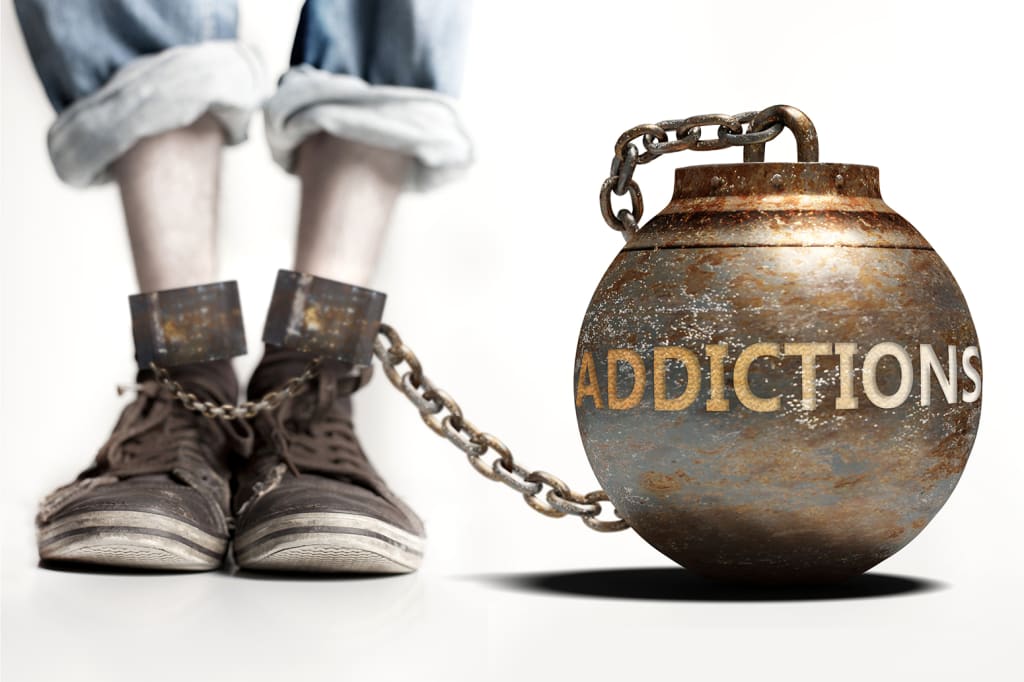
For a century now, the world has been waging a war against addiction — a battle filled with punishment, stigma, and fear. But what if everything we thought we knew about addiction is wrong? What if the real answer isn’t more control, more punishment, or more shame — but more love, understanding, and human connection?
This isn’t just theory. It’s rooted in lived experience, science, and social experiments from around the world.
A Personal Awakening
Many of us have experienced addiction up close. Maybe it was a loved one. Maybe it was ourselves. For one speaker, the journey began with childhood confusion — trying to wake up a relative who wouldn’t wake up. Only years later would he understand the harsh reality of addiction in his family: a painful struggle with drugs, including cocaine.
This personal pain sparked a question: Why do people become addicted — and how can we help them heal? The answers took him across the globe, speaking to scientists, addicts, and policymakers — and what he learned was staggering.
The Truth About Addiction
The common story we tell about addiction goes like this: drugs have chemical hooks. Take heroin for 20 days, and your body gets physically hooked. You become a slave to the chemical. Seems straightforward, right?
But there’s a serious flaw in this logic.
Consider this: in hospitals around the world, patients are given diamorphine — pure heroin — for pain. Sometimes for weeks. Yet the vast majority of those patients do not leave as heroin addicts. Why? If the chemical alone causes addiction, why don’t we see mass addiction from hospital use?
Rat Park and the Cage We Live In
The answer may lie in an experiment from the 1970s. Psychologist Bruce Alexander created something revolutionary: Rat Park. Previously, rats isolated in cages with access to heroin-laced water would choose the drug and quickly overdose. But in Rat Park — a stimulating environment with other rats, play, food, and fun — they avoided the drug almost completely.
The difference? Connection. Purpose. Life.
Rats in isolation chose the drug. Rats with a fulfilling life didn’t.
And humans are no different.
During the Vietnam War, up to 20% of U.S. soldiers were using heroin. Fearing a drug epidemic, the U.S. was shocked when 95% of those soldiers simply stopped using when they returned home. Why? They left a war zone — a place of trauma and fear — and returned to family, work, and connection.
Addiction: A Bonding Problem
Addiction isn’t about chemicals. It’s about bonding.
Humans are hardwired to connect. If we can’t bond with people, we will bond with something else — drugs, alcohol, gambling, even smartphones. Addiction is not a moral failure; it’s an adaptation to a life where connection is broken.
Dutch professor Peter Cohen put it this way: addiction is not about the drug — it's about the cage. It's about the environment we live in.
Portugal’s Bold Experiment
In 2000, Portugal faced a heroin crisis. One percent of the population was addicted. The government made a bold move: they decriminalized all drugs and reinvested that money into helping people reconnect with life.
They didn’t just treat the symptoms. They treated the cause.
They offered therapy, but more importantly, they helped people find jobs, housing, and community. Addicts were supported in building small businesses or returning to their former trades. Instead of shame and jail, they found dignity and purpose.
The results? Injecting drug use dropped by 50%. Overdoses, HIV, and addiction rates plummeted. And the Portuguese people overwhelmingly supported continuing the program.
The Hidden Crisis of Disconnection
This isn’t just about heroin or cocaine. It’s about us — all of us. In our hyper-connected digital world, we are increasingly disconnected. We have more social media “friends” than ever, yet fewer people we can call in a real crisis.
Our culture glorifies independence, yet we’re starving for real intimacy. We've traded community for convenience, depth for dopamine hits. And for many, that void leads to addiction — not just to drugs, but to shopping, scrolling, gambling, food.
When life is unbearable, we reach for something — anything — to make it go away.
A New Way to Help
So how should we treat addiction?
Not with shame. Not with punishment. But with compassion. The speaker in this journey learned to change the script with his loved ones struggling with addiction. Instead of threatening to walk away, he chose to say:
“I love you whether you're using or not. I will sit with you. I don’t want you to feel alone.”
Love is not enabling. It’s empowering. It’s saying: I see your pain, and I’ll walk with you through it.
From Individual to Social Recovery
Yes, individuals need recovery. But so do our communities. Our systems. Our cultures.
Addiction isn't just an individual failure. It’s a social failure — a sign that something is broken in how we live. We need to create a society where people can feel safe, seen, and connected.
And that starts with how we talk about addiction. It starts with empathy.
The Final Message
For 100 years, we’ve sung war songs about addicts. Maybe it’s time to start singing love songs.
Because the opposite of addiction isn’t sobriety.The opposite of addiction is connection.
About the Creator
Keep reading
More stories from Kreative William 254 and writers in Humans and other communities.
The Danger of Being Too Friendly
We’ve all been told to be kind, polite, and helpful. Society praises the "nice guy"—the one who says yes to everyone, avoids conflict, and sacrifices himself for the comfort of others. At face value, there’s nothing wrong with friendliness. It’s a beautiful trait. But when it becomes excessive—when friendliness morphs into chronic people-pleasing—it becomes a dangerous trap. One that can slowly choke your potential, suffocate your purpose, and leave you bitter, exhausted, and lost.
By Kreative William 25410 months ago in Humans
Thief In The Night
To the thief in the night that took and replicated what once was mine: Honestly, I feel kind of bad for you. It’s funny, because we hardly know each other. I only know of you through the magazines you’ve written and the broadcasts you have televised in the past — as well as through the public mentions of you from your show business connections there.
By Snarky Lisa6 days ago in Humans
The Shift From Pisces to Aquarius: From Following to Connecting
Astrological ages describe long arcs of cultural development, each lasting roughly two thousand years. These eras are not defined by single events but by gradual changes in consciousness, values, and collective orientation. The transition from the Age of Pisces to the Age of Aquarius marks one of the most significant shifts in human history, not because of a change in the stars themselves, but because of the change in how humanity interprets meaning. The Piscean era emphasized devotion, sacrifice, and hierarchical spiritual authority. The Aquarian era emphasizes connection, shared intelligence, and the dissolution of hierarchy. This shift can be summarized in a simple contrast: in Pisces, the savior said “Follow me.” In Aquarius, the savior says “Connect.”
By Julie O'Hara - Author, Poet and Spiritual Warrior3 days ago in Humans
Hottest in the Office
Dear Rafi, You’re very distracting to work around. For the first second I saw you the other day, I thought you were some type of executive. It took a moment to realize no, you were just the new guy, dressed up for the job he wants. Be still, my heart.
By Gabriel Shames4 days ago in Pride




Comments
There are no comments for this story
Be the first to respond and start the conversation.