
A New Era on the Horizon
How back to back to back disasters are changing my hometown.

The brain rewires itself in response to emotional trauma, which has a profound effect on the brain, mind, and body.
The Darkest Night of our Souls
My chest begins to burn as I stare up at the circular LED lights swaying from rows of creaking metal beams.
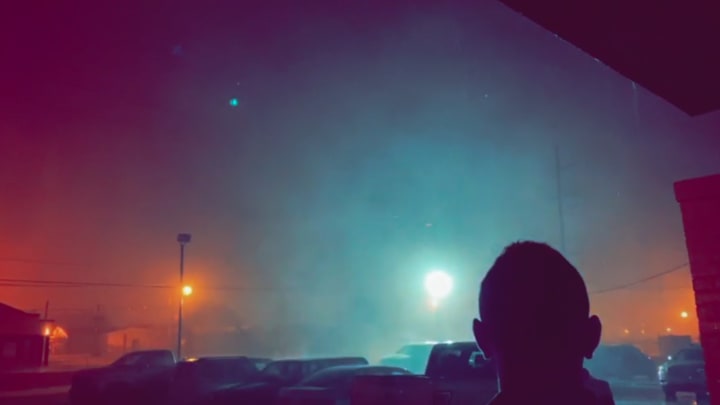
The streaks of blue lightning illuminate the three rectangular shaped windows on each side of the armory. The strikes produce brief, but frequent sources of light to the room.
I shake as I capture glimpses of the wind moving at speeds I have never witnessed in my life.
BOOM! BOOM! BOOM!
They pounded against the large, metal roll-up door and old brick walls.
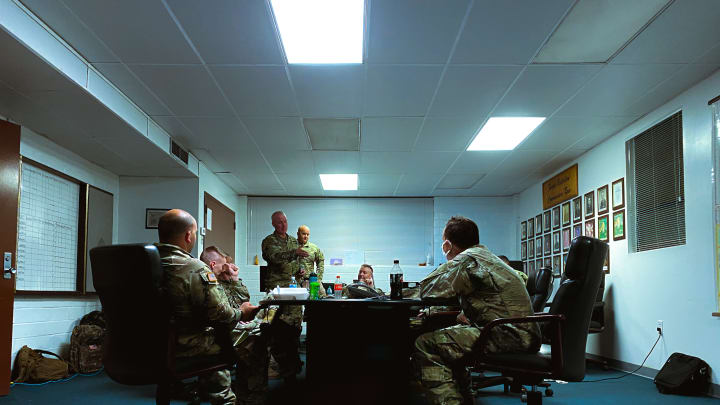
Over one hundred soldiers are inside the drill hall.
It is an hour past midnight on Thursday, August 27, 2020. History is being made in Lake Charles, Louisiana.
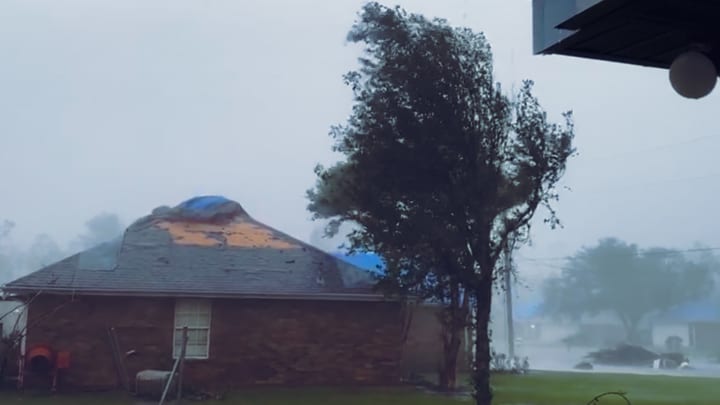
Hurricane Laura with winds screaming at 150 mph, just 7 mph shy of Category 5 intensity, is unleashing its fury on the city. It is the strongest storm to strike Louisiana since 1856. It is stronger than Hurricane Katrina.
“I need all you guys sleeping next to that door to move back!” says a sergeant. He startles me with his penetrating voice.
Soldiers begin moving their cots and personal items to the front of the drill hall. I head towards the back.
BOOM! BOOM! BOOM!
“Hey man, do you need help with any of this?” I ask a friend.
“Yeah, can you grab my backpack and…” He pauses as a loud screech begins.
CRACK!
The winds breach the metal roll-up door lifting the lower half into the air.
“RUN!” I yell.
I grab his backpack and we begin sprinting towards a stairwell at the front of the building. I use my cell phone flashlight to navigate through cots, clothes, MRE boxes, and people.
BAM! CRASH!
The wind rips the metal roll-up door off the hinges and flings it at a crowd of soldiers. It misses by inches.
Rain and wind surge from one side of the room to the other.
“I can take soldiers in the supply closet! Hurry!” shouts a sergeant.
“We have room in the medical room” shouts another.
I reach the second floor of the armory, with my friend, where our commanding officers are located. Fear covers their faces like war paint as they peer through a window overlooking the chaos.
I pull out a black leather rolling chair and sink into it.
I bounce my leg up and down as I think “This is crazy! Why do they have us here? We might…”
My thought is broken by a lieutenant.
“THE WHOLE WALL IS DOWN” he screams in horror.
I walk over to my friend standing near a door that leads to the 2nd-floor offices. His blank expression communicated everything I needed to hear. I wave at him to follow me towards my office.
He trails a few feet behind me as he places a phone call to his mother.
When I open the door, loud snoring exits the room. It is my office mate. I squat down to grab his shoulder to wake him.
“Hey man, you might want to get up and get dressed. The place is collapsing” I said.
His eyes squint at me as he struggles to awaken.
“What? That’s crazy, bro.” He closes his eyes again.
My friend's voice gets louder and louder as he approaches the door.
“I will be alright, mom. I will be okay. Love you. Bye.”
He slouches and rests his head against the wall.
“My mom upset… I can’t… she does not understand why the Guard making us stay in Lake Charles.”
I lay on my cot lost in my head. It is silent to me.
My awareness is brought back to the moment after my friend notices the winds have subsided.
We are in the eye of the hurricane.
“After all that, it’s so calm outside,” says my friend.
“It won’t be like that for long” I replied.
“Which is why you guys better go to sleep now. If we are about to die, it would be more peaceful to be sleep” says my groggy-voiced office mate.
I wrap a blanket around myself and close my eyes. I ponder what is left in the city and how I lost so much in a short period.
As the wind begins to ramp up in intensity, I go to sleep.

Who we Were Before

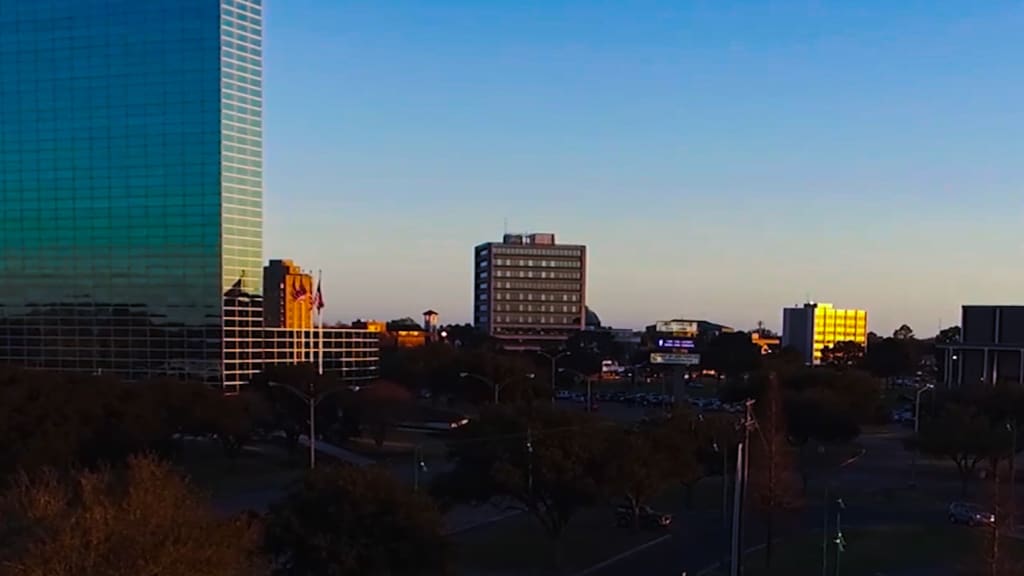
Lake Charles, Louisiana sits in the southwestern corner of the state.
The city is sandwiched between the zesty culture of New Orleans, which is 3 hours to the east; and the busy, hard-working lifestyle in Houston, Texas, which is 2 hours to the west.
The land Lake Charles was founded on once separated Spanish Texas and French Louisiana. Those roots are why Lake Charles expresses a culture that blends Cajun with cowboy.
The city is the Festival Capital of Louisiana. From Mardi Gras to Louisiana Pirates Day, we have numerous reasons to party.
We are in “Sportsman Paradise”. This is a great area to fish and hunt.
Music has played a massive role in shaping the city’s identity. Dolly Parton recorded her first song here. Zydeco music was born here.
Casinos are a major attraction.
And the best food in the state is here.
The people here are welcoming and warm.
It is an unspoken rule that if someone's mother offers you food, you take it. Even if you are not hungry.
It is not uncommon to have a conversation with a stranger in a grocery store.
When Hurricane Katrina devastated New Orleans, locals would feed their residents who were sheltering at the Civic Center.
And after Hurricane Harvey flooded Houston, volunteers took their boats to the city to help with rescues.
But like a subpar gumbo, you can tell something is missing.
Growing up in the 90s and early 2000s I wanted to figure out what that something was.
I was raised by my mother. She was a hardworking person. She did everything she could to provide for me and my younger brother.
During that time, boys were supposed to play sports, work with their hands and start families.
I did like sports but my biggest interest was photography and film
I would dream of showing people in the city that boys can be more than a coach or an operator at the plants.
I began to excell at art. My teachers often spoke to me after class and encouraged me to stay committed to my dream.
But I veered off that path when the bullying from my peers became too much.
I was passive and did not know how to stand up for myself.
I realized the voice I was searching for through photography and film was not only for others but for as well as myself.
I realized that the sense of together the city had come at the price of individual expression. You are forced to conform to everyone else's idea of you.
That's why the city remained stagnant for so long.
I was directionless for six years between 2008-2014.
At that time, I joined the Louisiana National Guard. That was when I saw a soldier whose job was to take pictures.
His courage influenced me to return to college and pursue my old dreams.
My desire returned, but my motivatin turned sour.
I no longer wanted to work with Lake Charles, I prove to people that I was better than them.
After graduating from McNeese State University in Lake Charles, I worked as a news producer at a news station for a couple of years. I started film school at The University of New Orleans after that.
I had finally made it to my dream... it was short-lived.
After only one and a half semesters, the coronavirus forced me to move back to Lake Charles triggering childhood wounds I had not healed.


The Light Reveals What is Broken

“Hey, wake up. We gotta go” says my friend.
Boats are being prepped and attached to LMTVs sitting in a high school stadium's parking lot.
“Make sure you have gas, water, life jackets” screams a second lieutenant.
Senior leadership issues missions from tables set off to the side.
THE GOAL: Rescue people who called 9-1-1 during the storm.
I climb into the passenger seat of an LMTV. There are two other soldiers in the cabin with me. Three soldiers sit in the rear.
We are tasked with rescuing a family that has a disabled daughter from floodwaters. They are in Westlake, Louisiana.
As soon as we turn out of the parking lot, we begin rolling over debris
CRUNCH! SNAP!
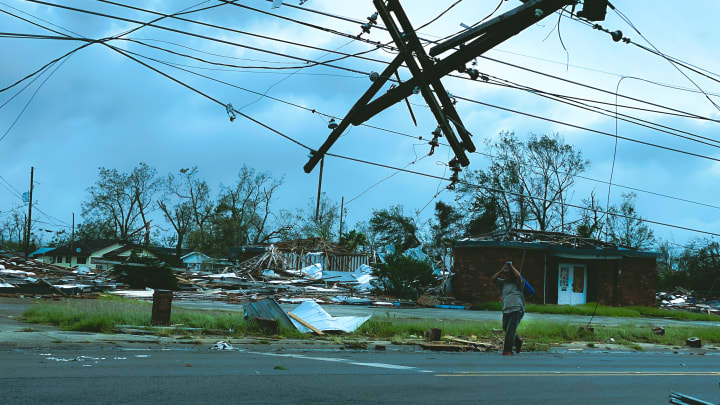
Power Lines are down – reducing some four-way streets to two lines and blocking others.
I see a man walking with a bag over his head. His shirt is wet. I can not tell if it is from sweat or water.
“Holy crap!”
I say pointing towards a mangled steel TV tower that has collapsed into the news station.
"Look at that"
My sergeant directs our attention towards a building.
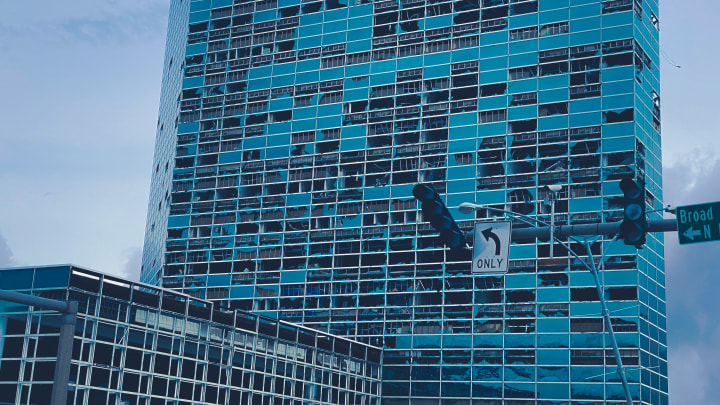
The Capital One Tower, the most symbolic feature in the Lake Charles skyline due to its height and L-Shaped design, has most of its windows blown out. The green glass inundates the streets.
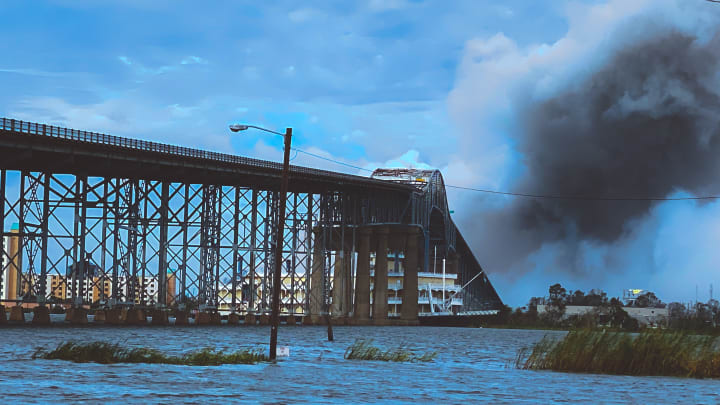
When we arrive at the old, tall, steel-framed bridge that separates Lake Charles and Westlake, we are met with a peculiar sight.
A riverboat that was sitting idle at a casino, broke loose during the storm and crashed it into the bridge.
Behind the riverboat is a large dark plume of black smoke.
A police officer standing by throws up his fist signaling us to stop.
“You cannot go this way. We are not sure how safe the bridge is now, and a chemical plant is on fire.”, he says.
“We have a family to get to. What can we do?” I replied.
“Head south and take the 210 Bridge to get to Westlake” He says.
Sirens begin blaring as shelter in place warning is issued.
We turn the vehicle around avoiding a restaurant sign and head south.
The storm annihilated the city.
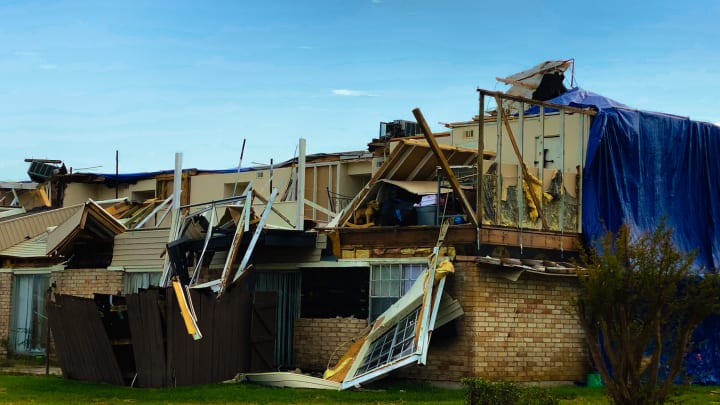
Entire roofs ripped from homes. Apartment complexes have their second floors blown off. Strip malls are shredded. The interior of businesses was exposed.
An older couple parks their vehicles where debris is too high to pass… They begin walking through the rubble to their destination.
As we cross the 210 bridge, I see the smoke from the chemical plant growing taller.
“Did we bring any gas mask?” I ask.
“No, but we do have N95 masks,” says the driver.
Weeks before the hurricane, the Lake Charles metropolitan area had the most COVID-19 cases per capita in the country.
Businesses already had strict hours, but the increase in cases forced many to close.
I had a job with the National Guard throughout the pandemic which allowed me to remain financially stable.
But I watched as people's lives, including my own family and friends, were turned upside down without work.
As other human beings suffered, I was forced to look at my childhood wounds.
Is this what I wanted?
Growing up, my goal was to bring Lake Charles together. I wanted to help this community.
It was time to start doing that.
I passed out brown paper bags filled with groceries at food drives with lines that would extend as far as the eye could see.
Like the rest of the country, this blue-collar community was hurting.
WHOOSH
We drive slow in the smokey, flooded, debris-filled streets of Westlake.
WHOOSH WHOOSH
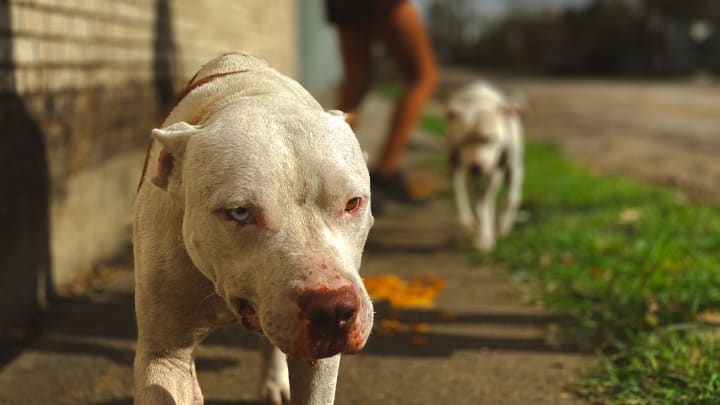
Dogs, left behind to fend for themselves by their owners, search for shelter and food.
A man wearing a white shirt with the sleeves cut off and blue jeans shorts begin waving a towel in the air from his front porch.
A tree has smashed a portion of the tiny home's kitchen.
“This is our destination.” says my sergeant.
“Please, help my daughter. She’s disabled and in a wheelchair.” the man shouts.
The girl and her mother are at the door behind him.
We stay on the road as the ditches were too flood to see.
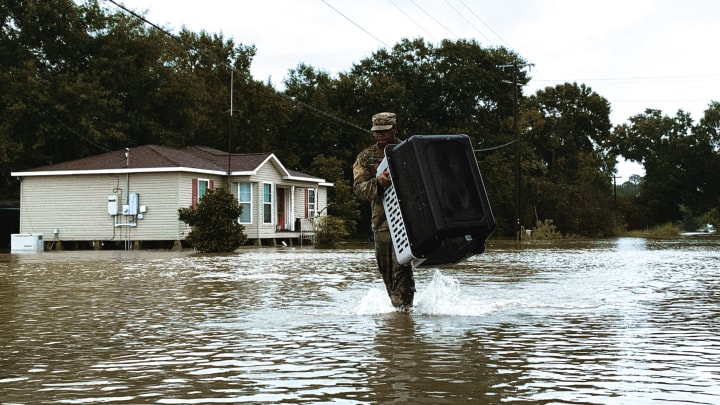
I jump from the passenger seat into the water that is as high as my knee and await orders. My sergeant gives the command
“Hey, guys this what we’re going to do. I need two of y’all to stand on the back of the LMTV and be ready to receive all items and people. We are going to put the wheelchair up there first. Then the girl. Then the parents.”
“We must be quick.”
Two guys sprint to the back.
The three other soldiers and I walk to the home.
"Thank you, thank you, thank you" are the words the man greets us with.
"We're going to get y'all out of here" sergeant replies.
“Okay, sir. Can you take your daughter out of the wheelchair? I’m going to have my guys take it to the back of the truck.”
The father and mother take their daughter out.
She wears yellow shorts and a purple shirt. Her legs are tiny. She is older but she can not speak.
“Now, you two take the wheelchair and lift the guys in the back.”
Two soldiers grab the wheelchair, never allowing it to touch the floodwaters.
“We’ll take her and hand her to the guys in the back of the truck. Please follow us.”
I face my sergeant and hold one of his hands.
The father sits his daughter in our arms.
The daughter wraps her arms around our necks.
We slide one arm to her back for support and move forward.
We take her to the LMTV and lift her to the soldiers waiting.
“I could not afford to leave… I put my family in danger.” He cries as he follows.
I told him that I understood his pain, that he is safe, and we are going to take his family to a shelter.
Several people had to be rescued that day.
Our Spirits are Challenged Again
Throughout August, Lake Charles comes together.
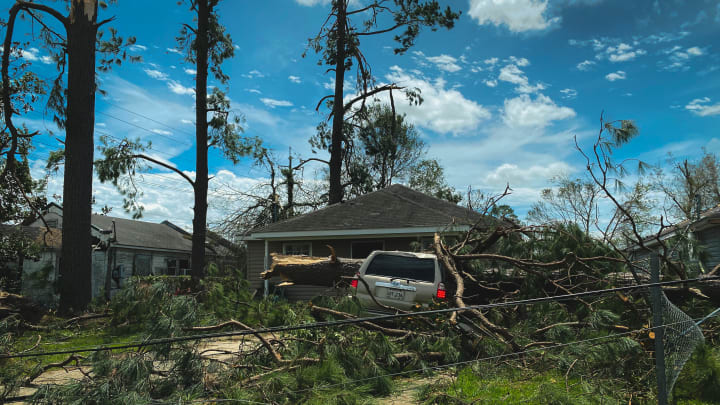
Men go from home to home with chainsaws cutting down trees in yards.
Churches fund food drives and give away toiletries.
I work the disaster with my unit.
I did not have a home, but I could not allow that to stop me from serving this community.
People are sleeping in tents in their front yards.
Some residents never come back.
Five weeks pass before 100% power is restored on October 2, 2020.
Progress was being made.
But five short days later an unbelievable event begins to shape up.
A powerful Category 2 hurricane, this one named Delta, is making landfall on Mexico’s Yucatan Peninsula.
It weakens but is expected to restrengthen as it reemerges into the Gulf of Mexico as it heads towards the United States.
Its next target is Lake Charles.
Anger. Sadness. Disbelief. Exhaustion. How could this be real?
For the second time in 44 days, residents had to leave the city.
Residents that were broke from the pandemic. Residents that were broke after evacuating from Laura.
Hurricane Delta strengths to a Category 3 hurricane.
Evacuations do not go as planned. Traffic jams stretch from the Texas border 30 miles away into the city. Cars run out of gas on the road trying to leave.
My unit is called up again for hurricane duty. This is one week before are to begin training for our deployment.
We travel to Baton Rouge, Louisiana, and ride out the storm there.
On October 9, Delta makes landfall as a Category 2 storm with 110 mph winds. It comes in 12 miles east of Hurricane Laura.
Unlike Laura, Delta's winds are not what caused the most damage. It was the rain.
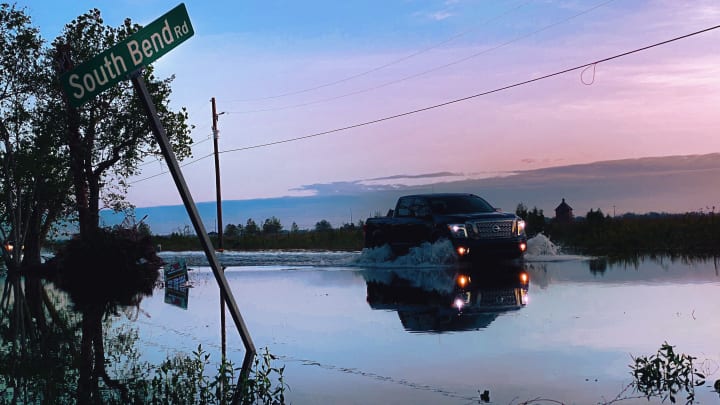
The debris left on the side of the road after Laura holds water like dams. Water floods homes where blue tarps are ripped.
Delta finishes off whatever Laura missed.
Despite record rains, no rescues are needed the next morning. Power is restored to the city within days.


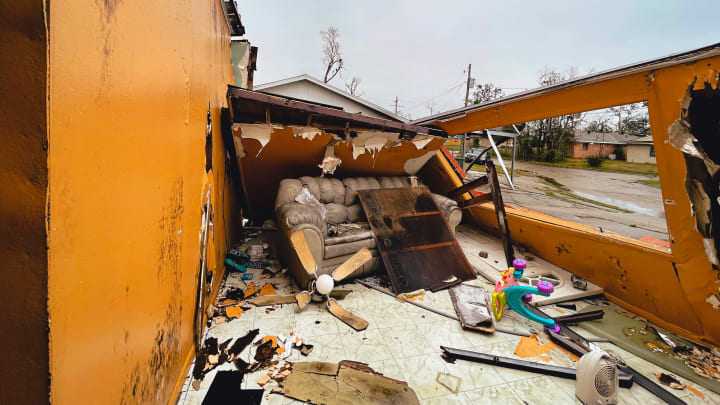

WE BOTH WILL REBUILD
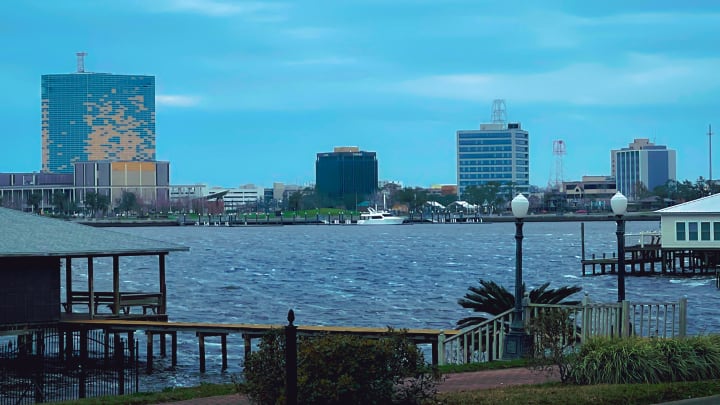
Three travel buses are parked outside my unit. They are here to take us away.
My family stands in the same drill hall still missing a wall.
My commander walks from his office.
"This is it guys"
"Say goodbye to your families and let's load up"
I hug my mother and cry. I was not worried about going to a third world country, I was worried about leaving her in a city that looked like a third world country.
I give her one final kiss and board the bus.
Fate saw that I returned to Lake Charles to heal and to achieve the goal I had always set out to do: Bring attention to a city in a time of need.
Residents are suggesting businesses and ideas that would have never been proposed before the storms.
I do not know what the future holds for me or the city.
But after the traumatic events of 2020, we know we can preserve through anything TOGETHER.


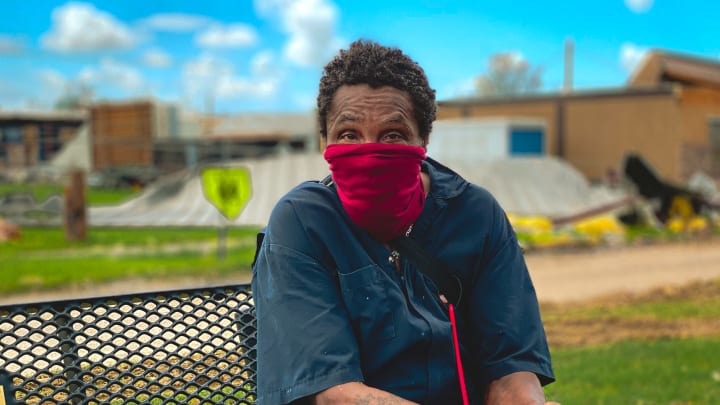

About the Creator
Keep reading
More stories from writers in Humans and other communities.
Whiskey At Dusk
Guess the whiskey was more important to you in the end, wasn’t it? It was more than the well-being of your friends; more vital than showing up to the places you promised you would and could come to; more critical of a matter than fulfilling your damn responsibilities and getting the press off your back.
By Snarky Lisa6 days ago in Humans
Resistance Is Not the Enemy
Iron sharpens iron. Brakes save lives. Friction preserves form. Modern culture treats resistance as failure. Anything that slows momentum is framed as obstruction, anything that introduces friction is assumed to be opposition, and anything that interrupts progress is labeled a setback. But this instinct misunderstands how both physical systems and human growth actually work. Resistance is not inherently hostile. In many cases, it is the only thing preventing collapse.
By Peter Thwing - Host of the FST Podcast5 days ago in Humans
10 Times Rotten Tomatoes and I Disagreed
***Disclaimer*** I will be ranking these movies in the following manner: The greater the divide between Rotten Tomatoes and I, the higher up on the list (and I am referring to the critic's score, not the audience score). I will also show Rotten Tomatoes' score on each one in addition to my score. I am curious to know what everyone thinks, please let me know in the comments below!
By Madison "Maddy" Newton5 days ago in Geeks
Killing him slowly
There’s an intruder in my house again. He stumbles through the door, wet carrier bags in hand. He’s bought me offerings. I show my appreciation, letting him caress my beautiful body. He wants to touch me. I rub myself against his legs. He sighs, dropping the bags. He can’t resist touching me. Running his hand slowly down my spine, I arch my back towards his caress, let out a low purr. It’s what we both need.
By N J Delmas3 days ago in Horror




Comments
There are no comments for this story
Be the first to respond and start the conversation.