
A Generous Contribution
A young man's desperate attempt to atone for wrongdoings.
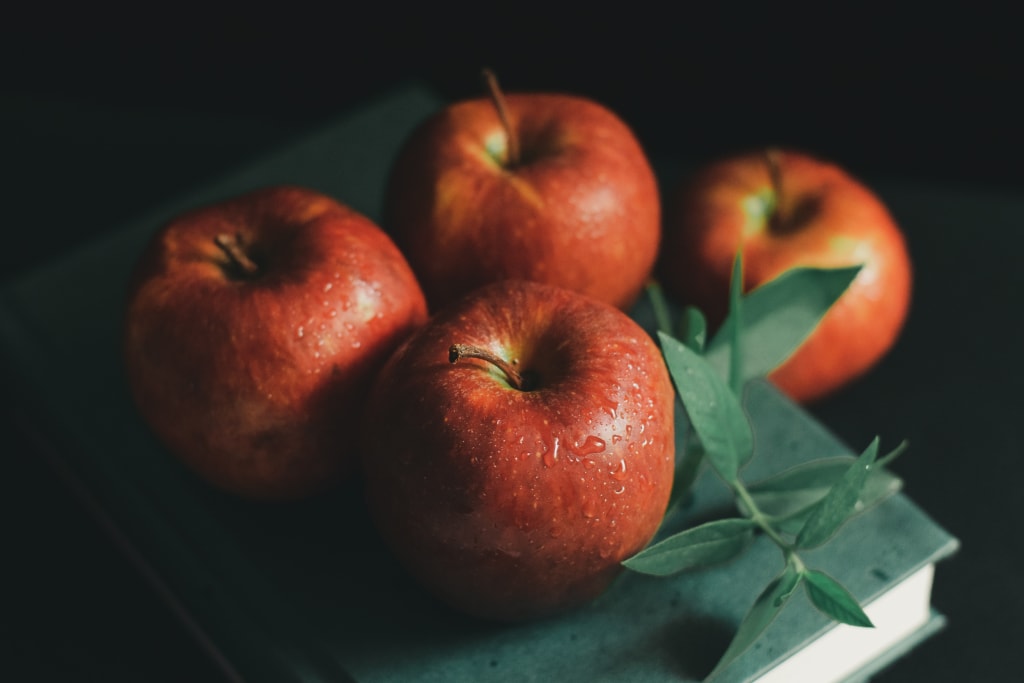
Simon’s neighbor was missing. He was pretty sure it was his fault. No one else seemed to notice.
It was nearing late May. The summer was shaping up to be the oppressive kind that plastered your clothes to your flesh and weighted the very air in your lungs. Although, Simon had trouble discerning whether his difficulty breathing was a product of the weather, or of the little black notebook hidden inside his jacket.
Anette Cadbury.
It was nearing late May, which meant two months since the fire. Two months since he’d returned home from the hospital to discover that mysterious package on his doorstep. Two months since he’d read the instructions included with his new journal and curiously scrawled her name inside. He hadn’t thought anything would come of it. But that was two months ago. He’d since learned just how wrong he was.
“Lovely apples you’ve got coming in, neighbor. Oh! Didn’t startle you there, did I?”
“No, no…” Simon settled again in the shade of his backyard and made a silent note to install a privacy fence once he had the money. You’d just have to write one extra name. He shook away the temptation. “Thanks, Will. They grow in every May.”
“You don’t say?” The lines around his neighbor’s eyes crinkled. He was older than Anette had been. She must have married young, Simon thought, as he studied the golden band on Will’s finger. “And you don’t do anything to treat ‘em? No pest control or… No? Nothing like that?”
Simon finished shaking his head. “Tree was here when I moved in. I don’t even touch the apples, honestly. They just fall off and rot.”
“Aw, you should harvest this year! I’ve got some extra cherry tomatoes springing up, thought I’d take ‘em into the church. Home-grown produce is sweeter. Not like that overly processed garbage you get at the grocery.”
“Yeah, maybe I’ll…pass them around to my neighbors or something. Sounds nice.” Simon offered a worn smile. “You and, uh, you and Anette will be sure to get the first batch.”
“Well, see, that’s the spirit! Just make sure to save a bite for yourself.” Will smiled, a polite obligation, but Simon caught the questioning flicker in the man’s eyes. The first time he’d seen that expression, Simon vowed never to sacrifice another name to the cursed pages of that little black book. Then, his second bill arrived.
“Yeah, yep, will do.” Simon adjusted his glasses where they rested awkwardly on the bridge of his nose. A quiet moment slipped through the breeze. “Actually, you know what, I need to get going. Yeah. I didn’t realize it’s almost three o’clock, you know, the calling hours—”
“Right, right, right. Of course. Don’t let me keep you.” Will laughed, scratching beneath his shirt collar. “You know, it’s good that you’re taking care of her, Simon. I can’t imagine how hard you’ve been working to hold onto the house and… I mean, Christ, if half the guys at my plant worked as hard as you, we wouldn’t have had that big lay-off after the holiday, you know what I mean?”
Simon winced. “Oh, well, I don’t know. I really gotta head out though, so—”
“No, I mean it. You’re doing the right thing, taking care of your mother like this. No one should have to go through the—Pardon my language here but—no one should have to go through the shit you’re dealing with right now. And you’re just, gosh well, you’re a damn inspiration to the community, you know that? Really stepping up to the plate, taking care of business. It’s incredible.”
“Okay.” Simon nodded briskly. “Thanks Will.”
He shuffled into the house before further conversation could unfold. Simon didn’t need to refuse his neighbor’s compliments to know they weren’t true; inside his home sat the evidence of every contradiction. His modest kitchen stood charred and coated with black ash, not repaired at all. Rejected requests for unemployment benefits lay scattered near an overfull trash bin. Most damning of all, though, was the too-tall stack of letters taunting him from the coffee table. He read the inky black print as he drew near, as though he hadn’t already memorized that eerily automated message.
Thank You for Your Generous Contribution! Incentive Has Been Credited to Your Account.
Every letter said the same thing, reliably accompanied by a one-thousand-dollar deposit to his bank account. Anette Cadbury earned him his first payment, for no other reason than hers was the first name he’d thought of upon reading the vague instructions included with his strange black book: Refer a Friend by Transferring Their Name to THE BOOK. Earn Donations from Our Sponsors. With a twenty-thousand-dollar hospital bill accruing interest by the day, hopeful curiosity won out over Simon’s sense.
Nowadays, there was no room for hope, or curiosity, or sense in Simon’s heart. All human emotion was consumed by guilt. And fear. Fear that he’d never understand the fate of Anette Cadbury, his good-natured neighbor who greeted him on her morning runs and saved him a piece of pumpkin bread whenever she asked to borrow a cup of sugar. Fear, not that he’d be punished for whatever crime he was sure to have committed, but that he’d never face any consequence at all, because Anette Cadbury had been apparently erased from this realm, her disappearance unacknowledged by even her closest kin.
Simon had taken to writing only strangers’ names, after that. There was Thomas Obrien, whose ID he’d glimpsed when the other man was buying a pack of cigarettes at the local corner store. Anthony Pérez, who’d placed an ad for a roommate in the morning paper. Margarette Sheffield was a woman from the church, but she was old anyway, and ill. Simon rationalized that it was only a matter of time before the universe claimed her one way or another.
But justifying Margarette Sheffield’s disappearance only brought Simon a new feeling of guilt. Never once had he desired to elevate himself to the status of a god. Did he have any right to choose, with such careful calculation, who deserved to live and die? And what if they didn’t die? Some fates, a hideous thought informed him, are worse than death. So, Simon promised again to never write another name.
And when another hospital bill arrived, clawing at his empty pockets, he altered his promise: He would select his names with the same detached randomness that the universe itself possessed.
At least, he’d followed that guide for the last fourteen names he’d written. Now, Simon found himself hunched over that notebook once again, with sickening familiarity. His pen slipped in his hand. He was sweating, but this was not any more a response to the weather than his previous struggle to breathe. He thought of Anette, because no one else would think of Anette, and he pondered whether her husband ever wondered who his wedding ring was meant for. Probably not, Simon reasoned, since he didn’t even care to remember the people who were still involved in his life—People like Simon, who suffered firsthand the effects of that “big lay-off at the plant.” Simon tightened his grip on the pen and watched ink bleed across the page.
William Cadbury.
“Shit.” Simon shoved the notebook away from himself, replacing his grip on the pen with a fistful of dark hair. He crumpled in on himself, fretting. “No time, no time.”
He gasped down a few mouthfuls of air and staggered toward the window. Shaking, he slid two fingers between the blinds and peered over the fence at his neighbor’s house. There was no sound, save for the awful thunk of a letter falling through his mail slot. Dizzy, he gravitated toward the little white envelope. He didn’t need to open it up to know what was written inside. He opened it anyway.
Thank You for Your Generous Contribution! Incentive Has Been Credited to Your Account.
Simon groaned, dropping the piece of paper at the same time his head fell into his hands. Clawed fingers raked through his hair, his ribs aching as he doubled over the weight of his uncertainty. What did I do? he pleaded with himself, with any entity that might be able to answer him. What did I do?
A sharp ringing tore Simon prematurely from his grief. He jolted upright, searching for his cellphone with clumsy hands. He located it in his back pocket and pulled it up in front of his face. An incoming video call from Eleanor Young. His mother.
Simon composed himself before answering. “Hi Mom.”
“Simon…”
The video buffered for a moment too long and Simon felt a little pulse of hope, wondering if it wouldn’t connect. Of course, his hope never lasted long. Eleanor’s face appeared on the screen as it always did, wrapped in loose bandages so as to render her unrecognizable. The stark red of her skin contrasted with the pristine white of her hospital bed and the sleek black of the wheelchair she’d had since Simon’s birth. The tracheostomy hole in her throat whistled when she spoke.
“Don’t…look good.” Eleanor’s voice was a coarse, smothered sound. Not at all the clear music Simon remembered from his youth. Or from any day prior to two months ago. “Simon?”
“I’m here, Mom. You look fine.”
“No. You.” Eleanor took a shuddering breath. “Not mad at you. Simon.”
“I know, Mom. I know. You’re not mad at me. Thank you.”
He’d had this conversation before, was all too familiar with his mother’s constant reassurance and forgiving heart. Only, she shouldn’t forgive him, Simon thought. It was his job to take care of her. It had always been his job, since his father walked out years ago. And Simon hadn’t minded, he really hadn’t minded the duties that tending to his sickly mother entailed. It was other people Simon minded, the way they treated him, or looked at him with Will’s level of patronizing sympathy, as though he were somehow burdened.
Simon’s mother wasn’t his burden. No. Simon’s burden lay in the knowledge that this was his fault. He’d grown too used to Anette’s morning greetings, too fond of human interaction that didn’t involve pity or empty praise. So, when he’d seen her passing by through his kitchen window, and forgot to turn off the stove before he’d gone to see her… Well, it was Simon who was mad at Simon, even if his mother was not. She shouldn’t have to bear the scars of his carelessness, just as Anette shouldn’t have fallen victim to his desperate scramble to financially correct his wrongdoings.
“Simon.”
“I have to go, Mom. It’s apple season. Think I want to try them this year.”
“Okay.”
Simon could tell his mother wanted to argue, but the exhaustion showed in her eyes. Simon offered a pale smile before disconnecting the call. He moved numbly toward the backdoor, tenderly retrieving his black book on the way.
In the end, Simon found himself sitting beneath the apple tree where he’d started his day. This time, his solitude was not interrupted by anything but his own tortured musings. Twenty thousand dollars. That was the total bill amount from the hospital visit he’d caused. He’d collected eighteen thousand of that, thus far. Nineteen thousand, he reminded himself, glancing to the Cadbury’s empty yard. If it is still their yard.
Simon only needed one more name. One more Contribution, and his mother’s debt was paid. He owed her that much, at least. And he did so wonder what happened to the people whose names he’d placed upon this wretched parchment. He also wondered, irrationally, if what Will said was true: Were the apples he grew at home sweeter than the ones at the store? If he was going to discover one thing, he might as well find out the other.
He took a bright red apple in his left hand, and with his right, he penned that twenty-thousand-dollar signature.
Simon Young.
About the Creator
Keep reading
More stories from writers in Humans and other communities.
Cabin Fever Because of Snow, Sleet, and Freezing Rain That Turned to Icy Roads
What Is Cabin Fever? The short answer is that cabin fever is restlessness from being in a confined area. Cabin fever is the distressing irritability or restlessness experienced when a person or group is stuck at an isolated location or in confined quarters for an extended time. Research shows that prolonged cold, gray skies, and being stuck indoors can trigger mood shifts similar to “winter blues.”
By Margaret Minnicks2 days ago in Humans
Tammie Sutherland: Age, Husband, Children, Net Worth, Biography & More
Tammie Sutherland is a well-known Canadian journalist and news anchor, best recognized for her work with CityNews Toronto. Known for her sharp reporting skills, professionalism, and warm personality, Tammie has become one of the most respected figures in Canadian broadcast journalism.
By Enoch Sagini4 days ago in Humans
Self Help: Grifters' Gospel
On Self-Help, Snake Oil, and the Illusion of Change Psychology professionals and students can be imagined on two opposite sides of a line called self-help books: likely a larger group opposes pop-science and step-by-step manuals filled with talk of success, journaling, and not giving a f**k; others love them, but they aren’t many.
By Avocado Nunzella BSc (Psych) -- M.A.P about 18 hours ago in BookClub




Comments
There are no comments for this story
Be the first to respond and start the conversation.