
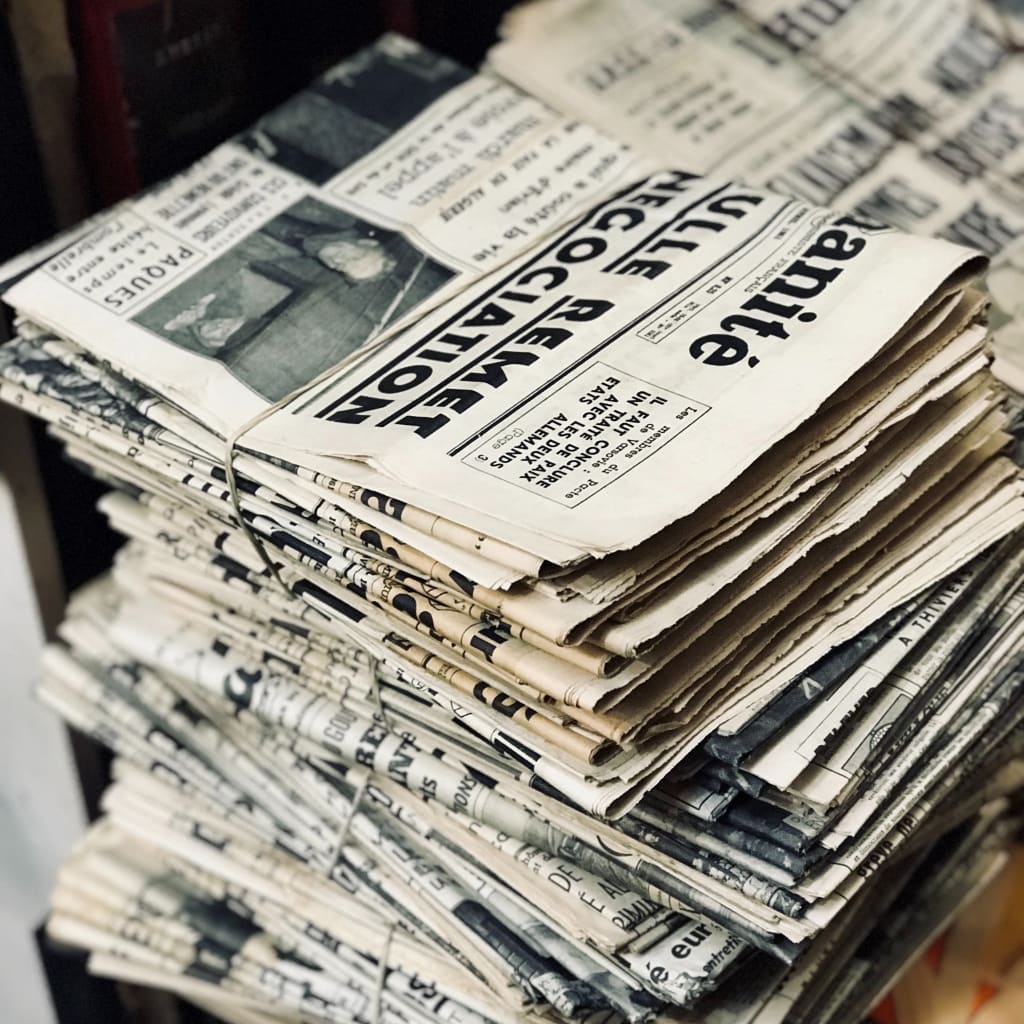
I caught the phone on the second ring. “Chronicle.” Wheeling my chair to face my computer screen. I hoped this was someone to give me the last bit of information I needed to finish my story.
“Michael Davis?” A hesitant low voice asked.
“Yes, it is.” I quickly replied, automatically scrolling down the screen to where I had left a hole to add a quote.
“You got the story wrong the other day,” the man said. I leaned back in my chair, realizing this wasn’t the call I needed. I switched the phone to my left ear and reached for the pen on my desk and the worn leather black notebook I carried with me everywhere. “Which story?” I was anxious to get rid of the guy. It was probably just some reader. It wasn’t unusual after a story runs to have people call, ever-ready to let you know just what you did wrong. Few called to pat you on the back.
“The story about the Adams Building. You got it wrong. The name is wrong.”
I scooted the chair back around to face my desk and sifted through a pile of other notebooks to find the one I had used on the story. He was talking about the Sunday piece I just did on Boston’s downtown redevelopment project. A 15-story red brick building was demolished last week before it could kill someone else. A young girl and her brother had died three weeks ago when a brick ledge crumbled, crushing them as they were about to cross over to the Commons. If they had been tourists, the building would have been shut down the next day. But this was February, when city officials are as frozen as the ground.
I made chicken scratches with the pen, digging into the page until the ink started to flow. “Can I ask who this is?”
There’s a risk in putting someone on the spot. If you really want information, the question often scares them off and you end up with just a dial tone. Which is exactly what I would prefer right now. I needed to get off the line to finish my story. I had a 6:00 PM deadline in exactly - I looked at the clock across the room - 24 minutes. Enough to finish the story but not enough time to rehash my reporting methods.
I was waiting for him to begin but all I could hear was breathing. And then there was a dull thud, like he had put the receiver down. I waited. I'd hang on for a couple of minutes unless I get another call. “Hello?” I raised my voice into the phone.
Nick Taylor, the reporter who sits across from me was busily emptying a deep black satchel. Lifting stacks of papers out onto his desk. He stopped and cocked his chin my way, “Who you got?”
“I have no idea.” I said shrugging. I put the receiver between my neck and shuffled through the morning mail. My desk is the joke of the office. One side is impeccably neat, files militarily straight in rows of metal fingers. The other side is a jumble of folders, thick pads of computer printouts, open mail, unopened mail and assorted lunch menus.
I took my letter opener and sliced through an ordinary white envelope. It was the only one in the bunch that didn't have some sort of embossed design. Public relations people think you'll be dazzled with their creativity. You don't know how many reporters have sent the envelopes like rockets to the trash can, when on opening, a shower of glitter rains down on your desk. I wouldn't want to get this kind of greeting from a friend much less a PR firm.
I leaned into the receiver, still hearing nothing. “Hello?” I tried again. Nothing. By now the call had gone from being a bother to one of curiosity.
I kept slicing through the mail and made conversation with Nick. “When did you get back?” He had been in Los Angeles on vacation.
“Last night. And yes, I’m out of my mind to be back. The weather there sure beats our little corner of the world.” He dug into the satchel and pulled out a small magnet of the state of California.
He slapped it on the side of my desk. Another vacation, another plastic state magnet. In the two years I've known him, Nick had brought me half a dozen, collecting them during his trips or at the different conventions he's gone to. He even brought one back last November when he went to Montana for his uncle's funeral.
I moved the receiver to my other ear and listened. Five minutes pass. I didn’t want to wait. I was wanting one more call from a city council member about the redevelopment work going on downtown. The story for Sunday was the first in a series I'm writing about the project. Not all of the city council members were so enamored of the work being done. But I already had comments representing both sides. No need to belabor this. I shipped the story off to my editor and made a note on my desk calendar: “Check name on Adams”
I started gathering stuff to leave and thought about the guy’s voice. It sounded vaguely familiar. But when you meet as many people as I do, lots of mannerisms, voices - even faces - seem familiar. I sighed and flipped through my stack of manila folders, picking out four to take home. It's a habit I can't break. I rarely leave the office without grabbing work I may need. I've got almost a duplicate of my desk at home.
Back at my desk, I saw the red light on my phone. I dialed my password to get my messages. One call was from Mark Lang, the city inspector I was going to meet in the morning. He left a number and the address of where he'd be tomorrow. I wondered which reporter had trained him. No one left a message on the other call. I guessed it might have been my unknown caller trying again. Well, maybe he'll try tomorrow.
The next morning, I was paired with the guy tapped to crawl inside that building on Mason, a spooky place with ominous looking gargoyles that would have given Edgar Allan Poe the creeps. We got to the basement and looked around. It was hard to maneuver, there was so many pieces of office furniture. I found a row of cabinets but couldn’t reach them. I got the guy to promise to let me return.
The next day, I’m back at my desk, a bit groggy but on the upswing with a few swigs of coffee. I had just gotten there when my phone rang. I quickly answered, “Chronicle.”
“Mr. Davis? I've been trying to reach you. Did you get my messages?”
“Yeah,” I said, hoping this was the guy from last night.
“I have lived in the city for nearly 68 years and I don't like to see misinformation go into the paper,’’ the caller said in a heavy wheeze.
“Well, Sir, I've only lived here two years and I don't like it either.”
I heard a click and the guy was gone. Just like that. “Shoot!”
I felt a copy of the newspaper gently nudge my left shoulder. “Hey, hold down that rough language, son.” I turned and found Walt Galvin. He likes to rib me because I never cussed. “Oh, hi, Walt. Ever get one of those callers who just want to bait you?”
Walt had been a reporter for probably 25 years. He had been dumped on the copy desk after the publisher at the time fell asleep reading a story he had written about a man who had been stabbed 23 times but survived.
“Yeah, I remember those kinds of calls,” Walt said balancing his chicken sandwich with the latest edition of the paper. He caught me square in the eye. Don't lose your patience. You never know what you might get out of it. With that he sauntered away to his corner.
I felt strange almost sad for some reason. Walt’s word stayed with me. A lot of people dismissed him saying he had missed his chance at a great career. He had been a police reporter and was able to get the story that others missed. But after about three years he just quit caring. No one knew why. He didn't talk much about his cub reporter days.
I glanced over my shoulder back up at the Chronicle and thought of Walt. Maybe he once had missed on a call just like mine.
The next day, the man called back. To sum it up, he told me that that his grandfather had once been a co-owner of the building but had a falling out with the other owner, John Dickerson. He agreed to payoff my grandfather but it never happened. The original title was somewhere in the building Granddad just gave up. “Your story got me thinking that maybe it’s not too late to get proof,” he told me.
“Okay, I’ll bite. What’s your name, anyway?”
“Buford Anderson.”
Long story short, I made my way back into the building, hit the row of cabinets, spent hours digging through folders and found the proof. Buford wound up getting $200,000. He offered to give me 10 percent. I told him it would be unethical and wished him well.
A few years pass and I’m at my desk starting a series on the city’s pot hole problems. This time, I’ve got a personal interest. I’ve hit plenty, along the way.
Suddenly, the day’s paper drops in front of me. Walt is by my side. “Did ya see the obituary section today?” he asks quietly.
He has that section open. I scan the pages and spot a familiar name: Buford Henry Anderson. I sit back in my chair and read his obit. It’s short, only about two paragraphs. It mostly contains the basics. A little about his life and when and where the funeral will be held.
I rearrange my schedule to be there. The service is set in one of the smaller rooms at the mortuary. Looking around, there are mostly older folks and a few younger ones sitting at the front of the room. Family members, I guess. At the end of the ceremony, I go to the front and shake hands with his wife, son and daughter. Their eyes light up, remembering me and my role in Anderson’s life. It’s a bittersweet moment.
A few days later, I get a call. It’s a lawyer saying he has something for me from Anderson. I’ve got time today, so I set out to meet him. He’s holed up in one of the older buildings in town. I dislike the sleek modern designs of today. This building has a lot of deep history,
He quickly gets to the point of my visit. My kind of guy.
He slides over an envelope. I open it and find a check for $20,000. I’m stunned. I pull out a letter inside.
“If you’re reading this, then I’m dead. I’ve never forgotten what you did for me. That inheritance worked for me, so I wanted to give you that same experience. Go have fun or put it in the bank. Whatever. Thanks again, pal. Be safe.”
I walked out and pulled my coat tight to ward off the chill in the air. I felt funny about keeping the money.
Back in the office I knew what to do. I signed over the check, put it in an envelope and placed it in Walt’s hands. “Here ya go buddy. You’ve been a great friend. Have fun. Put it in the bank. I don’t care.”
Walt’s mouth dropped open.
I smiled. It felt good. Real good. I think Anderson would have approved.
About the Creator
Keep reading
More stories from writers in Humans and other communities.
Time to change your life.
Is it even possible for you to change your life? A lot of people, more than there should be, are unhappy with their lives. But what are they doing about it? Usually nothing. People talk about how shitty their lives are and want change, but are they not taking the actions to change?
By Jen Phillips3 days ago in Humans
I Learned This the Hard Way
I Learned This the Hard Way There was a time when I believed that if I just worked harder, everything would eventually fall into place. I didn’t question it. I didn’t doubt it. That idea was repeated so often by teachers, family, and motivational posts online that it felt like a universal truth.
By Story Prismabout 5 hours ago in Humans


Comments
There are no comments for this story
Be the first to respond and start the conversation.