
(8) Redistribution Without Exposure
Why Wealth Transfers Consistently Bypass the Ruling Class

- The Promise of Redistribution -
Wealth redistribution is almost always framed as a corrective mechanism, a way to rebalance outcomes that markets, history, or circumstance have skewed. In theory, redistribution is meant to relieve pressure on those bearing disproportionate burden and to prevent extreme concentration of power from destabilizing society. The language surrounding it emphasizes fairness, compassion, and social responsibility, creating the impression that costs will be borne by those most able to afford them and benefits will flow downward.
In practice, redistribution rarely operates this way. Instead of transferring resources from the insulated to the exposed, it tends to extract from those with limited leverage and redistribute within the same protected strata that already control enforcement, policy design, and narrative framing. The promise of redistribution remains rhetorically powerful precisely because its failure is difficult to trace at the individual level, even as its structural pattern repeats reliably over time.
- Who Actually Pays -
The critical mistake most people make when evaluating redistribution is assuming that nominal targets are the same as actual payers. Policies may be written to tax wealth, regulate capital, or constrain corporate behavior, but enforcement determines who ultimately absorbs the cost. Those with resources, legal sophistication, and political access can restructure assets, relocate exposure, and negotiate compliance. Those without such leverage cannot.
As a result, redistribution tends to fall most heavily on labor, consumption, and fixed assets, because these are the least mobile and most easily enforced. Wages are transparent. Transactions are trackable. Property is immobile. These characteristics make ordinary people efficient revenue sources, while capital protected by complexity and jurisdictional arbitrage remains comparatively insulated.
- Redistribution as an Administrative Process -
Redistribution does not occur in a vacuum. It is implemented through bureaucratic systems that require compliance, reporting, and enforcement. These systems do not apply force evenly. They apply it where it is cheapest, safest, and least disruptive. This reality shapes outcomes more than stated intent. Administrative burden itself becomes a form of extraction, consuming time, resources, and opportunity disproportionately for those with fewer buffers.
For elites, administrative complexity is navigable. For everyone else, it is punitive. The result is a paradoxical system in which redistribution increases friction for those already struggling while remaining largely absorbable for those it claims to constrain. Redistribution becomes a process of managing populations rather than redistributing power.
- Why the Ruling Class Is Structurally Exempt -
Structural exemption does not require explicit carve-outs or conspiratorial coordination. It emerges naturally when those designing rules are also those best positioned to avoid their consequences. Policy architects understand where flexibility exists because they helped create it. Enforcement agencies understand which cases are politically risky and which are safe. Courts understand which disputes threaten systemic stability and which do not.
This shared incentive environment produces predictable outcomes. Redistribution policies are shaped to appear aggressive while remaining survivable for those at the top. The ruling class does not need to oppose redistribution openly. It only needs to ensure that redistribution flows through channels it can navigate, influence, or exit.
- The Role of Time and Delay -
Time is one of the most powerful insulating tools available to elites. Redistribution often promises long-term correction while imposing immediate cost. Those with resources can endure delay, litigate, restructure, and wait out enforcement cycles. Those without resources experience cost immediately and continuously. By the time redistribution’s effects are evaluated, beneficiaries and decision-makers have often moved on.
Delay also blurs accountability. When outcomes fail to match promises, responsibility is diffused across administrations, agencies, and economic cycles. The policy itself remains morally justified, even as its practical effects contradict its stated purpose. Time shields the structure from consequence in the same way it shields individuals from liability.
- Why Redistribution Expands Government Without Reducing Inequality -
One of the most consistent outcomes of redistribution is institutional expansion rather than structural correction. New programs require administrators. New taxes require enforcement. New regulations require oversight. Each layer increases the size and reach of the state while leaving underlying power relationships intact. Redistribution thus grows bureaucracy faster than it redistributes control.
This expansion benefits those already positioned to influence institutions. It creates new interfaces where negotiation, discretion, and exemption can occur. Meanwhile, inequality persists or even worsens, not because redistribution failed morally, but because it failed structurally. Power was never redistributed, only revenue.
- Redistribution as Political Theater -
Redistribution functions as political theater because it offers visible action without threatening insulation. Voters see taxes raised, programs announced, and funds allocated. They experience the emotional satisfaction of moral alignment without examining enforcement pathways. The system gains legitimacy through appearance while preserving its internal architecture.
This theatrical function is reinforced by fear-based narratives. Redistribution is framed as urgent protection against catastrophe, making scrutiny seem callous. Questioning outcomes is reframed as opposition to compassion itself. As a result, redistribution policies are insulated from evaluation in the same way authority is insulated from consequence.
- Why Costs Flow Downward -
Costs flow downward because downward enforcement is stable. Extracting from the exposed does not threaten institutional continuity. Extracting from the insulated does. When redistribution threatens elite exposure, resistance emerges through complexity, delay, and reinterpretation. When redistribution targets the public broadly, compliance is manageable and predictable.
This dynamic explains why redistribution often increases pressure on the middle and working classes while leaving concentrated wealth intact. It is not a failure of intent. It is a reflection of enforcement reality. Systems extract where resistance is lowest and risk is minimal.
- The Psychological Effect on the Public -
Over time, people sense that redistribution never seems to relieve pressure. Taxes rise. Costs increase. Compliance expands. Yet stability remains elusive. This produces cynicism not toward fairness, but toward institutions. People feel used rather than helped, managed rather than supported. The gap between promise and experience widens.
This psychological erosion matters. When people believe redistribution exists primarily to legitimize extraction rather than correct imbalance, cooperation collapses. Compliance becomes resentful. Solidarity fractures. The very social cohesion redistribution claims to protect begins to unravel.
- Redistribution Without Power Is Extraction -
Redistribution that does not redistribute power is not redistribution in any meaningful sense. It is extraction followed by reallocation within the same insulated system. Without structural exposure for decision-makers and beneficiaries alike, redistribution cannot correct inequality. It can only circulate burden.
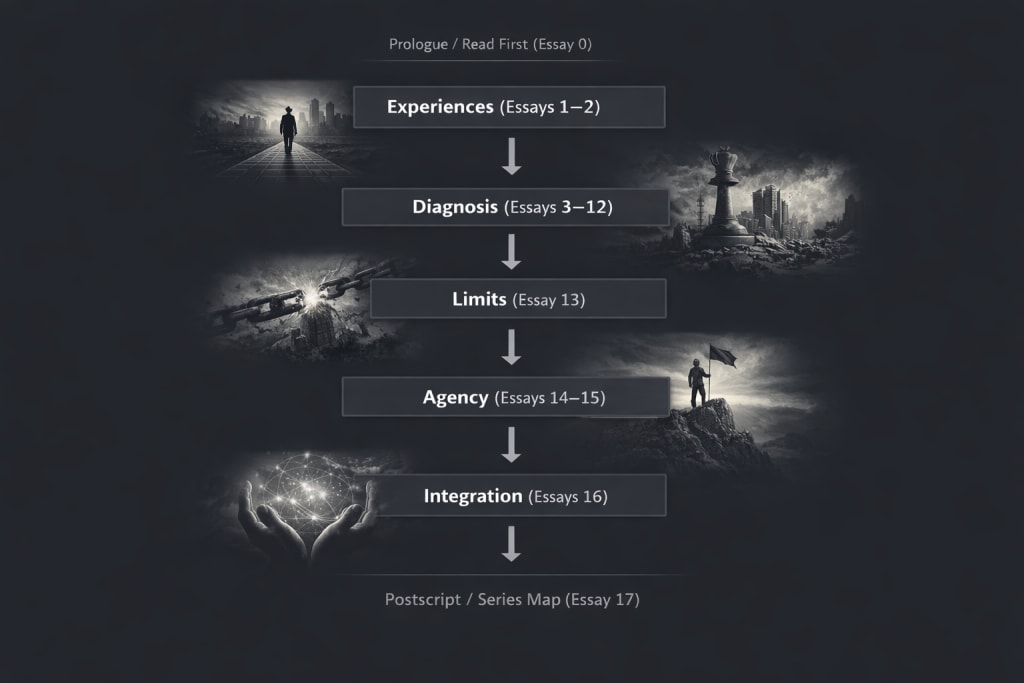
If previous essays showed how authority detaches from consequence, how law becomes unequal, how fear governs populations, and how systems respond to aggregates, this essay shows the financial expression of that same architecture. Wealth flows are governed by enforcement, not intent. Until power itself is exposed to consequence, redistribution will continue to bypass those it claims to restrain and burden those it claims to protect.
About the Creator
Peter Thwing - Host of the FST Podcast
Peter unites intellect, wisdom, curiosity, and empathy —
Writing at the crossroads of faith, philosophy, and freedom —
Confronting confusion with clarity —
Guiding readers toward courage, conviction, and renewal —
With love, grace, and truth.
Keep reading
More stories from Peter Thwing - Host of the FST Podcast and writers in Humans and other communities.
(7) Populations, Not Persons
- The Mistake of Individual Framing - One of the most persistent misunderstandings in political and social analysis is the tendency to reason from individual cases rather than aggregate behavior. Individuals experience systems personally, so it feels natural to evaluate outcomes through personal stories, edge cases, and exceptions. But systems do not respond to individuals as individuals. They respond to patterns, distributions, and averages. Policy is not designed around who someone is, but around how populations behave at scale.
By Peter Thwing - Host of the FST Podcast2 months ago in Humans
10 Things I Consider Micro-Cheating
1. Hiding Messages From Your Partner If someone feels the need to hide chats, delete messages, or quickly switch screens when their partner comes near, it usually means something is wrong. In healthy relationships, communication is open and transparent. While everyone deserves privacy, secrecy about certain conversations can signal that boundaries are being crossed.
By The Curious Writera day ago in Humans
Hottest in the Office
Dear Rafi, You’re very distracting to work around. For the first second I saw you the other day, I thought you were some type of executive. It took a moment to realize no, you were just the new guy, dressed up for the job he wants. Be still, my heart.
By Gabriel Shames2 days ago in Pride



Comments
There are no comments for this story
Be the first to respond and start the conversation.