
Whispers in the Han River: 7 Korean Horror Mythologies That Still Haunt the Living
Where ghosts and generative art collide: A dive into Korean horror mythology

I. INTRODUCTION
South Korea often dazzles the world with its vibrant pop culture, from the addictive beats of K-pop to the glossy perfection of its skincare routines. Yet, beneath this polished exterior lies a shadowy realm of horror mythologies that have gripped the Korean psyche for centuries. In our previous newsletter, we explored Japanese horrors like Kuchisake-onna, the slit-mouthed woman whose eerie legend continues to chill. Now, we turn to South Korea, where horror is deeply psychological, often steeped in sorrow, revenge, societal injustice, and isolation.
These tales aren’t just about fear—they’re about the human condition, reflected through the supernatural. In this article, we’ll uncover seven Korean horror mythologies that continue to haunt the living, each one a testament to the nation’s complex relationship with its past and present.
II. THE 7 KOREAN HORROR MYTHOLOGIES
1. Cheonyeo Gwishin (처녀귀신) – The Virgin Ghost
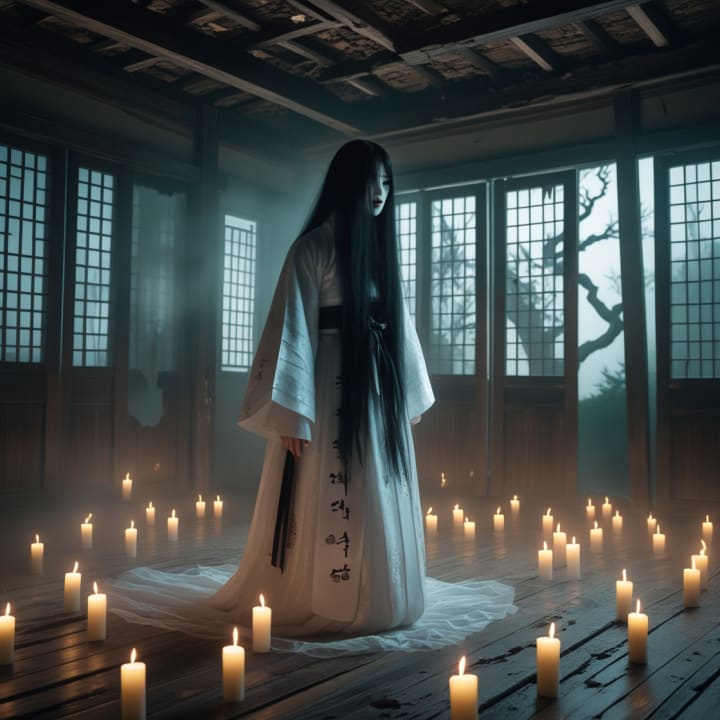
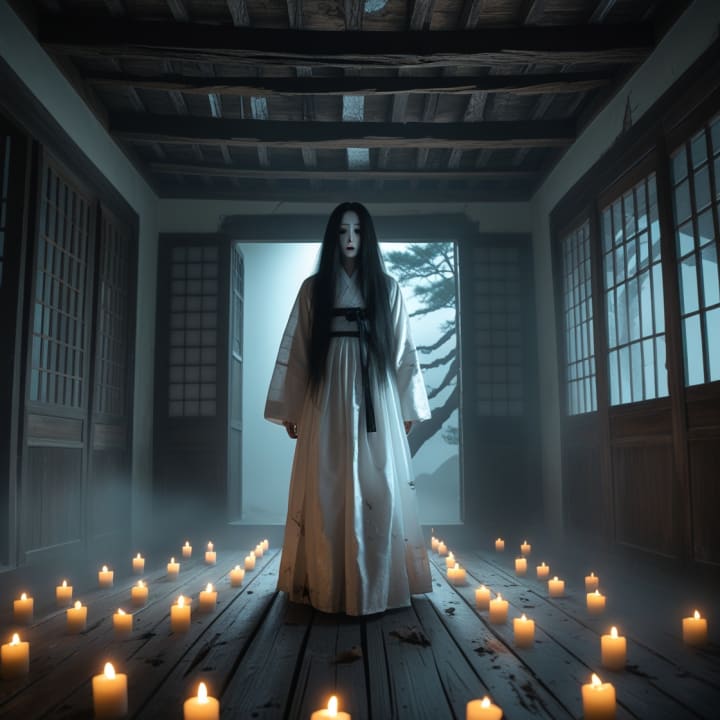
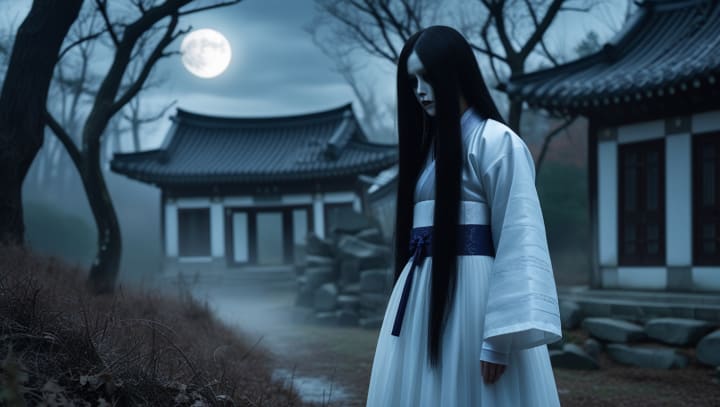
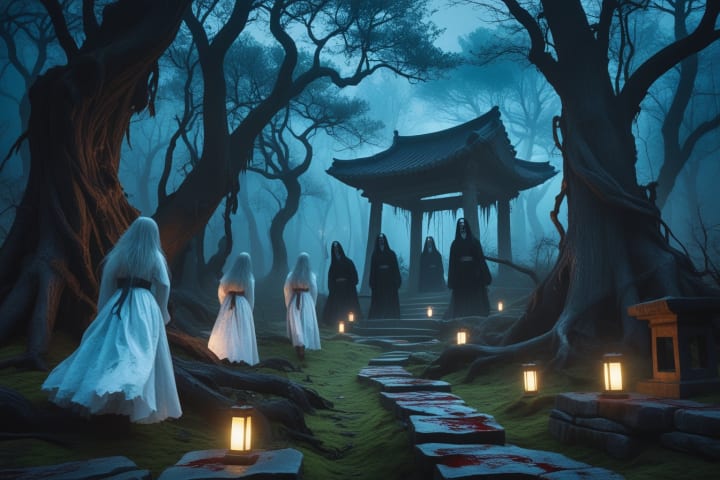
The Cheonyeo Gwishin, or Virgin Ghost, is a spectral figure born from tragedy—a young woman who died unmarried, often carrying unresolved emotions like anger, betrayal, or longing. In Korean culture, where marriage was historically a rite of passage, dying unwed was a profound shame, leaving these spirits cursed to wander the earth. They manifest in abandoned buildings, school bathrooms, or desolate mountain roads, their long black hair and white mourning hanbok a chilling sight.
What makes them terrifying is their unrelenting rage; they’re known to possess the living or wreak havoc until their grievances are addressed. In modern pop culture, the Cheonyeo Gwishin has become a staple of Korean horror films like Whispering Corridors, where her presence underscores societal pressures on women, making her a haunting symbol of unfulfilled dreams.
2. Mul Gwishin (물귀신) – The Water Ghost
Mul Gwishin, or Water Ghosts, are the restless spirits of those who drowned, their deaths often tied to despair or accident. These ghosts linger in rivers, lakes, or even bathtubs, their presence marked by an eerie ripple or a sudden chill. What makes them terrifying is their loneliness—they seek to drag the living into the water to join them, sometimes using seductive whispers to lure victims closer.
In Korean grief culture, water often symbolizes the subconscious, a place where suppressed emotions surface, making the Mul Gwishin a manifestation of unresolved sorrow. Their haunting grip on the living reflects a cultural fear of being pulled under by the weight of one’s own pain, a theme that resonates deeply in South Korea’s collective imagination.
3. Gumiho (구미호) – The Nine-Tailed Fox
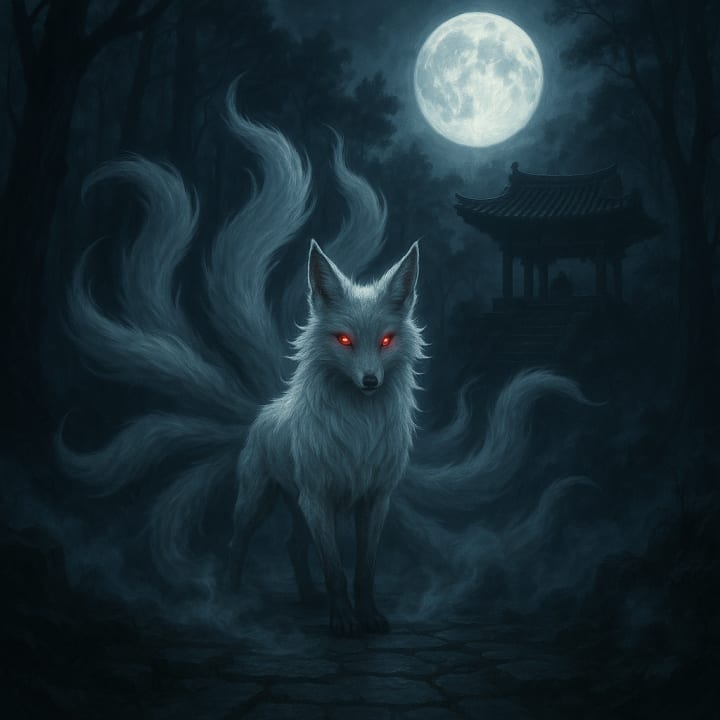
The Gumiho, a nine-tailed fox spirit, is one of Korea’s most enduring mythological figures, rooted in shamanistic folklore. This creature transforms into a stunningly beautiful woman to seduce men, only to devour their livers or hearts in a quest to become human. Unlike its Chinese or Japanese counterparts, the Korean Gumiho often carries a tragic duality—some tales depict her as a malevolent predator, while others portray her as a cursed being yearning for humanity and love.
This complexity makes her a fascinating subject for AI art, where her elegant, eerie femininity can be juxtaposed with her shape-shifting horror. Modern K-dramas like My Girlfriend is a Gumiho have reimagined her as a romantic heroine, showing how these myths evolve while retaining their haunting core.
4. Jangsanbeom (장산범) – The Mimic Beast
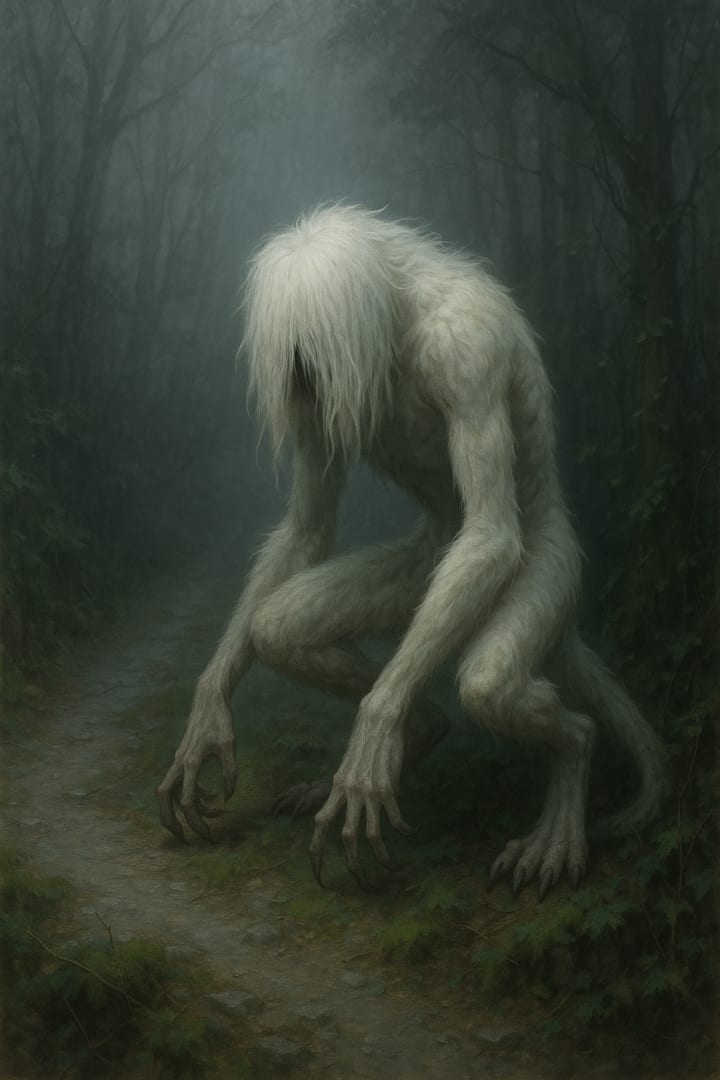
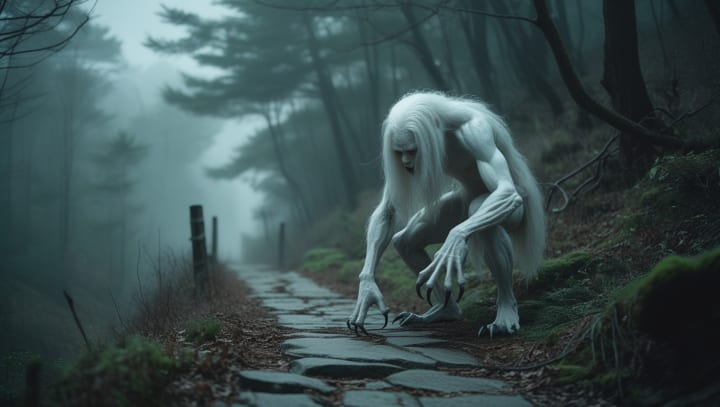
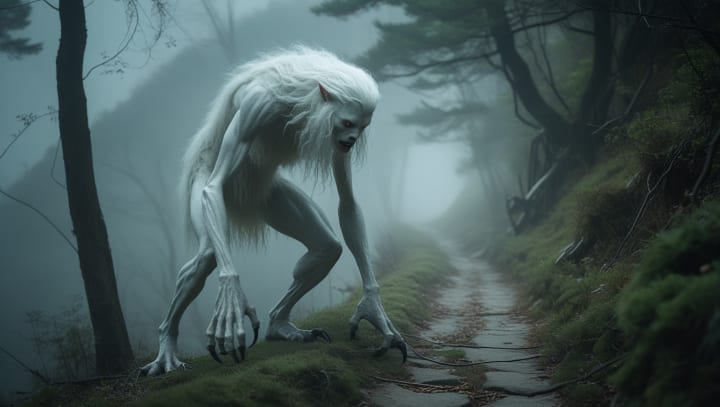
The Jangsanbeom, or Jangsan Tiger, is a modern cryptid that has captured South Korea’s urban imagination. Described as a creature with white fur, long limbs, and a human-like posture, it roams the mountains and forests, mimicking the voices of loved ones to lure people to their doom. Its legend gained traction through internet forums in the early 2000s, with reported sightings in Busan’s Jangsan area.
The 2017 horror film The Mimic brought this beast to life, portraying it as a shape-shifter that preys on familial bonds. The Jangsanbeom embodies the fear of the unknown hiding within the familiar, a theme that resonates in a society where rapid modernization often clashes with ancient fears, making it a chilling addition to Korea’s horror canon.
5. Dalgyal Gwishin (달걀귀신) – The Egg Ghost
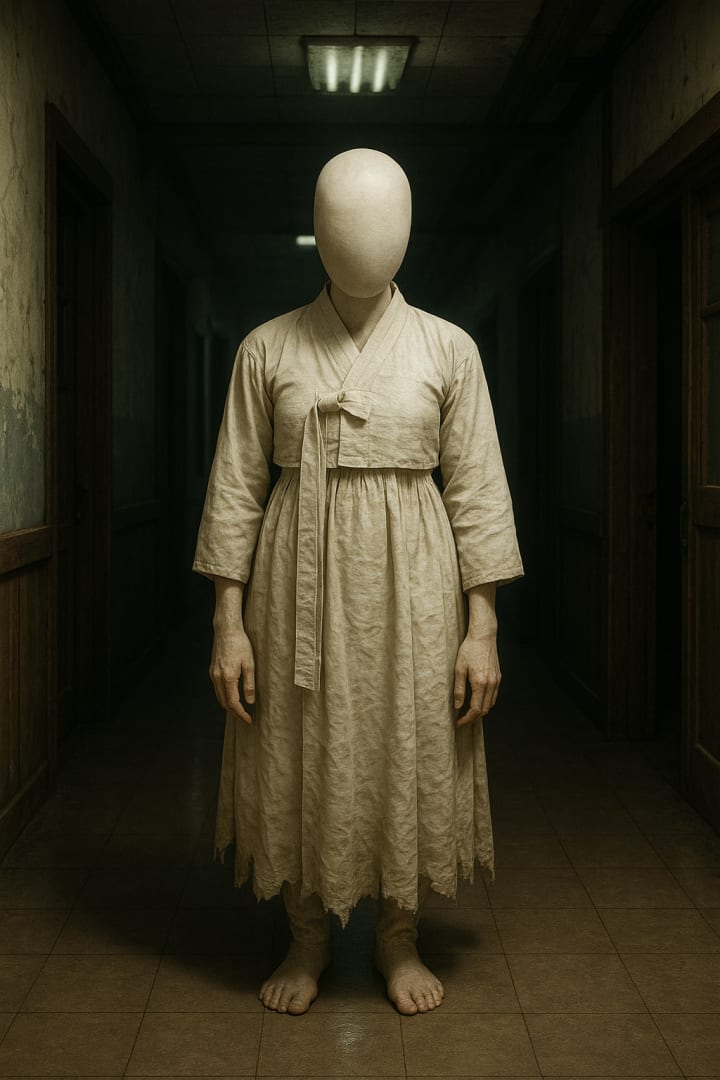
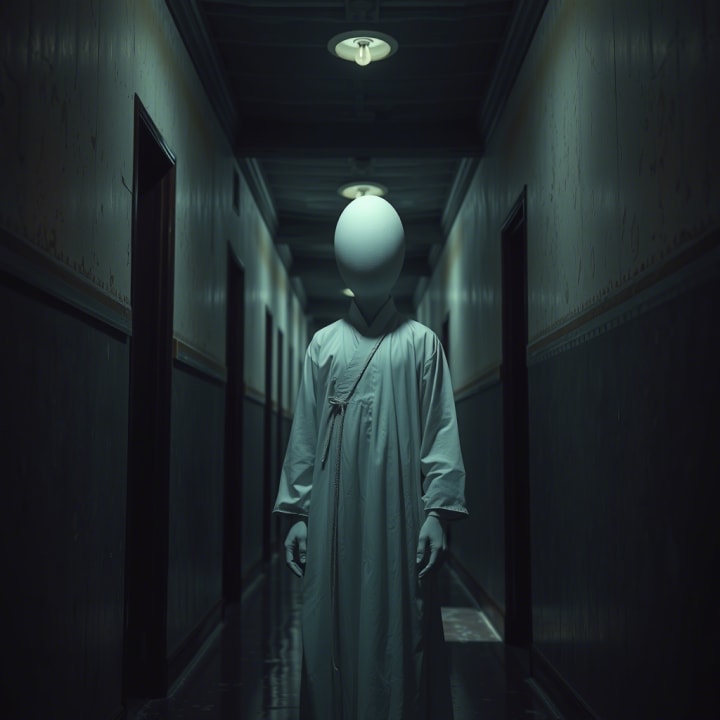
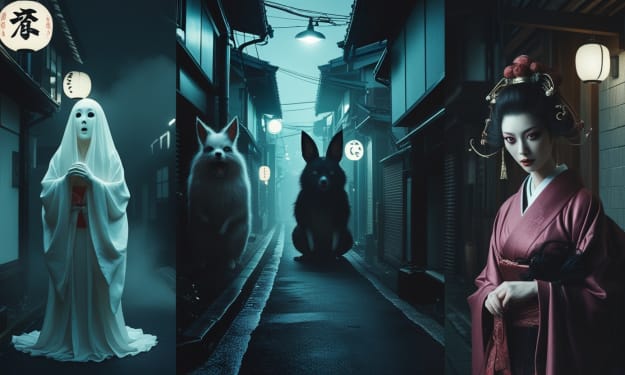
The Dalgyal Gwishin, or Egg Ghost, is a faceless apparition whose smooth, egg-like face lacks eyes, nose, or mouth—a walking embodiment of the uncanny. Often seen as an omen of bad luck or death, these spirits are believed to be the souls of childless individuals or those who died in obscurity. What makes them unsettling is their anonymity; they’re impossible to recognize, and those who encounter them often vanish without a trace.
Their minimalistic horror makes them perfect for AI x horror art, where their smooth texture and lack of features can evoke the uncanny valley effect, tapping into primal fears of identity loss and the unknown.
6. The Bongcheon-Dong Ghost (봉천동 귀신)
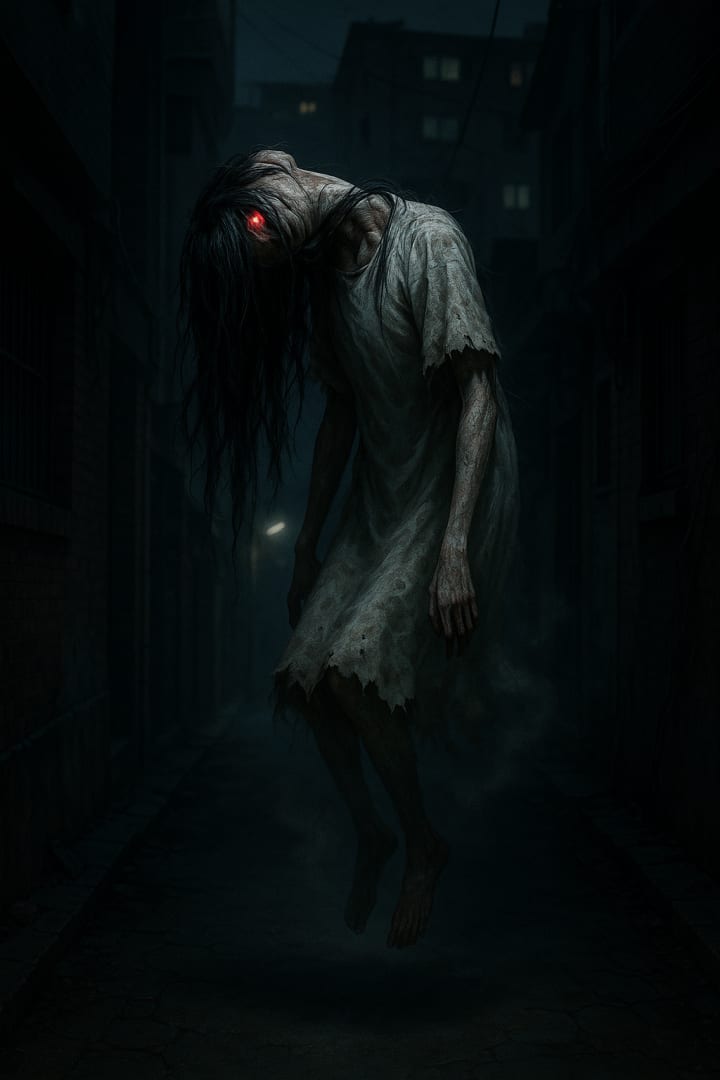
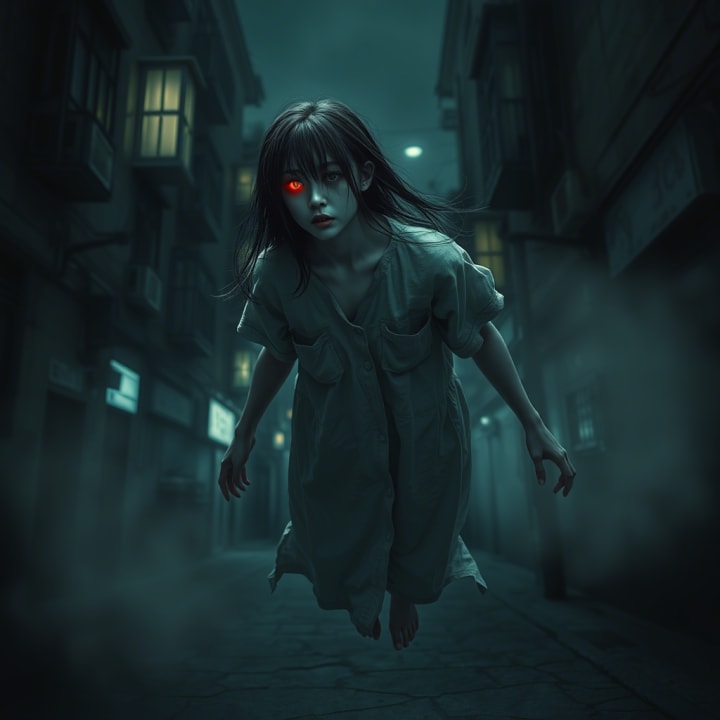
The Bongcheon-Dong Ghost emerged from a viral Korean webtoon that terrified global audiences in 2011. The story centers on a woman with twisted limbs who appears suddenly on a dark Seoul street, her jerky movements and haunting scream amplified by the webtoon’s animated effects. This digital ghost revitalized interest in Korean horror storytelling, blending traditional gwishin elements with modern anxieties about urban isolation.
The Bongcheon-Dong Ghost represents the evolution of Korean mythologies in the internet age, where the line between folklore and technology blurs, creating new avenues for fear that resonate with younger generations.
7. Jeoseung Saja (저승사자) – The Korean Grim Reaper
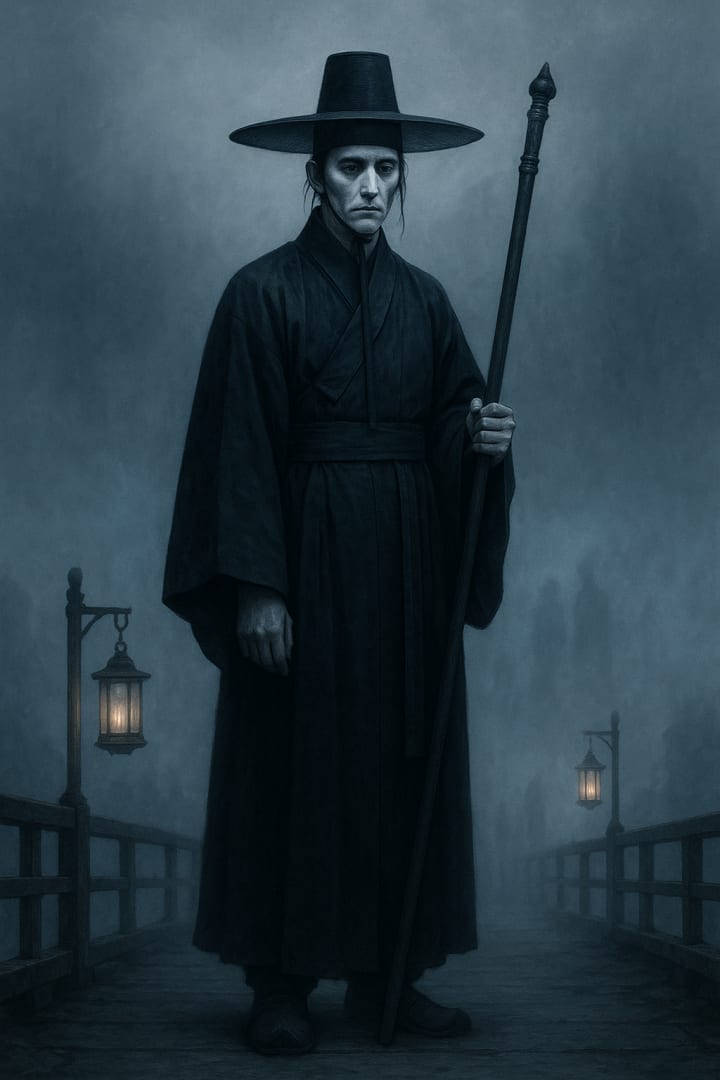
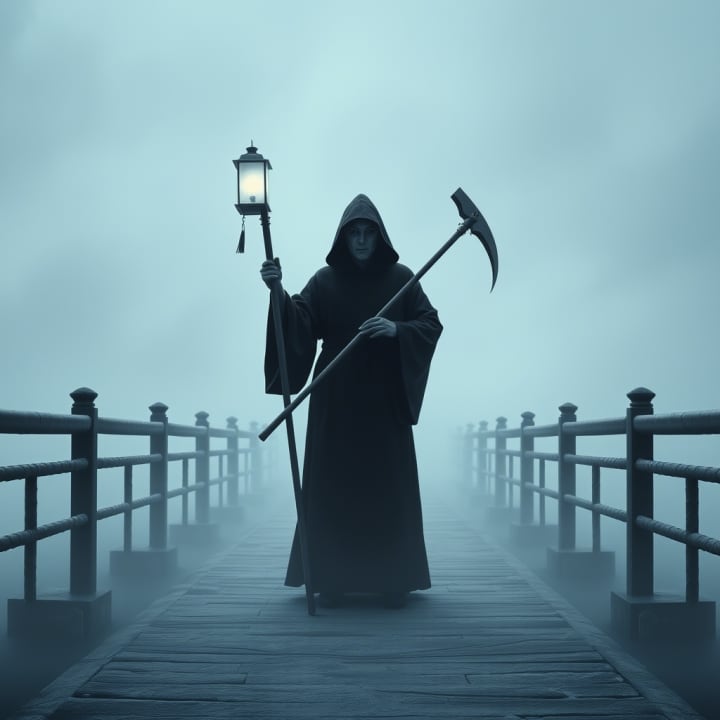
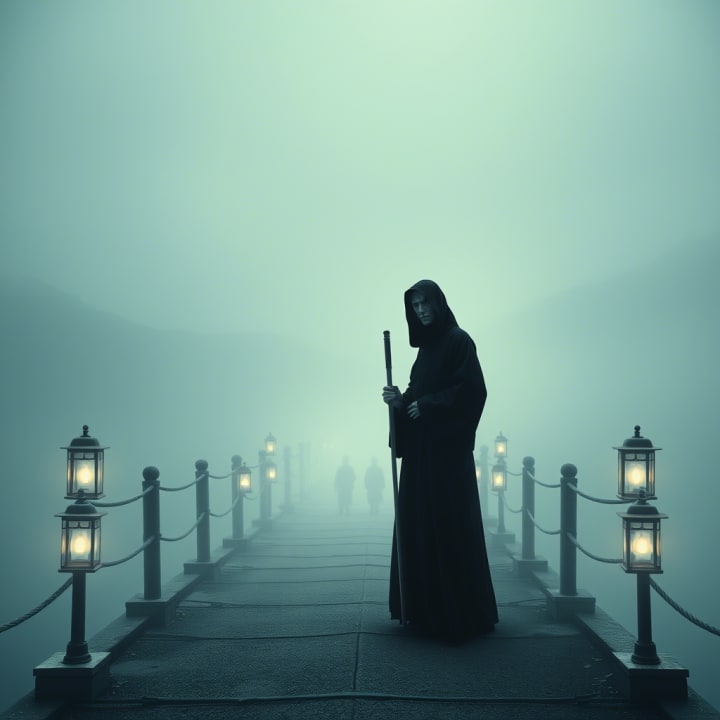
The Jeoseung Saja, Korea’s equivalent of the Grim Reaper, is a death god tasked with escorting souls to the afterlife. Clad in a black hanbok with pale skin and an emotionless face, they are a neutral force in some tales, guiding souls with solemn duty, but in others, they’re merciless harbingers of doom. Their presence is often preceded by a chilling wind or the sound of chains, signaling an inevitable end.
In pop culture, the 2016 K-drama Goblin reimagined the Jeoseung Saja as a romantic figure, but traditional tales emphasize their cold detachment. This duality—between benevolence and terror—makes them a compelling figure in Korean horror, reflecting cultural attitudes toward death and the afterlife.
III. BONUS MINI-MYTHS
Beyond these seven, Korean horror mythologies extend into other chilling corners. Gwishin in schools, often tied to the intense academic pressure faced by students, haunt high school bathrooms and hallways, their cries echoing the stress of the living. Red Masked Ghosts, a Korean urban variant of Japan’s Kuchisake-onna, roam cities asking victims if they’re beautiful before attacking.
Headless Ghosts, or Mugajin Gwishin, are the spirits of those beheaded during war or execution, their silent presence a grim reminder of Korea’s turbulent history.
IV. AI x ART PERSPECTIVE
These Korean horror mythologies offer fertile ground for AI-driven reinterpretation. The visual uncanny-ness of a Dalgyal Gwishin’s featureless face or the Jangsanbeom’s distorted mimicry can be amplified through digital art, creating immersive experiences that evoke both fear and awe. AI can also explore the psychological depth of these myths—capturing the Cheonyeo Gwishin’s sorrow or the Gumiho’s tragic longing in ways that resonate with modern audiences.
However, there’s an ethical balance to strike: honoring the cultural significance of these ghosts while reimagining them ensures that their roots aren’t lost in the pursuit of innovation.
V. CONCLUSION
Korean horror mythologies stand out for their unique blend of grief, feminine rage, identity loss, and lingering spirits—themes that reflect the nation’s historical and cultural landscape. From oral tales whispered by shamans to modern webtoons and K-dramas, these stories have evolved while retaining their haunting power.
Now, with AI art, they can take on new forms, not just to scare but to offer catharsis, allowing us to confront what haunts us. As you reflect on these eerie legends, consider what spirits linger in your own imagination—and how you might bring them to life through AI, not just for fear, but for understanding.
Subscribe to my newsletter for more haunting journeys into the world of AI x Art!
About the Creator
Dishmi M
I’m Dishmi, a Dubai-based designer, writer & AI artist. I talk about mental health, tech, and how we survive modern life.
Subscribe for healing advice, human stories & future thoughts!



Comments (1)
Korean horror mythologies are fascinating. The Virgin Ghost sounds especially creepy! Water ghosts are a new one. Wonder what makes them so restless.