
Whisper beneth the floorboards
Some secrets were never meant to be unearthed.
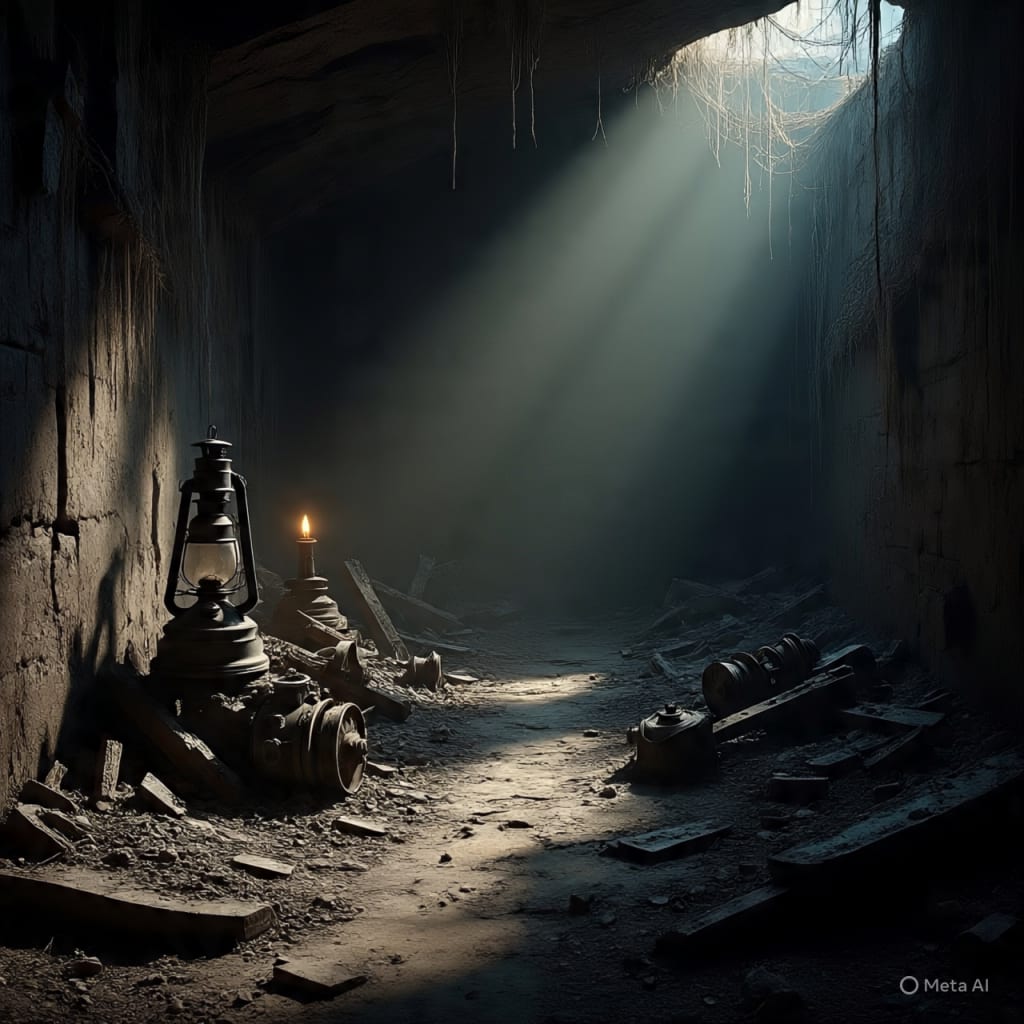
When Eleanor Bradford inherited her grandmother’s Victorian house in the quiet town of Black Hollow, she thought it was a blessing. Tired of city life and a string of failed relationships, she welcomed the isolation. The creaky house sat at the edge of a forest, flanked by fog-covered hills and surrounded by whispers of the past. Locals avoided it. They whispered about strange sounds, about Eleanor’s grandmother going mad before her death.
Eleanor dismissed the stories as small-town superstition. Her grandmother, Margaret, had lived alone for nearly forty years. Isolation could crack anyone’s mind.
The first night was uneventful, save for the occasional groan from old pipes and the wind brushing against cracked windowpanes. It wasn’t until the third night that Eleanor heard it: a whisper, faint and raspy, drifting from beneath the floorboards.
She sat up in bed, heart pounding.
"Hello?" she called into the dark.
Silence.
She waited, clutching the edge of her blanket like a child. Just as she started to lie back down, she heard it again—closer this time.
“Let me out…”
The next morning, she convinced herself it had been a dream. The floorboards were old, the house made noises. Nothing unusual.
But the whispering continued. Every night.
The sounds became clearer—pleading voices, crying, the occasional guttural growl that made her blood run cold. It wasn’t just one voice anymore. There were many.
By the end of the week, Eleanor was sleep-deprived and jittery. She scoured the library for anything on the house’s history. An old clerk hesitated before pulling out a faded book.
“Bradford House, eh? That place... there's a reason we keep quiet about it,” he muttered, sliding the book across the counter.
The entries were disturbing. In 1923, three children went missing near the property. In 1951, a man claimed he heard voices and tore up the floor trying to “free them.” He disappeared before he could finish. Her grandmother, according to town records, had been institutionalized briefly in the 70s after complaining about “things beneath the house.”
Eleanor rushed back home, determined to prove this was all a case of suggestion. Yet when she entered the living room, something had changed.
The floorboards—particularly under the rug—looked disturbed, slightly raised.
Her breath caught.
Grabbing a crowbar from the shed, Eleanor returned and peeled the boards away, one by one. The wood shrieked and cracked under her force, revealing a narrow crawlspace beneath the floor.
And there, staring up at her, were eyes.
Not human eyes.
Dozens of them.
Embedded in pale, leathery flesh that stretched like a membrane under the house. Some blinked, others wept blood.
Frozen in horror, Eleanor stumbled back.
Then came the voices.
“You see us now.”
“We are hungry.”
“She fed us.”
Before Eleanor could process the words, the boards slammed shut. Something beneath surged upward, slamming her into the wall. The house trembled violently.
She awoke hours later, sprawled across the room. Her ears bled, and her vision was blurry. But the whispering had stopped.
For now.
She tried to flee, but the front door no longer opened. Windows wouldn't break. The house had become a prison.
Over the next few days, the house began to shift—walls pulsing like breathing flesh, shadows crawling against the grain. The whispers returned, now speaking in unison.
“She kept us quiet. You set us free.”
In her delirium, Eleanor found her grandmother’s journal, hidden beneath a loose tile in the fireplace. The final entries were erratic:
“They are not ghosts. They are older than memory, older than God.”
“I fed them animals… then strangers… It was never enough.”
“If I die, they’ll need another.”
The last page was a handprint in dried blood.
Eleanor understood then.
Her grandmother had been a warden.
Now, it was her turn.
The house would not let her leave. And the voices—the things beneath—were growing stronger, louder. They wanted more.
And one night, when a hiker wandered too close to the edge of the forest, the floorboards opened once more.
About the Creator
Master your mind master your life
In a world that often feels chaotic and unpredictable, it's easy to believe that we have little control over our lives. We chase goals, react to challenges, and often feel like victims of circumstance. But what if the real source of change and direction isn't outside of us—but within?
By Samiullah 7 months ago in Motivation
The Politics of Playing Dress-Up
Well, to start off I'd like to say a happy world book day to all who celebrate. I know I haven't really posted anything on my socials about it but I'm not a jubilant kind of person. I lay low most of the time. Let's start off with a popular anecdote from the vaults...
By Annie Kapur7 days ago in Geeks




Comments
There are no comments for this story
Be the first to respond and start the conversation.