
When Hair Met Latex: The Practical Magic of The Howling (1981)
Joe Dante’s The Howling (1981) transformed werewolf horror through Rob Bottin’s groundbreaking practical effects — a tactile, terrifying feat of 80s movie magic.


Before CGI became the default language of movie magic, horror was built with sweat, latex, air pumps, and imagination. Joe Dante’s The Howling (1981) wasn’t just another monster movie — it was a statement. A howl of creative defiance from an era when filmmakers had to make nightmares real using their hands, not computers.
Released in 1981 — the same year John Landis unleashed An American Werewolf in London — The Howling proved that a werewolf transformation could be more than a simple dissolve or clever cutaway. It could be a performance of pain, flesh, and transformation. It could be funny, grotesque, and even strangely beautiful. And at the heart of it all was Rob Bottin, a 21-year-old effects prodigy who turned a low-budget horror movie into a landmark of physical filmmaking.

From Rick Baker to Rob Bottin: A Passing of the Torch
The story of The Howling’s special effects begins with a twist worthy of the movies. Rick Baker — the effects legend who would soon win an Oscar for An American Werewolf in London — was originally attached to Dante’s film. But when John Landis called with his dream project, Baker left, handing the reins to his young protégé, Rob Bottin.
It was a bold move. Bottin had apprenticed under Baker on King Kong (1976), but The Howling gave him the chance to lead a project for the first time. His approach was wild, fearless, and full of what Dante later called “punk rock energy.” He didn’t just want to show a man turning into a wolf — he wanted the audience to feel it.
Bottin’s arsenal included foam latex prosthetics, mechanical rigs that pushed snouts forward and jaws outward, and carefully placed air bladders that made skin seem to pulse with unholy life. The results were nothing short of astonishing. The creatures he built were sinewy, feral, and alive in ways no one had seen before. The film’s centerpiece — the transformation of Eddie Quist — set a new benchmark for cinematic horror and launched Bottin’s career into the stratosphere.
Transformation in Real Time: Stretching Skin and Pushing Limits
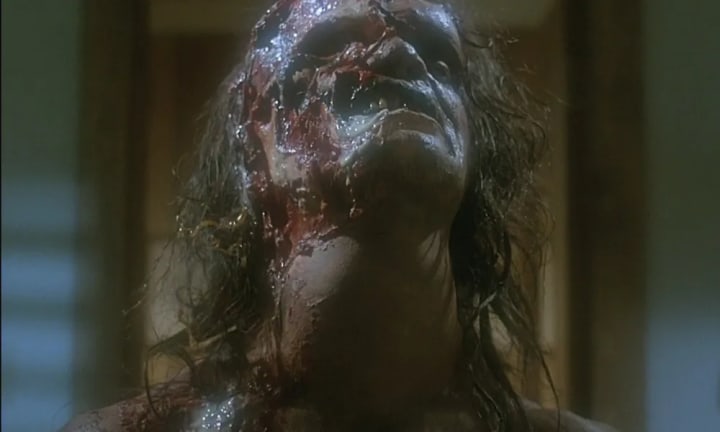
Eddie Quist’s transformation remains one of the great horror set-pieces of the 1980s — not just for what it shows, but for how it was done. The sequence took days to shoot, requiring an elaborate dance of prosthetics, puppetry, and mechanical effects, all captured in real time.
Bottin layered air bladders beneath translucent prosthetic skin, inflating them to simulate the stretch and swell of transforming muscles. Hydraulic face molds pushed forward from beneath the latex, simulating bone expansion and flesh distortion. Add a generous coating of K-Y Jelly for sheen, and the result was a visceral, unsettling spectacle that made the audience squirm in shared discomfort.
Because it was all filmed in camera, there was no digital safety net. Every movement had to work under the lights, every ripple of skin had to look organic. That commitment to physicality gives the scene its enduring power. Watching it today, you don’t just see the transformation — you feel it. The sound of stretching skin, the gasps between mechanical motions — it’s body horror rendered with precision and patience.

Latex, Lighting, and the Art of Suggestion
Dante’s genius wasn’t just in showing the monster — it was in knowing when not to. His team used shadows, cold blue light, and strategic framing to hide the seams of the effects and build tension through suggestion.
Cinematographer John Hora bathed the sets in soft moonlight that gave the latex a living, breathing texture. Editor Mark Goldblatt’s sharp cuts emphasized movement and rhythm, selling the illusion of a transformation happening faster than human comprehension. The collaboration between direction, lighting, and effects turned a modestly budgeted horror film into something hypnotic.
What’s striking about The Howling is that even its “flaws” — the sweat, the glistening rubber, the obvious strain of the machinery — contribute to the film’s charm. You can sense the craftsmanship. It’s horror built from hands and heat, a messy art that feels intensely alive.

Legacy of Practical Horror
Rob Bottin’s work on The Howling opened the door to his masterpiece: John Carpenter’s The Thing (1982). That film took everything Bottin learned here and pushed it further — into the realms of cosmic body horror. Both films share a core philosophy: horror should exist in the same light and space as the actors.
In a digital era where monsters are painted in post-production, The Howling stands as a tactile reminder of what’s lost when fear becomes virtual. Bottin’s werewolves glisten and breathe because they were real objects interacting with real light. They have weight, presence, and imperfection — the things that make horror believable.

The Howl That Still Echoes
Over forty years later, The Howling still resonates because it feels touched. You can sense the latex stretching, the air bladders inflating, the performers straining under fur and glue. It’s a movie made by people who believed in illusion as a physical act.
In a decade known for excess, The Howling embraced the mess. Every bubbling prosthetic and mechanical snarl serves as a testament to creativity born from constraint. It’s a film that reminds us that true movie magic doesn’t come from pixels — it comes from pressure, patience, and passion.
The Howling remains not just a horror classic, but a monument to the tactile era of filmmaking — when transformation was something you could almost reach out and touch.

Subscribe to Movies of the 80s here on Vocal and on YouTube for more 80s Movies Nostalgia.
About the Creator
Movies of the 80s
We love the 1980s. Everything on this page is all about movies of the 1980s. Starting in 1980 and working our way the decade, we are preserving the stories and movies of the greatest decade, the 80s. https://www.youtube.com/@Moviesofthe80s
Keep reading
More stories from Movies of the 80s and writers in Horror and other communities.
The Protest That Wasn’t: How Early 80s Horror Movies Turned Outrage Into Advertising
They Tried to Ban It! (Or So the Poster Said) It’s a line horror fans know by heart: “The movie they tried to stop.” In the early 1980s, it seemed every horror movie promised that someone, somewhere, was outraged about it. If protesters weren’t real, they’d be invented. If bans didn’t happen, distributors whispered that they almost did. Outrage wasn’t bad for business — it was the business.
By Movies of the 80s3 months ago in Horror


Comments
There are no comments for this story
Be the first to respond and start the conversation.