
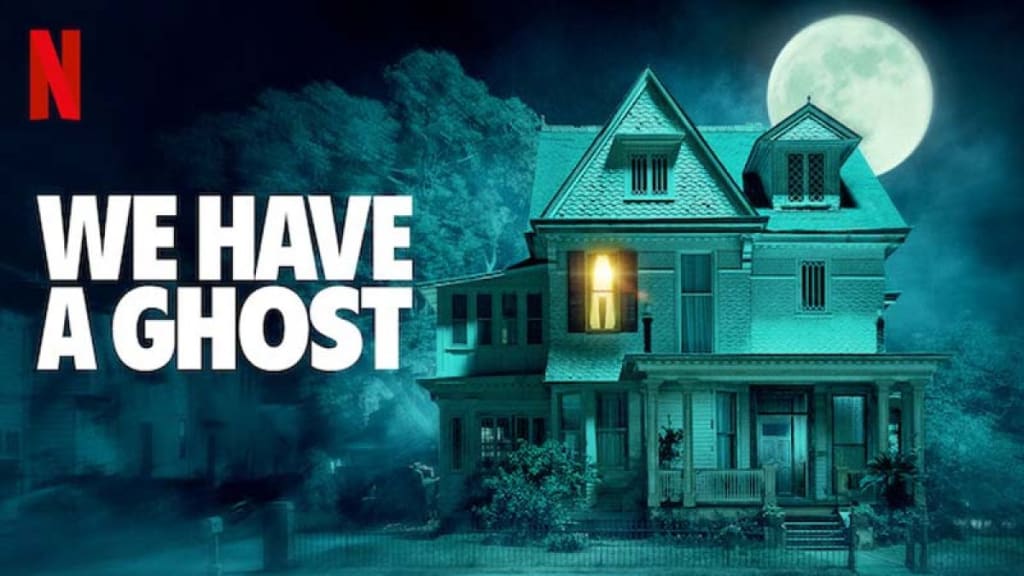
When Kevin moved into his new home, he had no idea that his life was about to change in ways he never imagined. He was just a young boy in his teens, excited about the prospect of a new home and a new start. But little did he know that he was about to discover a ghost living in the attic of his new home.
At first, Kevin was terrified of the ghost, but he soon realized that the ghost was actually quite friendly. He named the ghost Ernest and began to spend time with him in the attic. But when Kevin told his family about Ernest, they didn't believe him.
It wasn't until Kevin's elder brother, Fulton, and his father, Frank, started making YouTube videos featuring Ernest's sightings in the house that the family began to take notice. The videos quickly went viral, and the family became an internet sensation.
As the internet exploded with its trademark oddities, from calls for ghost rights to desperate weirdos professing their love for Ernest, the family was caught up in all kinds of madness. Even cringy memes and mindless ghost challenges were created in Ernest's name. But while the rest of the world was obsessed with Ernest, Kevin and his next-door neighbor, Joy, were the only ones committed to helping Ernest find the peace and closure that he deserved.
However, their efforts soon attracted the attention of a secretive government agency that wanted to capture Ernest for their own reasons. All the while, subplots kept popping up like ghosts from the past, adding to the film's unending runtime that was filled with cliches like Jennifer Coolidge's character, Judy Romano, a popular ghost TV show host.
Despite the chaos, writer-director Christopher Landon attempted to infuse some novelty into the premise by throwing in every weird scenario he could think of. At first, there was some fun to be had, but the weak writing soon became apparent, and the screenplay lost its way.
There was also a shady former government agent named Dr. Leslie, who wanted to capture Ernest for shadowy reasons. However, the plot became so silly and daft that it was hard to care about who was doing what and why. The lack of conviction in the plot made it challenging to feel anything for Ernest's situation. The sentimental overdrive only made matters worse.
The lack of substance in the plot meant that the actors had little scope to perform. David Harbour's portrayal of Ernest was lackluster, and the actors' attempts to make the audience laugh and cry throughout the film fell flat. While the CGI used to show Ernest's ghostly avatar was executed brilliantly and was one of the highlights of the film, it wasn't enough to save the weak script.
Overall, "We Have a Ghost" had a promising start but was progressively haunted by a weak script and a lack of conviction. The film ended up being a somewhat entertaining but largely soulless experience.
But despite its flaws, the film did raise some interesting questions about the nature of ghosts and their place in society. Should ghosts have rights? Should we treat them with respect and dignity, or should we exploit them for our own gain? These are questions that we may never have answers to, but they are certainly worth pondering.
In the end, "We Have a Ghost" may not have been the masterpiece that its creators intended, but it did offer a glimpse into a world that is often overlooked and ignored. It showed us that ghosts are not just scary apparitions that haunt our homes, but that they are complex beings with their own hopes and fears.
Perhaps one day, we will find a way to coexist with ghosts in a more meaningful way. But until then, we can only hope that films like "We Have a Ghost" will continue to inspire us to think outside the box and to explore
"We Have a Ghost" is a story that sheds light on several significant moral themes, including the dangers of seeking fame and validation through social media, the importance of empathy and compassion towards others, and the significance of communication in any relationship.
One of the most important messages conveyed by the story is the danger of becoming obsessed with social media and the negative effects it can have on individuals and society as a whole. The family's obsession with filming and uploading videos of Ernest the ghost leads to chaos, as the internet explodes with oddities and strange behaviors. People become fixated on Ernest, calling for rights for ghosts and making cringy memes and mindless ghost challenges. The family becomes an internet sensation, and the desire for attention and validation leads them to overlook the actual reason why Ernest is haunting their home. They fail to provide him with the peace and closure he deserves, and instead, focus on their own desires for fame and attention.
This aspect of the story serves as a cautionary tale for individuals who seek fame and validation through social media. It highlights the importance of being mindful of the negative impact that fame and attention can have on individuals and society, and the importance of staying grounded in reality and focusing on what truly matters in life.
Another significant theme of the story is the importance of empathy and compassion towards others. Kevin and Joy are the only ones who are genuinely concerned about Ernest's well-being and are willing to help him find peace. They look beyond his ghostly appearance and understand the pain and suffering he is going through. This aspect of the story emphasizes the importance of looking beyond surface-level appearances and understanding the pain and suffering that others may be going through. It also highlights the need for empathy and compassion in our relationships with others, as these qualities can go a long way in helping others find peace and happiness.
Additionally, the story underscores the importance of communication in any relationship. Had the family taken the time to listen to Kevin and understand his concerns, they might have been able to help Ernest much earlier. Instead, they chose to ignore him, which caused even more problems in the end. This aspect of the story highlights the importance of active listening and understanding in our relationships with others. It emphasizes the need to communicate openly and honestly with others, as this can lead to stronger and more meaningful relationships.
In conclusion, the story of "We Have a Ghost" teaches us several valuable moral lessons. It highlights the dangers of seeking fame and validation through social media, emphasizes the importance of empathy and compassion towards others, and underscores the significance of communication in any relationship. These themes serve as important reminders of the need to stay grounded in reality, be mindful of the impact of our actions on others, and focus on what truly matters in life. By embracing these moral lessons, we can cultivate stronger and more meaningful relationships with others, and lead happier and more fulfilling lives
About the Creator
Keep reading
More stories from writers in Horror and other communities.
Killing him slowly
There’s an intruder in my house again. He stumbles through the door, wet carrier bags in hand. He’s bought me offerings. I show my appreciation, letting him caress my beautiful body. He wants to touch me. I rub myself against his legs. He sighs, dropping the bags. He can’t resist touching me. Running his hand slowly down my spine, I arch my back towards his caress, let out a low purr. It’s what we both need.
By N J Delmas3 days ago in Horror




Comments
There are no comments for this story
Be the first to respond and start the conversation.