
Two Miners, Two Valentines: Comparing My Bloody Valentine (1981) and My Bloody Valentine (2009)
A head-to-head breakdown of My Bloody Valentine (1981) and the 2009 3D remake: budgets, box office, cast changes, what was updated (and what stayed the same), and how critics reacted to each film.

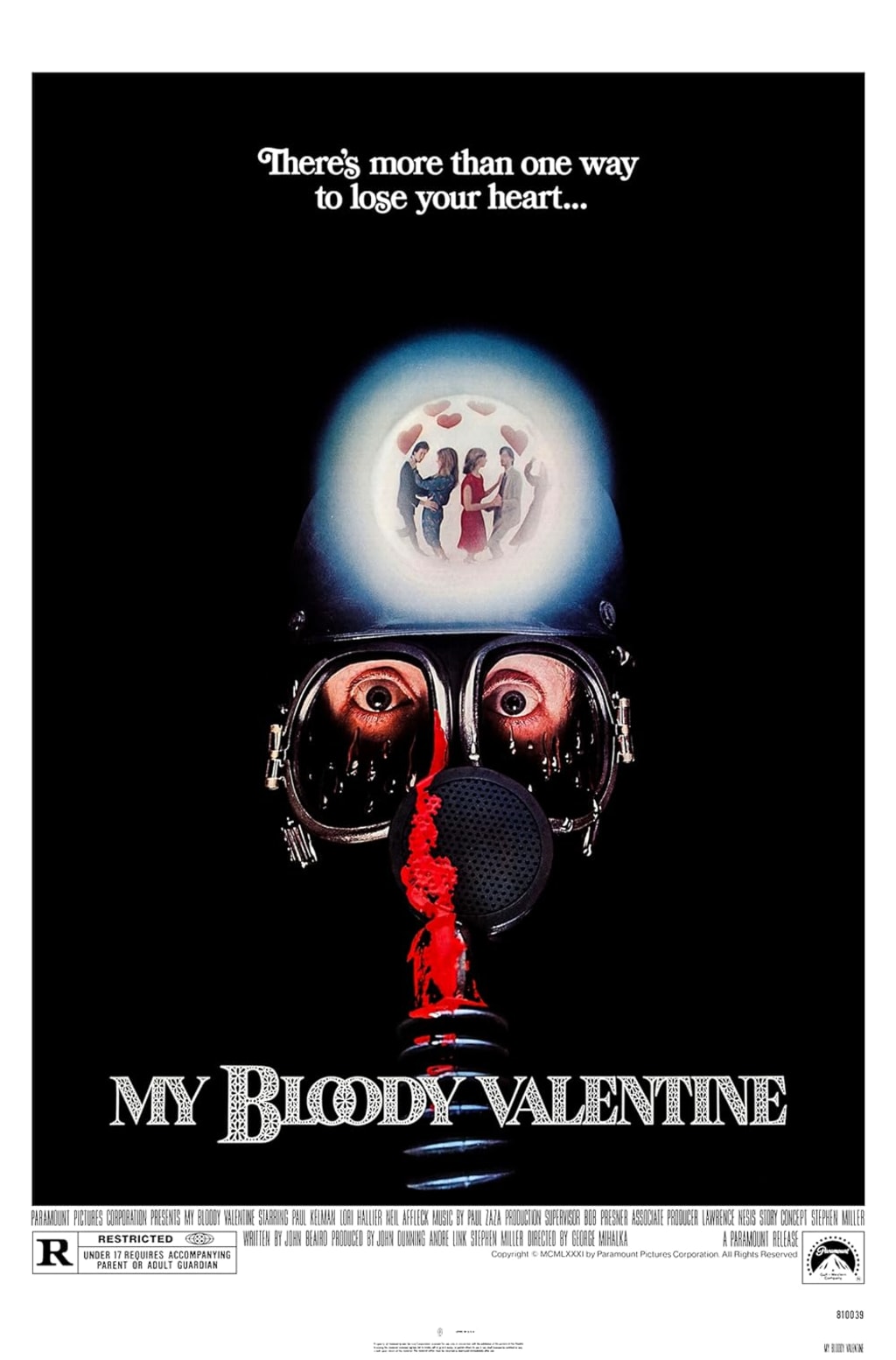
Throwback vs. Remake — the bottom line (budget & box office)
George Mihalka’s original My Bloody Valentine (1981) was a modest Canadian slasher shot on location in Nova Scotia. Its production budget is commonly listed at about $2.3 million, and it grossed roughly $5.7 million in the U.S., giving it a small theatrical return but the beginnings of a cult reputation.
The 2009 remake, marketed as My Bloody Valentine 3D, was a different business proposition: a mainstream, effects-driven horror picture made for mass audiences. Its production budget was widely reported at about $15 million, and it went on to earn roughly $100–103 million worldwide (about $51.5M domestic), making it a clear box-office success compared with the original.
⸻
Cast & creative teams — old faces vs. new names
The 1981 film features a mostly Canadian and relatively unknown young cast — Paul Kelman, Lori Hallier and Neil Affleck — anchored by the atmospheric direction of George Mihalka and a synth-heavy score by Paul Zaza. The remake went for higher profile genre names and familiar TV/film faces: Jensen Ackles, Jaime King, Kerr Smith, plus horror stalwart Tom Atkins in a memorable supporting turn. The remake’s director was Patrick Lussier (screenplay with Todd Farmer), and the film leaned hard into spectacle and modern kill choreography.
⸻
What changed — story, tone and technology
At its core both films share the same skeleton: a small mining town, a Valentine’s Day holiday setting, and a hulking miner (the “Miner/ Harry Warden” myth) who returns to enact bloody vengeance. But the remake modernizes and gamifies that premise:
• Scope & violence: The 1981 original is a tight slasher grounded in low-budget, tactile practical effects and a slower-building atmosphere of dread. The 2009 film amplifies the gore, set-pieces, and shock kills and stages them for 3D presentation — turning kills into visceral set-piece moments meant to pop off the screen.
• Character focus: The remake streamlines and changes character relationships and motivations to suit a contemporary audience (more backstory on town secrets, more action-oriented protagonists) while keeping the central “town-with-a-secret” theme intact.
• Tone: The original trades more on regional atmosphere and creeping paranoia; the remake trades on brisk pacing, creative kills, and a nostalgic-but-modern love of retro slashers filtered through 21st-century effects and marketing (including the 3D gimmick).
⸻
What stayed the same — why the remake felt familiar
Both movies keep the essential holiday-slash myth at their center: Valentine’s Day as an ironic backdrop for romance-turned-violence, the mining setting and the iconic miner mask/pickaxe imagery. Both tell a version of the story about a town trying to forget a horrific mining accident and then being forced to face it again when murders start happening on the holiday in question. That continuity is the reason the remake landed as a faithful — if reimagined — entry in the same tradition.
⸻
Critical response — cult classic vs. crowd-pleasing remake
The original received mixed contemporary reviews: reviewers often criticized its script and splatter, but over time it developed cult status and serious defenders (Quentin Tarantino among their ranks), and retrospective appraisals frequently highlight its atmosphere and place in slasher history.
Surprisingly for a remake, the 2009 My Bloody Valentine 3D earned generally favorable notices for what it was trying to be: a noisy, gory throwback that used modern 3D as a selling point. Aggregators and many critics gave it decent marks (Rotten Tomatoes consensus emphasizes it as an “unpretentious, effective mix of old-school horror stylings and modern 3D technology”), and audiences rewarded it with solid box-office returns — though some reviewers found the 3D marketing misleading in practice in certain markets.
⸻
Which one should you watch?
• If you want historical slasher atmosphere and a cult artifact of Canadian genre filmmaking, the 1981 original is the better pick: mood, restraint, and nostalgia.
• If you want gory fun, polished kills, and spectacle (preferably in 3D or at least for the theatrical-kill choreography), the 2009 remake delivers more bang for your buck.
About the Creator
Movies of the 80s
We love the 1980s. Everything on this page is all about movies of the 1980s. Starting in 1980 and working our way the decade, we are preserving the stories and movies of the greatest decade, the 80s. https://www.youtube.com/@Moviesofthe80s
Keep reading
More stories from Movies of the 80s and writers in Horror and other communities.
Buried Alive: How Blood Beach (1981) Went From Flop to Cult Classic
There are horror movies that slip neatly into the genre’s canon, and then there are movies like Blood Beach. Released in 1981 with a tagline that screamed drive-in thrills — “Just when you thought it was safe to go back in the water, you can’t get to it!” — the film promised sunny terror and delivered something stranger. Critics hated it. Audiences shrugged. And yet, four decades later, Blood Beach refuses to die.
By Movies of the 80s4 months ago in Horror
The Devil's Cut
“Comrade, finally you’re awake.” The voice was smooth, sensual. A flickering incandescent bar was all that lit the white, sterile room. All Vladimir remembered was everything going black. He tried to move his arms and found them strapped to the gurney.
By Matthew J. Fromm5 days ago in Fiction


Comments
There are no comments for this story
Be the first to respond and start the conversation.