
Tuen Mun Road: Hong Kong’s ‘Highway of Death’ and the Ghosts That Haunt Its Asphalt
Why Tuen Mun Road Still Terrifies: Where Tragedy and the Supernatural Collide

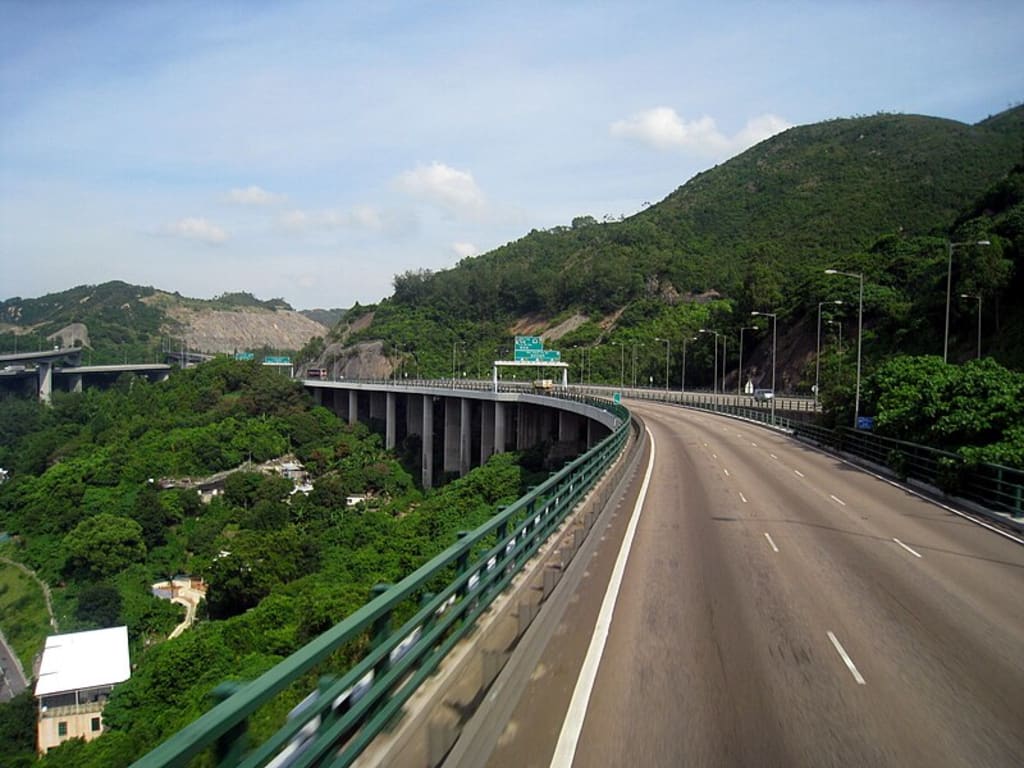
The Spookiest History of Tuen Mun Road: Hong Kong's "Highway of Death"
In spite of common misconceptions that it is part of mainland China, Tuen Mun Road is a treacherous road in Hong Kong with heavy traffic but more significantly, a reputation for being one of the most haunted locations in Asia. Built in the late 1970s to connect the more densely populated regions of Kowloon to Tuen Mun and Yuen Long's less crowded districts, this 20-kilometer highway has been linked to tragedy, superstition, and ghostly experiences. Its less-than-cheerful nickname, the "Highway of Death," belies the tragic tales that dominate its past.
A Road Built Out of Tragedy
The origin of Tuen Mun Road lies in its having been built out of necessity. When Hong Kong's population boomed in the mid-20th century, the government wanted to relieve congestion by building a modern highway. But the project was beset from the start. The road sliced through mountains and ancient villages, some of which were uprooted, reportedly disrupting burial sites and ancestral lands. Local legend says that construction workers were confronted by restless ghosts while building the road, with stories of tools going missing, equipment breaking down mysteriously, and workers hearing strange voices at night.
The highway opened in 1977 but was quite accident-prone with its steep inclines, narrow curves, and limited visibility. In the decades that followed, there have been hundreds of accidents here, many resulting in deaths. Tuen Mun Road was by the 1990s infamous for fatal bus accidents, head-on crashes, and cars crashing off cliffs. These accidents gave birth to its haunted moniker, as residents were convinced that the ghosts of the dead haunt the road.
Ghostly Encounters and Urban Mythology
The most obstinate of all the legends is that of ghost hitchhikers. Drivers, and particularly night-shift taxi drivers, report picking up riders who vanish en route. In one infamous story, a taxi driver picked up a white-clad, pale, silent woman from outside the Tsing Lung Tau district. When he glanced in the rearview mirror, she had vanished, leaving only a damp seat—a Chinese myth omen that a drowned spirit on the way had entered the cab.
One more chilling account is of the "Headless Motorcyclist." Witnesses report they glimpse a lone rider speeding along the road late at night, only to realize he has no head. Other survivors of near-crashes assume the ghostly biker was the cause of their accident, appearing out of nowhere before turning into thin air.
Among the most sorrowful testimonies are those of child ghosts. After a horrific 2003 bus crash killed 21 people, including children, drivers began reporting tiny shadowy figures darting across roads or faces peeking through car windows. Others find themselves surrounded by ghostly laughter or screams near accident sites.
The region surrounding the Sham Tseng tunnels is considered a hotspot. Hazy silhouettes passing along the road have been picked up by surveillance cameras, while maintenance personnel refuse to walk in certain areas during nighttime due to unexplained footsteps and whispers. In 2015, there was a viral photo claiming to have caught a ghostly female standing in the middle of the road at midnight, with translucent and blurred outlines.
Cultural Resonance and Modern Rituals
Hong Kong's combination of Buddhist, Taoist, and folk religion gives rise to these myths. Red ribbons are displayed or talismans worn by drivers for protection. Locals avoid the Tuen Mun Road during the Hungry Ghost Festival when ghosts are believed to be roaming or burn paper offerings near the location of accidents to appease the dead.
Authorities have tried to improve the road's safety—lane expansion, installing barriers, and installing speed cameras—but accidents persist. Accidents are blamed on poor design and reckless driving by critics, but the supernatural stories persist. The haunted image of Tuen Mun Road to many blends seamlessly into its grim history.
Conclusion
The haunted reputation of Tuen Mun Road is a complex mixture of real tragedy and cultural fantasy. Whether or not one is a believer in ghosts, the history of this road is irretrievably marked by tragedy—and the necessity to make sense of senseless death. Today, it is a reminder of Hong Kong's neck-and-neck modernization and the incomplete stories written onto its road. Late at night, drivers still whisper warning truisms: "Don't stop. Don't look back. And never, ever pick up strangers."
About the Creator
Kyrol Mojikal
"Believe in the magic within you, for you are extraordinary."
Keep reading
More stories from Kyrol Mojikal and writers in Horror and other communities.
St. George’s Church: Prague’s Ancient Sanctuary of Saints and Specters
St. George’s Church located in the Czech Republic is one of the oldest and most haunted sites in the country. Having been in existence since year 920 as a Romanesque basilica, the location has around 1100 years worth of history associated with it that ranges over devotion, distortion, and ghostly encounters. The red-and-white façade of the structure adds a Baroque touch to the building, which makes it more visually appealing, but it also masks the ages old secrets as well as the legends that are hidden inside its walls. Currently located in the grounds of Prague Castle, it still has features that highlight its old history, such as the St. Julian windows still incorporated in the church.
By Kyrol Mojikal11 months ago in Horror
The Screams Beneath the Floorboards
Old houses make noise. They creak, groan, and sigh as if remembering things they were never meant to keep. That’s what I told myself when I first heard it—a faint sound beneath my feet, barely louder than the wind slipping through cracked windows.
By David John4 days ago in Horror



Comments (1)
This highway is interesting. I think I’ve heard of it before, but maybe not. Good work!