
St. George’s Church: Prague’s Ancient Sanctuary of Saints and Specters
Exploring the Haunted Halls of St. George’s Church: Where History Meets the Supernatural

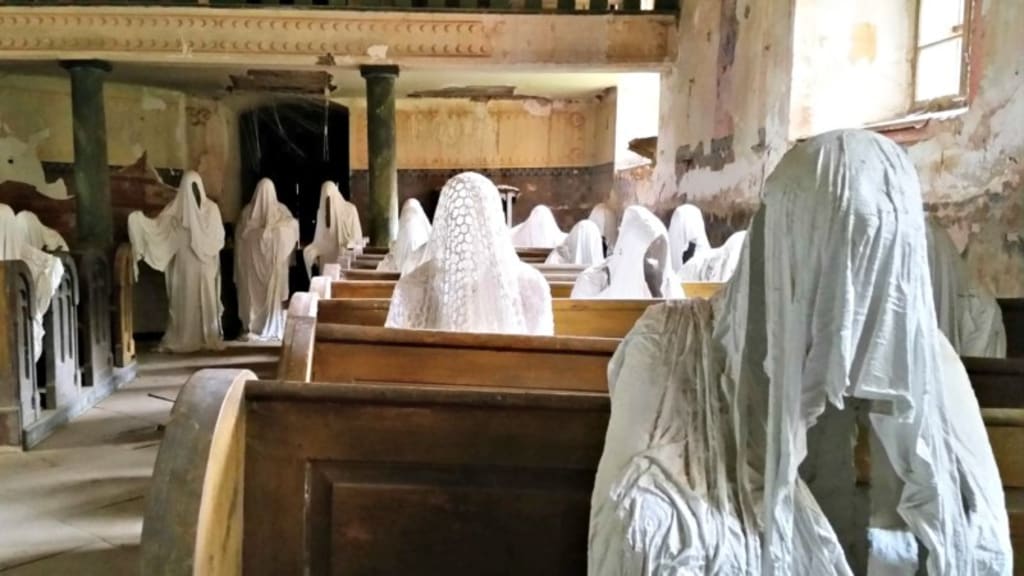
St. George’s Church located in the Czech Republic is one of the oldest and most haunted sites in the country. Having been in existence since year 920 as a Romanesque basilica, the location has around 1100 years worth of history associated with it that ranges over devotion, distortion, and ghostly encounters. The red-and-white façade of the structure adds a Baroque touch to the building, which makes it more visually appealing, but it also masks the ages old secrets as well as the legends that are hidden inside its walls. Currently located in the grounds of Prague Castle, it still has features that highlight its old history, such as the St. Julian windows still incorporated in the church.
An Outline of Authority, Religion, and Conflict
The Church was known to hold relics, which gained the interest and attention of many pilgrims. This resulted in George’s turning into a center for pilgrimage during the twelfth century and by year 973, it was developed into a basilica along with the addition of a Benedictine convent that was built by Mlada, who was the sister of Prince Boleslav II. The sister had noble background and was able to use her status as a way to combine faith and power so that the convent would serve as a shrine for noblewomen and later be politically exploited by the Přemyslid dynasty. Unfortunately, the church faced and endured a tragedy in the year of 1142 when a fire swept through during a succession war. It had to be the church in the Soběslav I period with columns that were stout in nature and ceilings with an arched Romanesque style.
The church is where the two legendary characters’ tombs rest. St. Ludmila who was the first Czech Christian martyr and the grandmother to St. Wenceslas and Prince Vratislav I. Her tomb, embellished with Renaissance reliefs dating back to the sixteenth century, is a place many pilgrims flock to which is said to also attract her spirit. The convent flourished for centuries until being dissolved by Emperor Joseph II in 1782 as part of his secular reforms. St. George's lost its holy purpose as it became an army barrack and later on in the twentieth century a museum for Bohemian art. The changes, the sudden violence, the sacred shifts, and everything else combined is what gives this place its haunted reputation.
The Church is said to be plagued by the “Whispers in the Shadows”: The Ghost of St. George’s.
The most famous of St. George's ghostly inhabitants is known as White Lady (Bila pani). Who many believe to be a 15th-century noblewoman called Perchta of Rozmberk whose life was spent in a loveless marriage. The tale has it that her husband put a curse on her for not following instructions leaving her trapped in an endless search for freedom until her curse is lifted. Clad in white and holding a red rosary, she is said to stroll around the church’s tombs with a sorrowful expression on her face. Visitors have experienced her presence through spine-chilling fragrances or sudden temperature drops, introducing the scent of roses in stark contrast to the church’s persistent musk odor of aged stone.
One of the ghosts is a headless knight clad in rusted armor, the ghost of a nobleman who was executed by beheading for treason. His black form terrorizes the cloisters with the sound of clanging chains. Some believe that he longs for forgiveness, but others say that he is the portent of suppressed wrath.
Even the spectral presence of Benedictine nuns is felt. Although restoration was undertaken during the 1960s, laborers said they heard faint Gregorian chanting and footsteps echoing in empty hallways. One tourist even photographed a wispy, fog-like apparition kneeling next to the altar, its shape that of a nun in habit. Many have described a stifling atmosphere in the old dormitories of the convent, as if unseen eyes appear to scan from the darkness.
Cold Spots and Unheard Voices
Paranormal investigators have recorded unusual phenomena: unexplained temperature fluctuations in the vicinity of St. Ludmila's tomb, EVP of unclear screams in Old Czech, and dark shapes moving at the edge of the field of vision. A tourist in 2019 recorded a redemptive, see-through figure ascending the church staircase—a clip later aired on Czech television.
Locals say that the mood of the church shifts after dark falls. Daylight reveals its beauty—Pale frescoes, Gothic chapels, and spooky silence of its crypts. But towards evening, the mood turns heavy and gloomy, and the past comes to life. Even atheists can't resist feelings of nervousness here, as though the weight of centuries rests on their shoulders.
The Legacy Lives On
Today St. George's is a concert hall and a museum, and its ghostly reputation draws thrillers and historians. Tourists make a production of the White Lady legend, and scholars debate the distinction between history and myth. But the legends persist, part of Prague itself.
Is St. George's haunted? The answer resides in its stone—each carving and fissure bearing witness to religion, treachery, and man's desire to reach his hand toward the unknown. Ghostly or psychoanalytical, the cold which immobilizes visitors within the somber interior will ensure St. George's legends for centuries to follow.
About the Creator
Kyrol Mojikal
"Believe in the magic within you, for you are extraordinary."
Keep reading
More stories from Kyrol Mojikal and writers in Horror and other communities.
La Isla de las Muñecas: The Dark Legend of Mexico’s Haunted Island of the Dolls
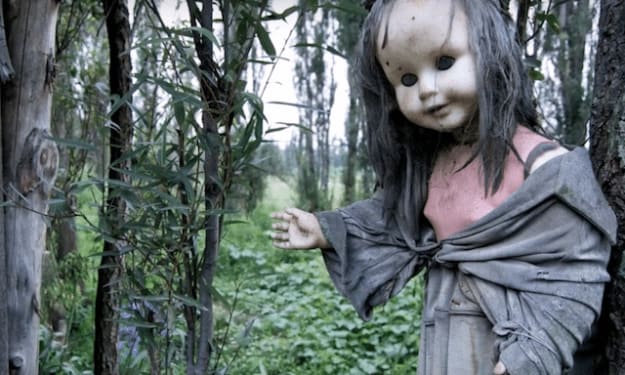
Surrounded by the canals of Xochimilco, a UNESCO World Heritage Site famous for its floating gardens and vibrant trajineras, is a place of strange beauty: La Isla de las Muñecas or the Island of the Dolls. The little island is cloaked in suffering, folklore, and the supernatural, decorated instead with decaying dolls which bear no eyes and are left with soulless faces and intertwined limbs.
By Kyrol Mojikal11 months ago in Horror



Comments (2)
Nice work! I really enjoyed this. Keep up the good work.
I found your story very beautiful.