
The Stranger Who Knew My Name—And My Darkest Secret
A chance encounter on a train turned into a night I’ll never forget

The Stranger Who Knew My Name—And My Darkest Secret
Some encounters feel like fate. Others feel like punishment.
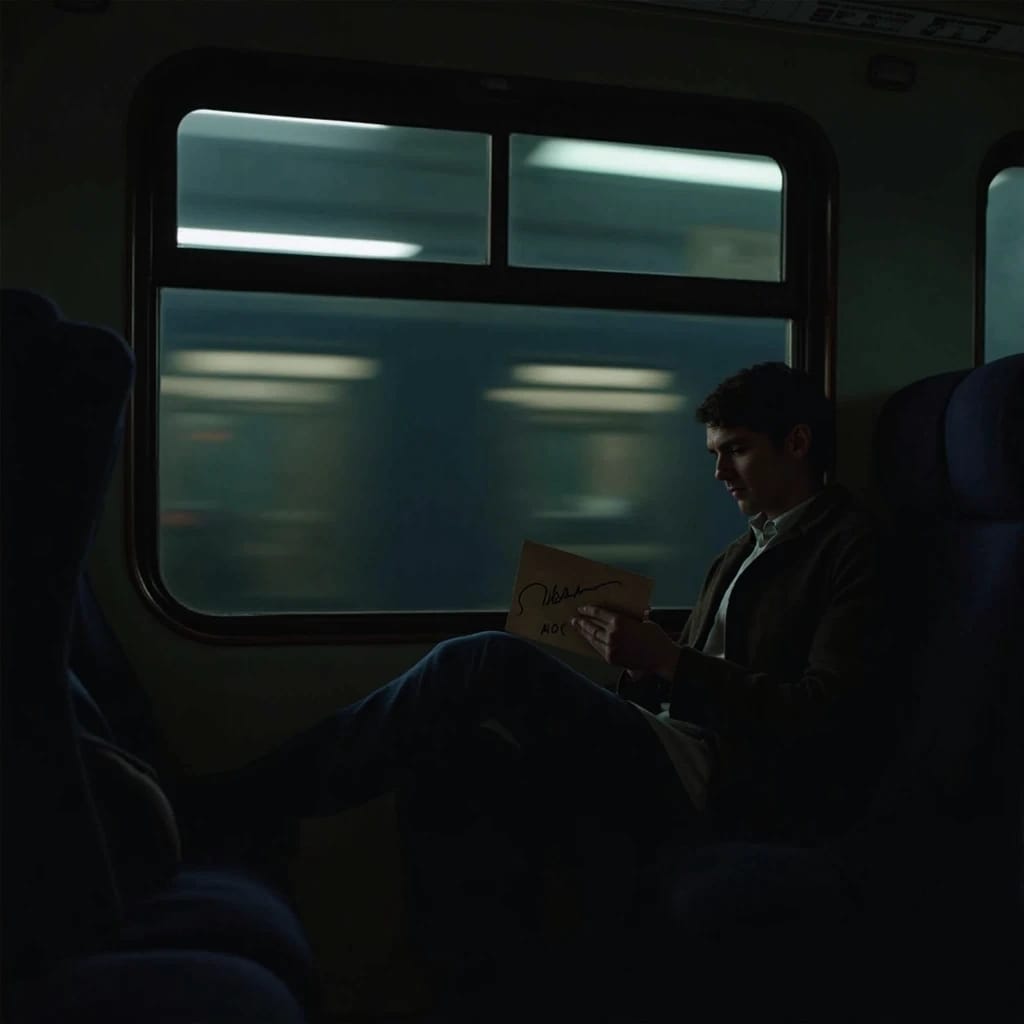
I remember the exact moment he sat down. The 7:43 p.m. train from the city was half-empty, the type of quiet that feels like a lullaby after a draining day. My earbuds were in, and the low hum of the carriage made everything feel distant—until he spoke.
“Mind if I sit here, Noah?”
My entire body froze.
Not because he said my name—people know each other’s names sometimes—but because he said it with familiarity. Not curiosity. Not accident. But certainty.
I looked up.
He looked… average. Tan coat. Wire-frame glasses. His voice was calm, too smooth. His eyes locked onto mine with an expression I couldn’t quite name. Not joy. Not threat. Just—intent.
I pulled out one earbud. “Do I know you?”
He smiled faintly, placing a worn leather briefcase on the floor. “No. But I know you.”
Every hair on the back of my neck stood. The kind of feeling you get when you’re being watched, only it was already too late. He had been watching.
He leaned back, fingers interlocked over his knee. “Don’t worry. I’m not here to hurt you. Actually, I’m here to help.”
“Help?” I said, eyes darting toward the emergency button by the door. But I didn’t press it. Not yet.
“You’ve been carrying something,” he said, glancing out the window as the world blurred past. “Something that’s eating you alive.”
My heart kicked in my chest. The air around me suddenly felt thinner.
“You’ve been having the dreams again,” he continued. “The fire. The voice calling your name. The smell of burning plastic. The weight of someone’s hand slipping away.”
I swear the blood drained from my face. He couldn’t have known that. I never told anyone about the dreams.
He wasn’t just describing nightmares.
He was describing my guilt.
The incident had happened nearly seven years ago.
I was seventeen, staying with my cousin Ian in his parents’ lakehouse for the summer. He was two years younger, and idolized me in the way younger siblings often do. But that summer, I was reckless. Angry. And high more often than I should’ve been.
One night, we snuck into the abandoned factory at the edge of town. I'd brought fireworks, thinking it'd be fun to light them inside the hollow building. Just for the sound. Just for the thrill.
Ian begged me not to.
But I lit them anyway.
There was a storage room filled with plastic crates—old materials, maybe chemicals. I never knew for sure. What I do know is that once the sparks flew, the fire spread faster than anything I'd ever seen.
I got out. Ian didn’t.
The police ruled it an accident. They never traced it back to me. I told them I’d run for help. That I’d tried to pull him out. That the fire was already raging by the time I got there.
But I lied.
And Ian died.
I’ve lived every day since then with a pit in my chest so deep it felt like a second set of lungs—ones that only breathe guilt.
Back on the train, I couldn’t speak.
The man turned back to me. “Ian was only fifteen. And he trusted you.”
My throat burned. I felt like I might throw up.
“Who are you?” I asked finally, voice barely a whisper.
“Let’s just say I help people… balance their books.”
“That’s vague. And creepy.”
He smiled politely. “I’m not asking for money. I’m not asking for an apology. But I am offering something.”
He opened his briefcase and pulled out a manila envelope. My name was written on it in black ink. Neatly. Deliberately.
I didn’t touch it.
“What’s inside?” I asked.
He placed it on the seat between us. “Proof. And a choice.”
“Proof of what?”
“Everything you did. Everything you didn’t. Security footage. Witness accounts. Your hospital records. Your deleted messages to your dealer that night.”
My stomach dropped. “That’s impossible.”
“Ian’s parents deserve the truth,” he said softly. “But I’m not the one to give it to them. You are.”
I stared at the envelope. I had a good job now. A girlfriend who knew nothing about my past. A carefully constructed life held together by silence and time.
“I rebuilt myself,” I said, trying to sound firm, but it came out like a plea. “I made mistakes. But I’ve paid for them.”
“Noah,” he said, folding his hands again, “you’ve only paid with memory. Not consequence.”
The train began to slow. We were one stop away from mine.
He stood and adjusted his coat. “You don’t have to decide now. But if you take the envelope with you, it means you’re ready to choose.”
“Choose what?”
“Redemption,” he said. “Or exposure.”
I looked up sharply.
“If you throw it away,” he continued, “I’ll know. And I’ll send it to Ian’s parents myself. Along with a letter—handwritten by you, from the night you got home. You left it unsent in your desk drawer. I recovered it months ago.”
My head spun.
He had been in my home. He had seen things even I forgot existed.
The train screeched to a halt.
He nodded once, then stepped off the train and disappeared into the crowd.
The envelope sat beside me like a ticking bomb.
I stared at it the entire ride to my stop.
I didn’t touch it.
But I didn’t leave it behind either.
That night, I didn’t sleep. I didn’t even turn on the lights.
I sat on the kitchen floor, the envelope in my lap, afraid to open it.
And when I finally did, I found more than evidence.
There were pictures. Newspaper clippings. My teenage handwriting. Printouts of online chats I thought I’d deleted years ago. And on the very bottom—an obituary for Ian. The picture of him smiling in that goofy way he always did. The same photo that haunted me every time I opened his parents’ Christmas cards and quietly threw them away, unread.
There was a letter attached:
“You’ve built a life on top of a corpse, Noah.
This is your chance to stop pretending he never existed.”
The next morning, I drove to Ian’s parents’ house.
It was raining. The kind of soft, steady rain that feels like confession.
I stood at their doorstep for almost twenty minutes, envelope tucked under my coat like a buried sin.
But I couldn’t ring the bell.
Not yet.
Instead, I left the envelope in their mailbox and drove away.
I told myself that was enough. That the truth had been delivered.
But three days later, the envelope was back—on my doorstep.
No note. No damage. Just returned, as if untouched.
And then the calls started.
Blocked number. No voice.
Just silence.
And sometimes… faint breathing.
I stopped sleeping again.
I went to the police.
Told them someone was stalking me. Harassing me.
They opened a case, but they couldn’t find anything.
No fingerprints. No video footage. No trace of the man on the train.
He didn’t exist in any official capacity.
And the detective asked me a question I couldn’t answer: “Why would someone go to such lengths to torment you?”
I said I didn’t know.
But I did.
One night, two weeks later, I was coming home late from work when I saw him again.
Same coat. Same calm.
Sitting at the bench outside my apartment.
He didn’t look up when I approached.
“Why are you doing this?” I asked.
He looked at me with that same unblinking expression.
“To wake you up,” he said. “To make you remember. Because people like you don’t deserve peace until they tell the truth.”
“I did,” I insisted. “I delivered the envelope.”
“But you didn’t deliver yourself.”
He stood.
“You’re still running.”
I stepped back. “If I go to them, I’ll lose everything.”
He nodded. “You already did. The night you walked out of that factory.”
And then he walked away again.
Just like that.
Like a ghost satisfied with one last whisper.
That night, I made a choice.
I called Ian’s parents.
I told them I needed to talk.
I asked to come over. No envelope. No scripts. Just me.
I spent three hours in their living room, telling the truth I’d hidden for years.
I told them about the drugs. About the fireworks. About the fear. The lies. The guilt. The cowardice.
They didn’t cry.
They just listened.
And when I finished, Ian’s mother stood and hugged me.
It broke something open in me. A dam I’d sealed long ago.
We wept together.
That was five months ago.
I still don’t know who the man on the train was.
No one ever saw him again. The police dropped the case. My therapist says he could’ve been someone from a restorative justice program, a freelance investigator, or maybe just someone obsessed with moral reckoning.
But a small part of me—one I don’t share with anyone—thinks he wasn’t real at all.
Or maybe he was too real.
Like fate.
Like karma.
Like the conscience I tried to bury, finally showing up with a face.
And a deadline.
Some secrets rot slowly. Mine came alive, put on a coat, and sat beside me like an old friend.
If you’ve ever run from a truth, beware: the past doesn’t knock.
It sits beside you.
And whispers your name.
About the Creator
Muhammad Sabeel
I write not for silence, but for the echo—where mystery lingers, hearts awaken, and every story dares to leave a mark
Keep reading
More stories from Muhammad Sabeel and writers in Horror and other communities.
The Baby Monitor That Heard My Dead Sister's Voice
I was never the kind to believe in ghosts. Growing up, my sister Emily was the one who stayed up reading horror novels under the covers, watching ghost hunting shows with wide eyes, and insisting the attic door sometimes opened on its own. I was the older, grounded one. Practical. Skeptical. The kind who turned off the lights and said, "There’s no such thing," while she begged to keep the hallway light on.
By Muhammad Sabeel7 months ago in Horror
One to See, One to Speak, One to Listen
Contains gore and horror some readers may find disturbing. Rated 14+ Author's Intro: This story is meant to revive the Gothic literature so famously crafted by one of my favourite writer's, Edgar Allen Poe, and as such, the language and style is deliberately antiquated. Thank you for reading my all time favourite work of horror - Les
By Call Me Les20 days ago in Horror
Stories Told At Twilight
A 300-word flash fiction regarding the above image: She never realized the pale blue of her eyes until now. Pressing the palm of her hands against the cold porcelain sink, she sank deeper into her own gaze. Her eyes were not only pale but striking.
By JB Inglanda day ago in Horror
Wild Card Weekend Recap: What Happens Now?
I think I figured out why I love Wild Card Weekend so much. It's because it's the first playoff anything of the calendar year. The NFL season starts in the fall, and once upon a time, the champion was crowned either on or slightly before New Year's. The evolution of the NFL schedule has resulted in the playoffs starting just into the New Year, and currently, the final week of the season falls on the first weekend of the New Year, with Wild Card Weekend coming a week after that. So yes, chronologically, the NFL's Wild Card Weekend serves as the first playoff anything of the calendar year.
By Clyde E. Dawkins7 days ago in Unbalanced


Comments
There are no comments for this story
Be the first to respond and start the conversation.