
The Staircases in the Woods
Why Are Search-and-Rescue Teams Finding Them Where No Buildings Ever Stood?

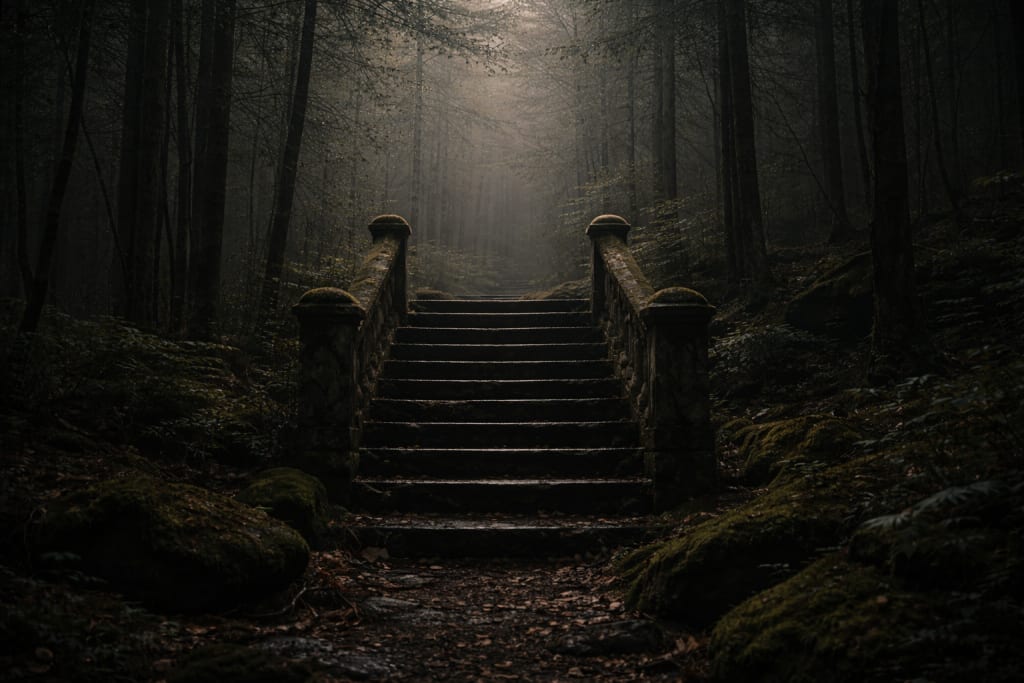
There are places in the wilderness where things don’t add up, but most of them have explanations:
- An abandoned foundation.
- A collapsed hunting cabin.
- A logging road swallowed by moss and time.
Search-and-rescue teams are trained to recognize those remnants. They know what decay looks like. They know how long it takes for structures to disappear, how trees reclaim space, how human activity leaves signatures long after people are gone.
Which is why, when some of them began reporting staircases; standing alone, deep in the woods, disconnected from any structure, the stories carried weight. Not because they were dramatic. But because they were consistent.
A Pattern Emerges
The reports didn’t come from hikers or urban explorers looking for a thrill. They came from search-and-rescue professionals. People tasked with finding missing persons in remote areas, on brutal terrain.
These were individuals accustomed to long days, rough conditions, and unsettling discoveries. They didn’t spook easily. They didn’t speculate wildly. And yet, across different states and regions, they described the same thing... A staircase.
- Sometimes wooden.
- Sometimes concrete.
- Sometimes pristine.
- Sometimes decaying, but intact.
No walls, no debris and no foundation. Just steps… leading nowhere. But why?
“Don’t Go Near It”
One of the most chilling aspects of the phenomenon isn’t the staircases themselves, it’s the reaction to them.
Multiple SAR members have described being instructed, either formally or informally, not to approach these staircases when encountered during a search.
- Not to photograph them.
- Not to touch them.
- Not to climb them.
In some accounts, they were told the instruction came from higher-ups. In others, it was passed down quietly, like a rule everyone followed without asking why. The reasonings were vague:
- Safety concerns
- Structural instability
- Distraction from the search
But that explanation doesn’t fully satisfy those who’ve encountered staircases that looked structurally sound, clean, and strangely well-maintained. Sometimes in areas where no vehicles or heavy equipment could reasonably reach.
Locations Where Staircases Have Been Reported
While exact coordinates are rarely shared, often intentionally, accounts place these staircases in specific regions, repeatedly.
Appalachian Mountains
Dense forests. Steep terrain. Long histories of disappearances and isolation. Several SAR members have reported encountering staircases during searches in this region, often miles from roads or known structures.
Pacific Northwest
Washington and Oregon forests appear frequently in reports. Thick canopy, limited visibility, and vast wilderness areas create conditions where something can exist unnoticed for decades. Yet that doesn’t explain how staircases arrive intact.
Sierra Nevada
Accounts from mountainous California terrain describe staircases found during searches for missing hikers. Sometimes near areas where sound seemed muted or distorted.
Alaska
Perhaps the most unsettling reports come from Alaska, where distance, scale, and isolation are magnified. Staircases reported here are often described as especially clean, despite the harsh environment.
These locations have one thing in common: They are places where people disappear.
What Could They Be?
There are several explanations often proposed, but each leaves gaps.
1. Remnants of Old Structures
The most grounded theory suggests these staircases are all that remain of:
- fire lookout towers
- ranger cabins
- logging facilities
- homesteads
But SAR members push back on this idea. They know how ruins look. They expect debris, like nails, beams, fragments. These staircases often stand alone, without any sign of collapse or decay consistent with age. And in some cases, no records exist of structures ever being built in those locations.
2. Training Structures or Art Installations
Another explanation points to:
- forestry training
- military exercises
- conceptual art
The problem? There are no known programs that involve placing isolated staircases deep in wilderness areas, and then abandoning them indefinitely.
And if it were art, someone would eventually claim credit. No one has...
3. Psychological Phenomena
Skeptics suggest misidentification:
- eroded rock formations
- fallen trees arranged strangely
- imagination under stress
But the consistency of descriptions across different people, regions, and years makes mass misidentification unlikely. Especially from trained observers, who spend their lives navigating wilderness terrain.
The Connection to Missing Persons
This is where the story grows darker. In several accounts, staircases were discovered near areas where search dogs lost scent, or where searches stalled without explanation.
No evidence suggests the staircases caused disappearances. But the correlation unsettles those who’ve noticed it. Some SAR members have reported:
- sudden silence in the forest near staircases
- feelings of unease or pressure
- the sense of being watched
- disorientation
Whether psychological or environmental, the effect is real enough that many refuse to approach them at all.
Why Aren’t There Photos?
This question comes up very often... In a world where everything is documented, mostly with phone cameras, why are there so few verified images?
Several reasons are suggested:
- SAR operations restrict photography
- focus remains on the missing person
- approaching the staircase is discouraged
- phones often have no signal or power, ironically enough
And perhaps most tellingly… Many who encounter them say they don’t want proof. They just want to finish the search and leave.
A Quiet Rule of the Woods
Among those who believe the phenomenon is real, an unspoken rule seems to exist... If you see a staircase in the woods, you walk away. Not out of superstition, but out of experience.
The woods already hold enough unknowns:
- terrain
- weather
- wildlife
- human error
The staircases represent something else... something out of context, something that doesn’t belong. And in wilderness survival, context matters.
Why the Story Endures
The reason the Staircases in the Woods legend refuses to fade isn’t because it’s flashy. It’s because it doesn’t ask you to believe in monsters. It asks you to believe that something was placed where it shouldn’t be, and no one knows why.
It exists at the uncomfortable intersection of human infrastructure, natural isolation, professional testimony and unanswered questions. That’s where the best mysteries live.
Final Thoughts
If the staircases are real, they challenge our assumptions about wilderness and control. If they aren’t, then we must confront why so many trained professionals report the same impossible detail... often reluctantly and often years later.
Either way, the forests keep their answers. And the staircases... if they exist, remain where they are.
Watching... Waiting.
About the Creator
Veil of Shadows
Ghost towns, lost agents, unsolved vanishings, and whispers from the dark. New anomalies every Monday and Friday. The veil is thinner than you think....
Keep reading
More stories from Veil of Shadows and writers in Horror and other communities.
THE FIVE DOORS THAT NEVER SHOULD HAVE BEEN OPENED
~By Caelum, Night Archivist of the Veil~ Most cops think the worst thing you can find at a crime scene is blood. They’re wrong... The worst thing is a question. A question with teeth. A question that refuses to let you sleep. Some cases don’t end when you file the report. They stay with you. They lean over your bed at night. They breathe behind you in empty rooms.
By Veil of Shadows3 months ago in Horror




Comments
There are no comments for this story
Be the first to respond and start the conversation.