
The Silent Agony: A Portrait of Resistance and Loss
Exploring the Untold Story Captured in a Single Moment of Blood, Earth, and Unyielding Resolve


In a world overrun by noise—of war, of politics, of relentless chatter on digital screens—sometimes, a photograph tells the story louder than a thousand voices. The image before us is one such visual parable. It speaks in muted tones, in earth-stained fabric and blood-drenched wool. The woman depicted does not scream, does not reach out, does not protest. Yet everything about her—the closed eyes, the tension in her brow, the soft lines of her face frozen in fatigue or final rest—screams volumes.
Clad in a mustard-yellow hooded garment, she lies against a hay-covered surface, either in hiding or in repose after a violent encounter. The lower half of her tunic is soaked in deep red blood, suggesting a wound unseen but profoundly consequential. Her position—half-reclined, leaning into the safety of straw and autumn leaves—evokes a final moment of peace or a fleeting hope for survival
But who is she? And what does she symbolize?
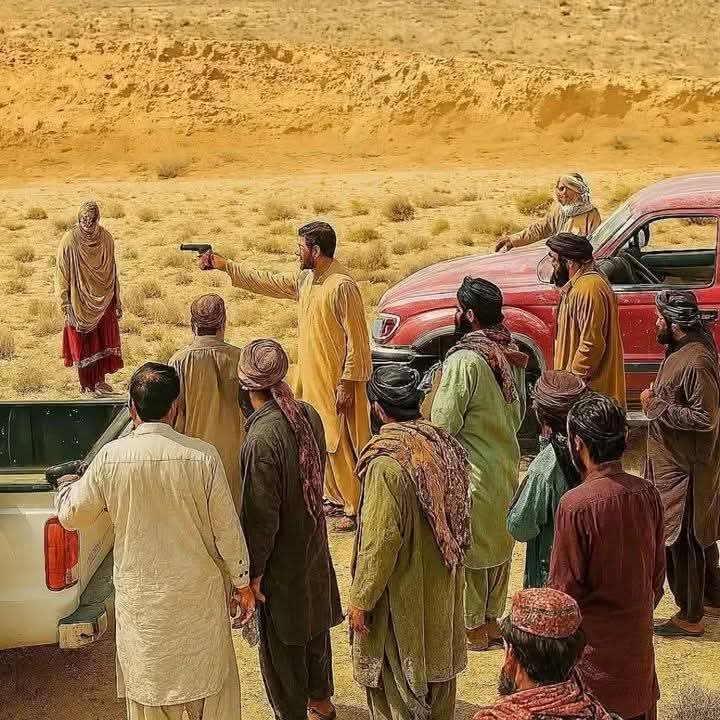
A Still Frame of Human Struggle
This photograph isn’t just a candid scene—it is a canvas painted with the emotional hues of loss, resistance, and the enduring feminine spirit in times of chaos. The woman could be a peasant, a rebel, a mother, a daughter. Her identity remains anonymous, and that anonymity allows her to become every woman in history who has suffered at the fringes of war or conflict.
Her mustard yellow clothing, earthy and unassuming, connects her with the land—perhaps suggesting her role as a villager or someone rooted in a simpler, agrarian way of life. This visual cue leads us to interpret her as a representation of the often-ignored casualties of war: the civilians. Women, especially in rural regions, bear the invisible scars of violence—losing homes, children, and sometimes their own lives in the background of heroic headlines.
The Blood That Speaks
The most striking visual element in the image is, undeniably, the bloodstain. It is no artistic flourish. It’s raw, it's tragic, and it’s real. The blood makes the quiet violence undeniable. While her expression could be mistaken for sleep, the crimson bloom across her side contradicts that illusion, injecting the image with urgency and horror.
The location of the wound—off-center, low—suggests she may have been shot, stabbed, or struck. But more than an analysis of her injury, the blood functions as a symbol of sacrifice. Whether it was willingly offered in the name of resistance or forcibly taken in a moment of terror, it marks her as a martyr to a story we may never fully know.
Layers of Silence
The absence of sound in a still image is expected, but this photo has an eerie, echoing silence—like the kind you find in abandoned battlefields or graveyards. There are no obvious signs of struggle around her: no weapons, no torn terrain, no scattered belongings. Just nature, gently curling around her in vines and hay, as if trying to reclaim her into the earth.
This silence tells us more than noise ever could. It’s the quiet of things that should have been said but weren’t. The quiet of promises broken, of dreams stolen. It’s the silence of entire populations whose stories were never told because they didn’t fit the narrative. It’s the silence women have often had to carry—in grief, in endurance, in death.
A Possible Narrative: Fiction Rooted in Reality
To better understand the weight of this image, we might imagine her story. Perhaps she was part of a village under siege. Maybe she was delivering food to fighters hidden in the hills when she was ambushed. Or she was fleeing a raided home, struck down in the chaos, managing to crawl to the edge of a field before collapsing.
She could have been a healer, a teacher, or a sister to someone involved in resistance. Her journey may have been entirely apolitical, and her death entirely unjustified. These imagined histories, while fictional, are rooted in the very real experiences of countless women across war-torn regions—from Syria to Ukraine, from Rwanda to Afghanistan.
Her story may be lost to us, but her image ensures she is not forgotten.
Art, Documentary, or Protest?
Photographs like this toe a delicate line between being a work of art and a tool of documentation. They evoke aesthetic appreciation, even as they portray unimaginable suffering. They exist not just to be viewed, but to be felt.
Whether this image is part of a film still, a photojournalistic project, or a standalone work of art, it undeniably serves a political purpose. It confronts the viewer. It demands introspection. It does not let you look away.
In that sense, the image becomes a quiet act of protest. It holds a mirror to our apathy and asks us to feel something—to remember that every news headline carries a human cost, and behind every statistic is a face, a life, a body like hers.
The Role of the Viewer
What are we, the viewers, to do with this image?
We can’t save her. We don’t know her. We may not even know what country she is in. But we can witness her. We can resist the urge to scroll past. We can linger on her face and offer a moment of acknowledgment.
In a world where people die silently every day—unnoticed, unmourned—bearing witness becomes a radical act. To see her is to say, “You mattered. Your pain was real. Your life was worth remembering.”
And perhaps that’s the point. That in showing us this moment, the photographer or creator is entrusting us with her memory. Asking us not just to see—but to feel, to reflect, and maybe even to act.
Final Reflections
In just one frame, we are offered a powerful meditation on violence, gender, mortality, and remembrance. The woman in mustard yellow becomes a universal figure—a symbolic casualty of the world’s endless appetite for conflict. Her closed eyes remind us of all those who never saw peace in their lifetimes. Her blood is a silent scream against injustice.
This image is not easy to look at. And it shouldn’t be.
But by honoring the truth it captures, we participate in a form of collective healing. We build empathy. We reclaim the narratives buried under war's louder, flashier headlines.
In the end, we’re reminded that no one should ever be reduced to a casualty. Every life lost is a story unfinished, a dream interrupted. And every image like this is a quiet, defiant plea: Don’t forget me.
About the Creator
Fazal Malik
"Welcome ! We're dedicated to making learning fun and accessible. Subscribe for educational videos, tutorials, and resources to ignite your curiosity."
Keep reading
More stories from Fazal Malik and writers in Horror and other communities.
Names of Honor and the Tragedy in Balochistan
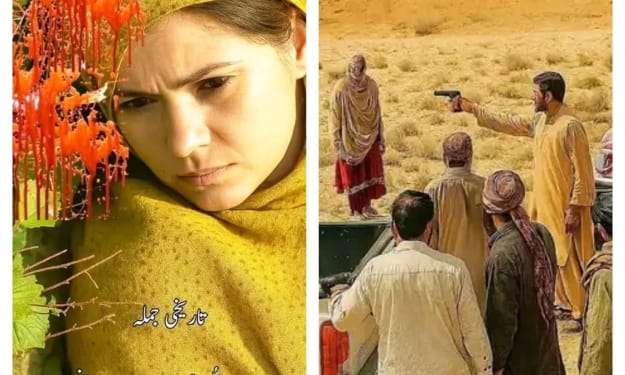
Balochistan’s Names of Honor and a Recent Tragedy Balochistan, a region rich in tradition and steeped in tribal values, has long upheld a cultural system that places honor—ghairat—at the core of personal and social identity. Within this code, the concept of “name” (naal) or honor (izzat) often determines an individual's reputation, familial pride, and community standing. However, the weight of this honor can, and often does, lead to tragic consequences.
By Fazal Malik8 months ago in Horror


Comments
There are no comments for this story
Be the first to respond and start the conversation.