
The Resurrectionist
Grave robbing's a dark trade. "The Resurrectionist" explores its impact on science & ethics. Read more today!

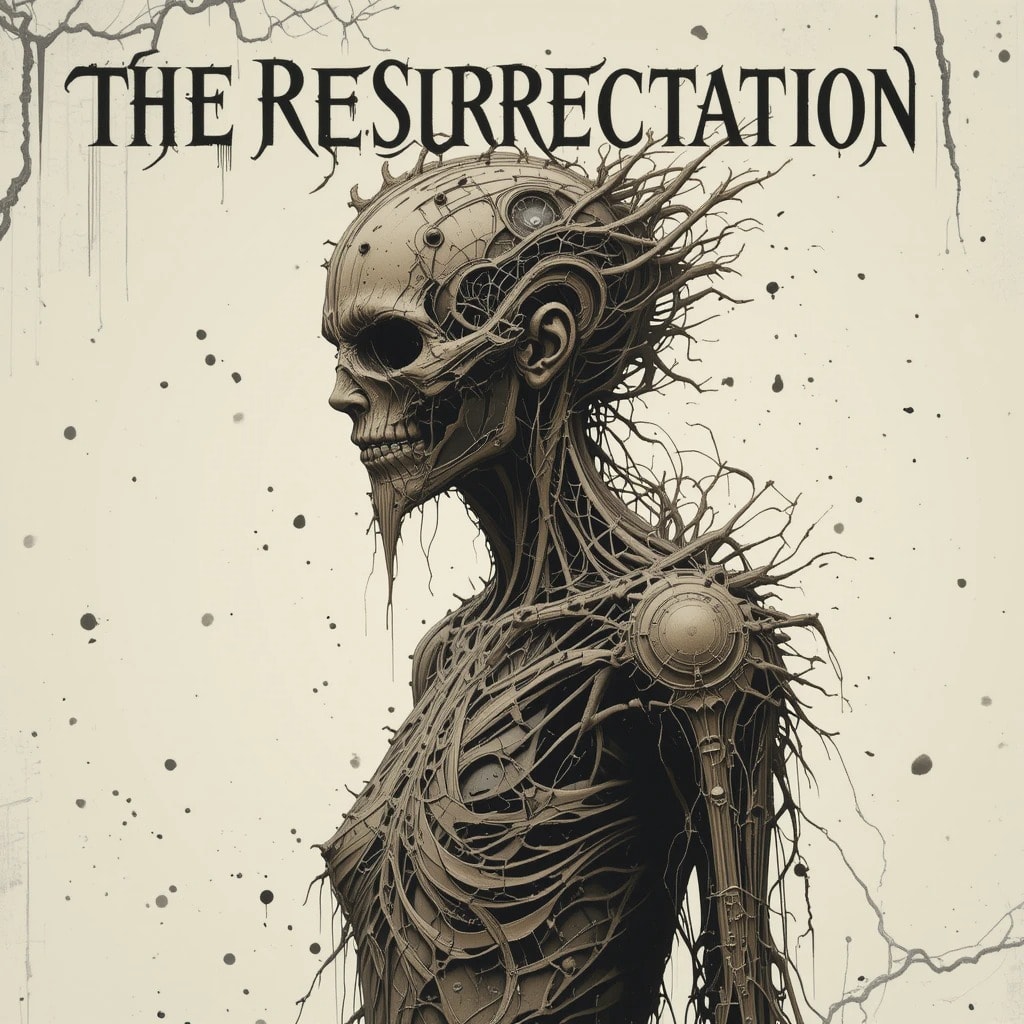
The Resurrectionist: Unearthing the Dark Genius of Dr. Spencer Black
Prepare to enter a world where science and the macabre intertwine. "The Resurrectionist: The Lost Work and Writings of Dr. Spencer Black," by E.B. Hudspeth, is no ordinary book. It's a disturbing, yet captivating journey into anatomical horror. Discover the unsettling legacy of a brilliant, yet mad doctor.
This article will explore the book's core themes. We'll examine the artwork and lasting appeal of this unique creation. Are you ready to confront the disturbing genius of Dr. Spencer Black?
Unveiling Dr. Spencer Black: Anatomy, Madness, and Myth
Dr. Spencer Black is not a real historical figure. He is a fictional character created by E.B. Hudspeth. The book presents itself as a biography of this "lost" anatomist. Let's peel back the layers of his disturbing life.
Early Life and Anatomical Obsession
Born in Philadelphia, young Spencer showed an unusual interest in anatomy. His father, a grave robber, exposed him to the hidden world of the human body. This early exposure sparked a life-long, intense fascination. He excelled in his studies. Yet, this interest soon took a dark turn.

The Philadelphia Academy of Medicine and Beyond
Black's medical career started with promise. He quickly gained respect at the Philadelphia Academy of Medicine. But his research began to push boundaries. He became fixated on radical surgeries and unusual anatomical theories. His colleagues grew concerned about his increasingly erratic behavior.
The "American Hippocrates" and His Descent
Initially, Black was hailed as a rising star, even the "American Hippocrates." This all changed as his experiments grew more bizarre. His obsession shifted to creating hybrid creatures. This was the turning point, leading to his ultimate descent into madness and obscurity. The bright light was gone, swallowed by the night.
The Art of Anatomy: A Visual Feast of the Grotesque
"The Resurrectionist" is not just a story. It's a visual experience. Hudspeth's anatomical illustrations are both beautiful and deeply disturbing. The book presents a strange intersection of art and the scientific world.
A Fusion of Art and Science
The book masterfully blends scientific accuracy with artistic license. The anatomical drawings are detailed and precise. Yet, they depict impossible creatures, blurring the line between reality and fantasy. It's a compelling, yet unsettling mix.
The "Lost" Illustrations: Exploring the Unnatural
The illustrations show fantastical creatures. They are "lost" anatomical studies. They depict human-animal hybrids, mythical beasts, and other abominations. This imagery is disturbing, yet strangely alluring. You can't look away.

Influences and Inspirations: From Vesalius to Goya
Hudspeth draws inspiration from historical anatomical illustrations. He also incorporates artistic styles from masters like Vesalius and Goya. Vesalius' detailed anatomical renderings are an obvious inspiration. Goya's dark and grotesque imagery also influences the book's unsettling tone.
The Myth of the Human Bestiary: Where Science Meets the Supernatural
At the heart of "The Resurrectionist" lies the concept of a human bestiary. Dr. Black believed that humans could be transformed. He imagined a world where humans could become mythical creatures. This idea is central to the book's unsettling narrative.
Anatomical Speculation and Evolutionary Theory
Dr. Black developed radical theories about human evolution. He speculated that humans could revert to earlier evolutionary forms. He envisioned creating hybrid creatures through surgery and anatomical manipulation. These experiments were driven by his perverse understanding of the world.
The Morality of Creation: Playing God in the Victorian Era
Black's experiments raise profound ethical questions. He was essentially playing God, creating life in unnatural ways. This hubristic pursuit of knowledge led to his downfall. It also reflects Victorian-era anxieties about science and progress. Was he going too far?
Real-World Parallels: Scientific Anomalies and Genetic Oddities
While Dr. Black's creations are fantastical, they find echoes in reality. Certain genetic anomalies and medical conditions share similarities. These real-world examples underscore the unsettling possibilities of science. They make Dr. Black's fantasies seem a little less far-fetched.
The Resurrectionist's Enduring Appeal: Why We're Drawn to the Dark Side of Science
"The Resurrectionist" has captured the imaginations of many readers. Its popularity comes from its unique blend of art, horror, and scientific speculation. Why are we so drawn to this disturbing world?
The Allure of the Grotesque: Exploring Human Curiosity
Humans have a natural curiosity about the macabre. We're drawn to the unsettling and the forbidden. "The Resurrectionist" satisfies this curiosity. It lets us explore the dark side of science in a safe, fictional space.
Gothic Horror and Victorian Aesthetics
The book uses Gothic horror tropes effectively. It reflects Victorian-era anxieties about science, progress, and the human body. This combination resonates with readers who enjoy dark, atmospheric stories. The Victorian setting only adds to the charm.
The Resurrectionist in Pop Culture: Influence and Adaptation
"The Resurrectionist" has inspired other works. While there aren't direct adaptations, its themes and imagery have appeared in other media. This influence demonstrates the book's lasting impact on popular culture.
E.B. Hudspeth: The Author Behind the Madness
E.B. Hudspeth is the author and artist behind "The Resurrectionist." He created the fictional world of Dr. Spencer Black. Let's look at Hudspeth's background and influences.

Hudspeth's Artistic Background
Hudspeth is an accomplished artist with a background in medical illustration. This expertise shows in the book's detailed anatomical drawings. He uses his skills to create a believable, yet disturbing world.
Research and Inspiration
Hudspeth drew inspiration from historical anatomy texts and Gothic literature. He blended these influences to create "The Resurrectionist"'s unique aesthetic. His dedication to research is evident in the book's intricate details. It is plain he worked hard.
Current Work
Hudspeth continues to work as an artist and writer. He is pursuing other creative endeavors. Fans eagerly anticipate his next project.
Conclusion
"The Resurrectionist: The Lost Work and Writings of Dr. Spencer Black" is a singular achievement. It blends art, science, and horror into a disturbing, yet beautiful whole. Dr. Spencer Black's unsettling vision continues to captivate readers. He forces us to confront the darker aspects of scientific ambition. The work will endure as long as people have a morbid fascination with oddities. < more >
About the Creator
Samson Murad
Global Books Bank has millions of stories. You're sure to discover your next adventure here! We have a story for everyone. Check out our collections now!
subscribe and enjoy every new story fast you
Keep reading
More stories from Samson Murad and writers in Horror and other communities.
Blood Over Bright Haven: Unraveling the Epic Fantasy
Blood Over Bright Haven: Imagine a place of great power, shadowed by dark secrets. "Blood Over Bright Haven" pulls us into a story where magic is both a gift and a curse. This novel explores what happens when the hunger for control clashes with the need for sacrifice. We'll journey into this book, looking at its characters and the challenges they face.
By Samson Murad12 months ago in BookClub




Comments
There are no comments for this story
Be the first to respond and start the conversation.