
The Real Story Of Freaky Foo Fighters
WW2 Ghost Story

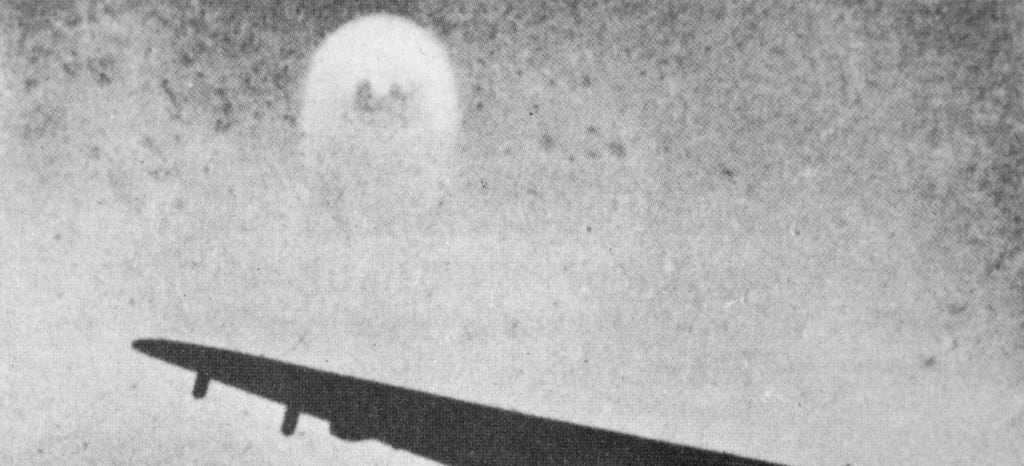
The mission reports that were being provided by the 415th Night Fighter Squadron took an unexpected and unexplained turn at the conclusion of World War 2. In addition to the specifics of dogfights that took place above the Rhine Valley, which was held by the Germans, pilots started reporting lights that followed their aircraft for no apparent reason.
During the evening of November 1944, a Bristol Beaufighter crew consisting of pilot Edward Schlueter, radar observer Donald J. Meiers, and intelligence officer Fred Ringwald was flying along the Rhine to the north of Strasbourg. The witnesses reported seeing "eight to ten bright orange lights off the left wing...flying through the air at a high speed." Both the ground control and the aerial radar failed to detect anything in the immediate vicinity. After then, the story stated, "Schlueter turned toward the lights, and they vanished." Subsequently, they seemed to be farther away. The presentation lasted for a few minutes until it was abruptly terminated. In order to give these things a name, Meiers used a meaningless phrase that was used by characters in the classic "Smokey Stover" fireman cartoon. He called them "foo fighters for short."
The reports continued to come in. These things flew alongside aircraft at a speed of two hundred miles per hour; they were either red, orange, or green in color; they could be seen single or in formation with as many as ten additional objects; and they often outmaneuver the airplanes that they were pursuing. Neither of them ever appeared on the radar.
The historian for the neighboring 417th Night Fighter Squadron, Richard Ziebart, was able to hear many of the accounts firsthand from the crew members of the 415th: "The pilots were very professional." It was said that they discussed the lights, but they refrained from making any speculations concerning them. Despite this, the pilots said that the encounters were unsettling. In an interview with Keith Chester, author of Strange Company: Military Encounters With UFOs in World War II, a pilot from the 415th Expeditionary Force characterized his feelings as "scared shitless."
There was a combat journalist for the Associated Press named Robert C. Wilson who celebrated New Year's Eve with the 415th. This occurred at the conclusion of the year. The next day, his article on the foo fighters was carried on the top page of newspapers all around the country. Investigations into the sightings were eventually sparked by the fact that a reporter listened to the airmen, in addition to the fact that other squadrons had seen them. The quantity, consistency, and effect on the 415th crews were the factors that ultimately led to the probe.
There were theories suggested by amateur psychologists, military aviation enthusiasts, and conspiracy theorists; however, none of these explanations were considered plausible by the aircrew. They were under the impression that they were hallucinating due to the effects of war exhaustion. Due to the fact that the lights did not inflict any harm, the pilots had good reason to believe that they were not remotely controlled German secret weapons. In view of the fact that the foo fighters shown such extraordinary agility, it was very improbable that St. Elmo's fire, which is a discharge of light from sharp objects in electrical fields, would occur.
After the war, officials were sent by the Army Air Command to conduct an investigation; however, their findings were not recovered, according to Chester's report. In 1953, the Central Intelligence Agency (CIA) assembled a group of six highly regarded experts who were well-versed in experimental aviation technology in order to ascertain whether or not the lights were a danger to the nation's security. There was no official conclusion that was presented by the Robertson Panel, which was called for its head, the physicist Howard P. Robertson of Caltech.
Neither did the historian, Ziebart, provide an explanation; rather, he only provided an insight. He made the following statement: "I believe the foo fighters did not show up on radar because they were plain light." Radar needed to be able to detect solid objects. It is beyond a doubt that the pilots would be able to identify any potential threat that could be there.
Reference
https://www.smithsonianmag.com/air-space-magazine/what-were-mysterious-foo-fighters-sighted-ww2-night-flyers-180959847/
https://www.history.com/news/wwii-ufos-allied-airmen-orange-lights-foo-fighters
About the Creator
Bomb Scare
It was 2027, and the world never thought it would happen. A missle hit the United States, but it wasn't where they had anticipated. A little town in the northeast was hit by a missile strike, they didn't know why, and they didn't know exactly where it hit, but they did know it was a coastal community, somewhere between Maine and Delaware.
By Gregory Payton7 days ago in Fiction



Comments
There are no comments for this story
Be the first to respond and start the conversation.