
The Real Story Of Dracula
Vlad the Impaler

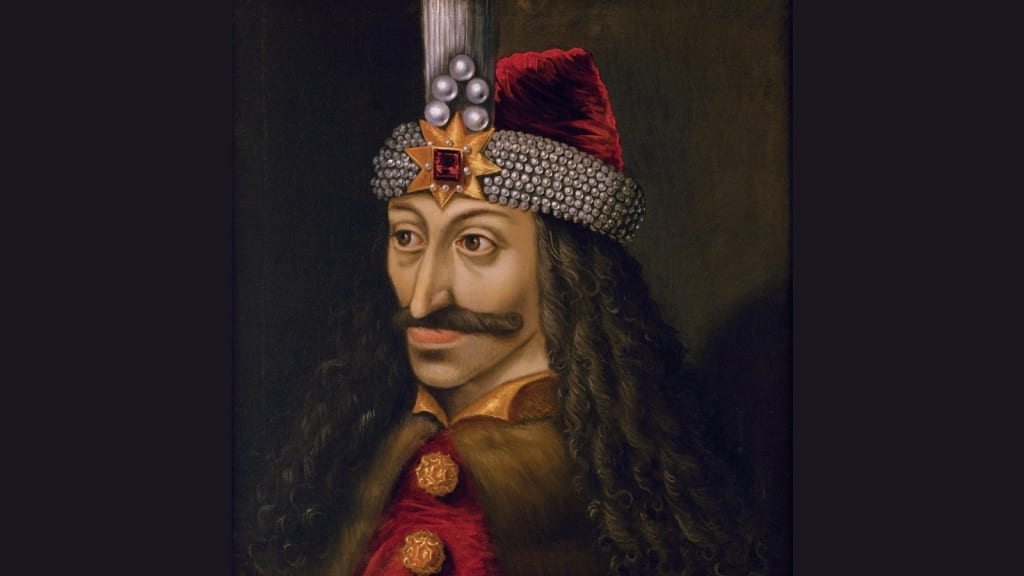
Between the years 1448 and 1476/77, Vlad III, well known as Vlad the Impaler, held the position of Prince of Wallachia three times. He passed away in 1476/77. The Romanian people hold him in high esteem as a national hero and consider him to be one of the most influential monarchs in the history of Wallachia.
In the globe that speaks English, Vlad is most well-known for the stories that circulate about his ruthless nature. These stories provided Bram Stoker with the inspiration for the principal character that he created for the well-known book Dracula.
The territory of Wallachia was situated in the middle between the Ottoman Empire and the Kingdom of Hungary. Due to the fact that the Turks were engaged in combat with the Kingdom of Hungary, which was commanded by John Hunyadi, Wallachia became a battlefield for the conflict between the Turks and the Hungarians. It was the Romanian nobility, known as boyars, who were responsible for selecting the rulers of Wallachia. In many cases, the king was a member of a noble family, while in other cases, he was an illegitimate prince who was born outside of marriage. Due to the fact that the rulers of the nation were at odds with one another, the country was experiencing instability, which led to family conflicts and violence.
It is quite probable that Vlad was born during the winter of 1431 in the city of Sighisoara, which was located in Transylvania at the time and was a part of the Kingdom of Hungary.
During that historical period, Sighişoara served as a military stronghold. Being the second son of his father, Vlad Dracul, he was born into the world. Radu the Handsome was his younger brother, while Mircea was his elder brother. He also had a younger brother. The family lived in exile in Transylvania despite the fact that his original nation was Wallachia. This was due to the fact that his father had been driven out by boyars who supported the Ottoman Empire.
The Ottoman ruler exerted pressure on Vlad's father over the matter. He made a commitment to serve as the Sultan's vassal, and in order to ensure that he would follow his word, he offered his two younger boys as hostages instead of keeping his vow.
In spite of the fact that Vlad endured a great deal of suffering at the hands of the Ottomans and was imprisoned in a subterranean jail, Radu, Vlad's younger brother, managed to attract the attention of the Sultan's son. In addition to being granted entry into the Ottoman royal court, Radu was granted his freedom and converted to Islam.
These were the years that had a significant impact on Vlad. The character of Vlad was molded by them. In order to punish him for his stubbornness and rudeness, the Turks often beat and whipped him. In the course of his life, he acquired a well-known animosity for Radu as well as for Mehmed, who would eventually become the Sultan.
The death of Vlad's father and the passing of Mircea, Vlad's elder brother, occurred at this moment. In response to the invasion of Wallachia by the Turks, the Sultan appointed Vlad III to the throne as his puppet commander. His authority was brief during this time period; Hunyadi attacked Wallachia and succeeded in driving him out of the region in the same year. Following his escape to Moldavia, Vlad was placed under the protection of his uncle, Bogdan II.
Among the Romanian peasants, stories and traditions about Vlad continued to be passed down from generation to generation. They have built an idealized vision of a significant national hero by often recounting the story, which has led to confusion among them. There were moments when Vlad řepeş was regarded as a prince who defended his homeland among the Romanian peasants.
On the other hand, he is often regarded as a monarch who was very ruthless and frequently capricious. In every story, there are a few occurrences that are consistent throughout. There is a story that revolves around the foreign diplomats that Vlad Śepeş was convening with in Targovişte. There is a consensus among all accounts that Vlad had their hats nailed to their heads as a reaction to some actual or imagined offense (perhaps because they refused to remove their caps while Vlad was there).
The character of Vlad III řepeş has been characterized as very harsh. "Devil" is the current Romanian translation of the ancient Romanian term "dragon," which originated from the word "Dracul." Old Romanian translates to "dragon" in English. The other members of the Order of the Dragon gave his father, Vlad II, the name Dracul. Dracul was the name that was given to him. According to Śepeş, the technique of torture and execution that he chose was impalement. As part of his way of torturing the victim, he would connect a horse to each of the victim's legs while simultaneously driving a sharp spike into the victim's body. On several occasions, Vlad would arrange the stakes in a pattern. The most typical design was a ring that was located outside of the city that he was trying to target. Depending on the height of the spear, the victim's rank might be determined. In many cases, the bodies were kept there for many months.
References
https://en.wikipedia.org/wiki/Vlad_the_Impaler
https://www.nbcnews.com/sciencemain/vlad-impaler-real-dracula-was-absolutely-vicious-8c11505315
https://www.britannica.com/biography/Vlad-the-Impaler
About the Creator
The Oakville Blobs: When the Sky Dropped Something It Shouldn’t Have!
Some mysteries whisper... Others fall from the sky. And in 1994, that's just what happened. In the summer of 1994, residents of the quiet logging town of Oakville, Washington, reported something that sounded like a prank, a hoax, or perhaps a misremembered weather event. But it wasn’t. Because on multiple occasions that year, a strange gelatinous substance rained down from the sky, clear, sticky, and unnervingly organic.
By Veil of Shadows6 days ago in Horror




Comments (1)
I love Dracula! Glad to get to know Vlad!