
The Real Haunted Story Of Veliki Tabor
Love Horror Story


The castle is not only intriguing due to its age, but also tied to the legend of Veronika of Desinić.
Celje's Count Herman II governed Veliki Tabor. Fridrik, his son, loved local Veronika. The Count disapproved of their relationship, but they fled to Slovenia and married secretly.
However, Frikrik's father discovered the marriage and imprisoned him in the Celje Tower for over four years. Veronika fled but was apprehended at Veliki Tabor. The Count claimed she was a witch who cursed his son.
Veronika's trial confirmed her innocence, but Count Herman ordered her execution. Legend says her body was fashioned into a castle wall after she drowned in Veliki Tabor's courtyard. People say they can still hear Veronika's moans and wails in the hills and valleys at night, especially on long, cold winter evenings.
The Rattkay family ruled Veliki Tabor until 1793, when the Hungarian Chamber took over. After several owners and uses, Veliki Tabor was revived in the late 1980s and held falconry, art exhibitions, and knight competitions.
Ownership
The Rattkay branch that was located in Hungary relocated to Croatia. Before the death of the last member of the family in the 18th century, the family had been residing in Hrvatsko zagorje.
Over the course of time, the Rattkay family becomes more prominent in the aristocratic community. Under the rule of Ferdinand II and Leopold I, they were elevated to the rank of baron in 1559 and count in 1687. Family was at its most powerful throughout the 17th century.
There were several castles in Hrvatsko zagorje and the surrounding area that belonged to the Rattkay family in addition to Veliki Tabor Castle. For instance, Mali Tabor, Jurketinec, Miljana, Velika Horvatska, and Druškovec, as well as areas of Donja Stubica, Susedgrad, Klenovec, and Golubove, were among the individuals who were involved.
Following the passing of the last Rattkay in the year 1793, Veliki Tabor Castle was declared to be state property. It was given to count Thuguth, who was in charge of the ministry of external affairs, by the Imperial Chamber. Following his passing, Veliki Tabor was returned to the control of the state. Later on, it was owned by the Grunewald brothers, who were businessmen from Zagreb. During World War I, the fortification was converted into a prison.
Between the years 1919 and 1938, the property was under the ownership of the renowned Croatian painter Oton Iveković. It was purchased to be able to prevent deterioration. He was forced to sell it since the cost of maintaining it in the city was too high. After the Order of St. Claire took possession of Veliki Tabor Castle. They turned it into an orphanage and divided the residential quarters into smaller rooms in order to accommodate the children.
Following their departure, Veliki Tabor Castle was put to a variety of unsuitable uses, including the establishment of a meat drying facility and the housing of agricultural union quarters.
In 1993, the Museums of Hrvatsko zagorje assumed responsibility of the collection. The study of archaeology started very quickly. It described the history of Veliki Tabor Castle as well as the architectural changes that were made. Because of these research, conservation initiatives were initiated. Following a period of repair that lasted for several years, Veliki Tabor Castle emerged as one of the most well-preserved medieval fortifications in Croatia.
Secrets Of Castle
Experience chivalry in Veliki Tabor's fortified walls. The nobility Ratkaj family built the castle in the 12th century as a powerful defensive fortress that saw several fights. Discover its powerful towers, secret corridors, and knightly chambers and envision swords clanging and valiant deeds.
Velika Tabor is shrouded in mystery, driven by the tale of Veronika Desinić, the “White Woman of Tabor.” The melancholy tale describes a young noblewoman starving to death in the castle. Her spirit has been seen prowling the castle, adding unsettling intrigue.
Veliki Tabor is a culinary paradise as well as a historical site. Enjoy Zagorje's rich culinary traditions by sampling local delicacies including “štrukli” (rolled pastries), prosciutto, and stews. Taste Croatia's countryside in the castle walls with a glass of local wine.
References
https://croatiacaptured.com/veliki-tabor-unveiling-the-secrets-of-croatias-fairytale-castle/
https://culturetourist.com/destinations/croatia/veliki-tabor-castle-medieval-fort-you-shouldnt-miss-while-in-croatia/
https://freakinparanormal.com/2020/09/03/haunted-croatia/
https://www.atlasobscura.com/places/veliki-tabor-castle
About the Creator
"Scream 7" (2026): Running out of Fresh Screams
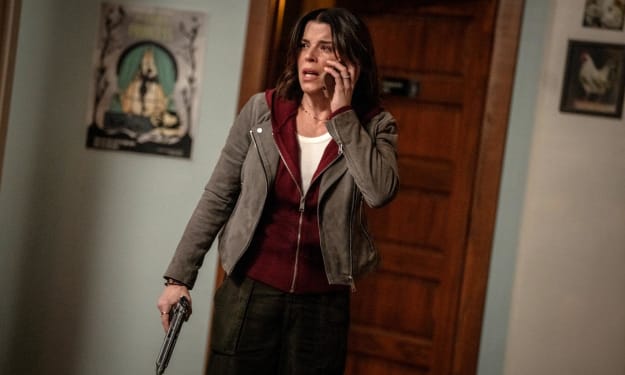
This is the seventh time we’ve had a Ghostface crisis. Scream 7 is the latest edition of the Scream franchise. Sydney Prescott and her family are under attack by another anonymous killer dressed in a Ghostface costume. While having issues with her daughter, Tatum, they run from the bloody murders, trying to determine who is behind it all.
By Marielle Sabbag5 days ago in Horror
Becca
"Everything is so... flat." Denille said stupidly as she looked around her new neighborhood. She looked around at the muted desert where even the smallest sign of life seemed to have given up. The plant life was shrubs that were half cooked by the heat and where there should have been a lawn, a mess of white rocks laid glistening in the sun. Even the sky looked stretched thin, like the sun had ironed it smooth. She’d moved from Riverside, where at least there were hills, but here in Barstow, everything felt baked and brittle.
By Sara Wilsonabout 18 hours ago in Fiction



Comments
There are no comments for this story
Be the first to respond and start the conversation.