
The Locked Room Mystery
"Secrets Behind Closed Doors"
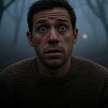

The Locked Room Mystery
Detective Marcus Vane had seen plenty of strange crime scenes in his twenty years on the force, but nothing like this. The door was locked from the inside. Windows sealed. No signs of forced entry. And yet, the body was there—slumped in the antique armchair like someone who had simply stopped breathing mid-thought.
The victim was Professor Alan Thorne, a brilliant but reclusive historian known for his obsession with old locks and cryptography. He lived alone in the upper floor of a century-old manor, a place more museum than home. That morning, the housekeeper, Mrs. Beale, was coming to look for the professor's study.Not unusual. But after hours of silence and unanswered knocks, she grew anxious. She called the police.
Marcus arrived to find officers already puzzled. They’d broken down the door after confirming the room was locked with a deadbolt—and the key was still inside, on the desk. Windows latched. No trapdoors, no hidden passages. Just the lifeless professor, eyes wide open, mouth slightly parted, as if caught by surprise.
“Poison?” Marcus asked the man who nodded?
“No visible signs. No wounds, no bleeding. Toxicology will take time.”
Marcus scanned the room. Bookshelves lined every wall. A fireplace, cold. One wooden desk stacked with papers. A small safe—locked. On the desk, a cup of tea, still half-full, and a leather-bound journal. Nothing seemed out of place. Except for the man lying dead in a locked room.
He picked up the journal and flipped to the last page. A scribbled sentence:
“The key to truth is not the key in the lock, but the lock itself.”
Cryptic, but that was Thorne’s style.
Marcus sat down at the desk, letting the atmosphere settle over him. The room had a silence that felt too deliberate. Controlled. Like someone had orchestrated this scene. But who? And how?
Day Two
While waiting for the coroner's report, Marcus dove into the professor’s background. Alan Thorne had few friends. He was widowed, childless, and had spent the last ten years writing obscure books on ancient puzzles, medieval lock systems, and cryptographic codes. His most recent lectures focused on "illusion as architecture"—how perception could be manipulated through design.
According to his publisher, Thorne had become paranoid lately. He claimed someone was watching him. He had installed multiple locks on every door in his home, though most weren't functional. A show, perhaps. Or a warning.
Back at the manor, Marcus brought in a locksmith.
“This lock,” the locksmith said, tapping the ornate bronze deadbolt, “is from the 1800s. Original. But look here.”
He removed the faceplate to reveal something odd—a mechanism behind the deadbolt that didn’t belong. Modern wiring.
“Someone modified this. Recently.”
Marcus felt a tingle. Maybe someone have controlled the lock from outside the room!
The locksmith nodded slowly. “Yes. But it would’ve needed a trigger—remote or timed.”
Suddenly, the professor's cryptic last words seemed less poetic and more literal.
Day Three
Toxicology came back clean. No poisons, no drugs. But a neurological expert spotted something strange—a small red dot at the base of the professor’s neck, just below the hairline. Barely visible.
“A micro-needle puncture,” she said. “Possibly a neurotoxin. Something advanced.”
“Advanced like military-grade?”
“Or black-market. Paralysis and death in minutes. Undetectable without close inspection.”
Marcus exhaled. “So it wasn’t suicide.”
“No. Someone planned this. Carefully.”
Day Four
Marcus focused on the safe. They brought in a codebreaker from cybercrimes, but the lock wasn’t digital. It was mechanical. Old-school.
“Professor Thorne had a fondness for Fibonacci patterns,” said the tech. “The safe might be rigged with a sequence-based lock.”
After many hours of trying, the safe opened.
Inside: a thick envelope marked For M.V.—his initials.
Marcus’s pulse jumped. He tore it open. Inside was a single page:
Detective Van, by the time you read this, I will no longer be on Earth! And someone made sure of it. You’re looking for Edward Langston—my former student. Brilliant. Dangerous. He once believed in ideas. Now he believes only in control.
He’ll make it look perfect. He thrives on puzzles. This locked room is his signature—his mockery. He wants you to believe the impossible. But nothing is impossible. Not for him. Not with the tech he’s developed.
You’ll find proof in the clock tower.
The clock tower? The manor didn’t have a clock tower.
Or did it?
Day Five
Digging through the property’s original blueprints, Marcus found it: a now-abandoned wing sealed off after a fire decades ago. It included a narrow tower with a clock face—nonfunctional for years.
Inside, everything was covered in dust—except a recent set of footprints leading to a small cabinet hidden behind the gears.
When there's a drone inside the cabinet, it's as small as a hummingbird! Fitted with a syringe-like needle. Silent flight. Remote-controlled.
“Langston’s tech,” Marcus whispered.
Next to it, a laptop. Encrypted. But they retrieved security footage from a hidden drive: Langston entering the manor two nights before the murder. Wearing gloves, carrying the drone.
Langston had used the old service crawlspaces to enter. He never needed to unlock the door from outside—he triggered the drone to inject the toxin, waited for the professor to die, then activated the modified deadbolt to lock from inside, making it look like no one had entered.
Genius. Terrifying.
The Arrest
Langston was arrested at a private tech conference in Prague. He didn’t resist. In fact, he smiled.
“Tell me, Detective,” he said calmly, “wasn’t it beautiful? The elegance of it? A room that tells a lie without speaking?”
Marcus stared at him. You killed someone to prove it?
Langston shrugged. “He stopped listening. This way, he made his final lecture.”
Epilogue
The case made headlines. “The Locked Room Killer.” But to Marcus, it wasn’t about the fame. It was about perception. About how the most secure spaces can become cages when the enemy is inside the system itself.
Professor Thorne’s journal became public record. His final lesson echoed beyond his field:
"Locks don’t keep danger out. They keep the illusion of safety in."
Marcus still kept that page in his wallet. A reminder that even the perfect crime can be solved—if you learn to question the lock, not just the key.
About the Creator
Keep reading
More stories from Mohammad Shawkat Hossain and writers in Horror and other communities.
The Last Passenger
The Last Passenger The train groaned as it trudged along the ancient tracks, cutting through the dense fog that clung to the countryside like a suffocating shroud. Inside the dimly lit compartment, Clara tightened her grip on the worn leather bag resting on her lap. Her pulse quickened—a steady, rhythmic drumbeat of unease echoing in her chest. She was alone. Or so she thought.
By Mohammad Shawkat Hossain10 months ago in Horror


Comments (1)
Good