
The Locked Attic
Some Secrets Should Stay Hidden

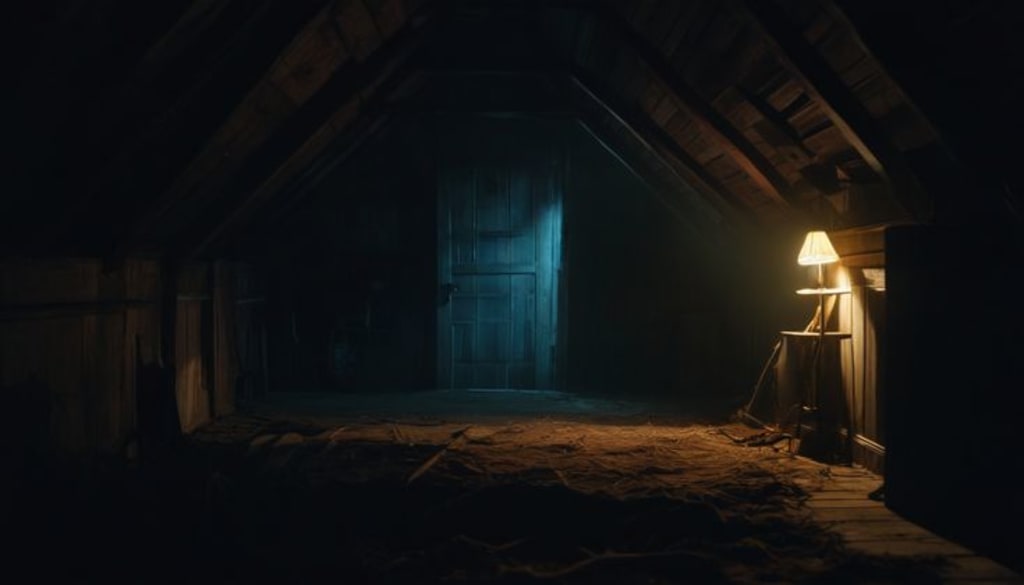
The Mitchell house had stood for nearly a century at the edge of town. Its brick walls were weathered, and its roof sagged slightly in the center, giving it a somber, forgotten look. Every neighborhood child knew one rule: never go near the attic door on the third floor. The brass key had vanished decades ago, and the door remained locked, with scratches marking the wood as if desperate hands had tried to escape from within. Adults rarely spoke of it, but whispers suggested something lived up there, something that had watched generations of the Mitchell family come and go.
Eighteen-year-old Clara Mitchell had grown up in the house. As a child, she had listened to her grandmother warn her repeatedly, “The attic is not for children. Do not even think about it.” Of course, the warning only made the door more tempting. Clara had always been curious, imagining treasures, old letters, or forgotten toys hidden in the dusty shadows above. But as she got older, she dismissed it as a child’s obsession. That is, until the night the house itself seemed to call her.
It began subtly. Late at night, Clara would hear scratching, almost like nails against wood, coming from above her bedroom ceiling. At first, she ignored it, blaming raccoons or settling wood. But the sounds grew louder, rhythmic, deliberate. She would hear whispers too—low, murmured voices that she couldn’t understand, as if the attic was speaking a language meant only for her. On several nights, she awoke to find her bedroom door ajar, though she was certain she had closed it.
One stormy evening, unable to sleep, Clara decided to investigate. The house groaned under the weight of the wind, rain streaking down the windows in relentless sheets. She grabbed a flashlight and ascended the narrow staircase to the third floor. The air was thick with dust and the faint smell of decay. When she reached the attic door, her hand trembled as she tried the knob. Locked, of course. But that night, for reasons she couldn’t explain, she noticed something strange—a faint outline of the keyhole glowing softly, as if inviting her to try again.
Determined, she searched the floorboards near the staircase and found a small, rusted key tucked under a loose plank. Her heart pounded as she slid it into the lock. The door clicked open effortlessly, revealing darkness so complete it seemed to absorb her flashlight’s beam. .
The attic was larger than she had imagined, filled with old furniture draped in yellowed sheets, trunks stacked to the ceiling, and rows of dusty shelves. But what caught her attention was a small mirror leaning against the far wall. Its surface shimmered unnaturally, reflecting nothing but blackness. Clara approached it, feeling a chill crawl up her spine.
It wasn’t her own face staring back. The eyes were hollow, sunken, and filled with a darkness that seemed to shift and move independently. A low whisper rose behind her ear: “You shouldn’t be here.” She spun around. The attic appeared empty. The door she had unlocked was now closed, though she had not touched it.
Suddenly, shadows detached from the corners of the room, slithering toward her. They were not quite solid, more like smudges of darkness, yet heavy enough to press against the air and make her struggle to breathe. The whispers grew louder, overlapping, forming distorted words she could barely understand. “Leave… leave… forever…
Clara’s instincts screamed at her to run. She darted toward the door, yanking it open. The shadows recoiled briefly, hissing as if in pain, before retreating into the darkness of the attic. She stumbled down the staircase, never looking back until she reached the safety of her bedroom. That night, she slept with every light in the house on, trembling at every sound.
The next morning, the attic door was locked again. Clara tried the key—it no longer fit. The scratches along the wood were gone, as if the night’s events had never happened. Her parents dismissed her story, attributing it to stress and imagination. But Clara knew the truth: the attic had watched her, tested her, and left a mark she could never forget.
About the Creator
Sudais Zakwan
Sudais Zakwan – Storyteller of Emotions
Sudais Zakwan is a passionate story writer known for crafting emotionally rich and thought-provoking stories that resonate with readers of all ages. With a unique voice and creative flair.
Keep reading
More stories from Sudais Zakwan and writers in Horror and other communities.
The Reflection That Wasn’t Mine
Sara had always been meticulous about her appearance. Every morning, she checked her reflection twice—once in her bedroom mirror and again in the bathroom. Mirrors, she liked to think, were honest companions. They revealed flaws, imperfections, and every stray hair without judgment. For years, she had trusted them implicitly. That trust ended the day she moved into the old apartment on Crescent Lane.
By Sudais Zakwanabout 7 hours ago in Horror
Killing him slowly
There’s an intruder in my house again. He stumbles through the door, wet carrier bags in hand. He’s bought me offerings. I show my appreciation, letting him caress my beautiful body. He wants to touch me. I rub myself against his legs. He sighs, dropping the bags. He can’t resist touching me. Running his hand slowly down my spine, I arch my back towards his caress, let out a low purr. It’s what we both need.
By N J Delmas17 days ago in Horror




Comments
There are no comments for this story
Be the first to respond and start the conversation.